Marktmotiv auf der Haide — History & Facts
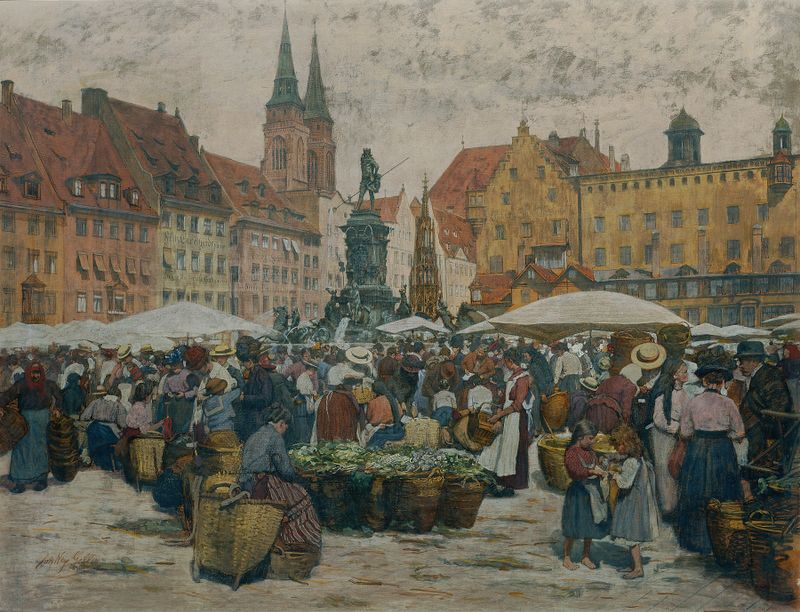
In the stillness of a moment captured, whispers of silence echo through the scene, inviting contemplation. What stories lie beneath the layers of paint, hushed yet profoundly present? Look to the left at the gathering figures dressed in earth-toned garb, their postures a blend of leisure and purpose. Notice how the muted colors of the landscape harmonize with the soft brushstrokes that define the contours of the hills in the background.
The light, diffused yet warm, bathes the scene, lending an almost ethereal quality to their interactions. This gentle illumination accentuates the deep creases on the faces of the elders, imparting a sense of wisdom and age, while the vibrant greens capture the essence of nature’s rejuvenation. Delve deeper into the contrasts within the painting — the liveliness of the market against the tranquility of the surrounding landscape. The quiet, almost reverent expressions suggest a shared understanding among the figures, hinting at both community and solitude.
The juxtaposition of bustling activity with the serene backdrop invites viewers to ponder life’s dualities: movement and stillness, noise and silence, connection and solitude. Each stroke seems to whisper secrets about the human condition. Johann Nepomuk Geller created Marktmotiv auf der Haide during a prolific period in the late 19th century, surrounded by the rise of realism in European art. Working primarily in Germany, he sought to capture the essence of rural life, reflecting a growing interest in the everyday experiences of common people.
Geller’s approach marked a significant shift as artists began to embrace authenticity, pushing against the boundaries of romantic idealism that had previously dominated the art world.