Kamianets-Podilskyi — History & Facts
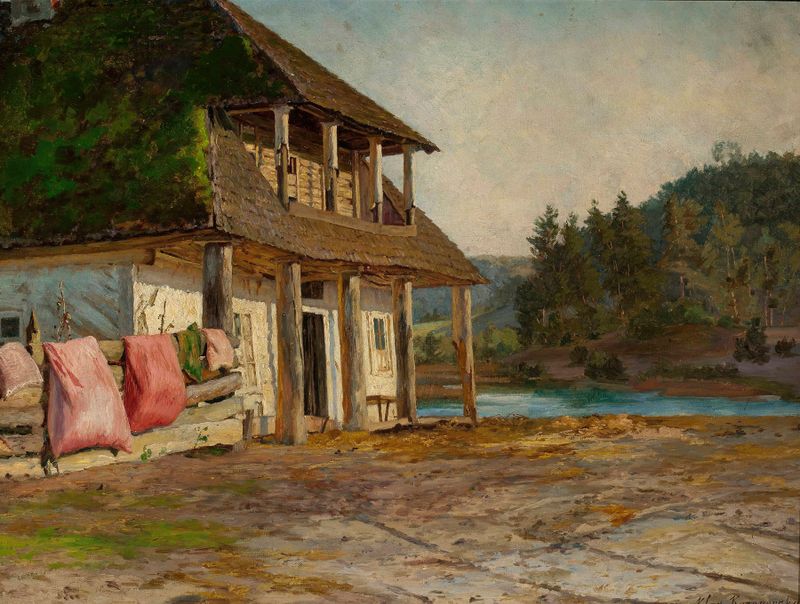
Can paint confess what words never could? In Kamianets-Podilskyi, a tumult of colors and forms weaves a narrative that words alone can scarcely contain, revealing the chaos of a moment suspended in time. Look to the left at the intricate outlines of the fortress, its stone battlements stark against the violet sky. The artist employs a rich palette of deep blues and vibrant reds, the brushstrokes swirling with a fervor that suggests both turmoil and beauty. Notice how the light dances across the landscape, illuminating the crags and casting shadows that deepen the sense of mystery.
Each stroke feels spontaneous, inviting the viewer into the tension of the composition, where nature and architecture collide in a chaotic embrace. As you delve deeper, consider the juxtaposition of the serene river winding through the chaotic foreground and the imposing fortress looming above. This contrast speaks to the duality of existence—where the tumult of life is met with peaceful moments of reflection. The sky, alive with swirling clouds, hints at an impending storm, suggesting that chaos is not just nearby but inevitable.
The emotional pull of this scene lies in its ability to evoke questions about stability, resilience, and the relentless passage of time. Maria Klass-Kazanowska created this evocative piece in 1894, during a period marked by a growing emphasis on impressionism in Eastern Europe. While living in Ukraine, she absorbed the vibrant local scenery and the tumultuous cultural atmosphere of the time, reflecting both personal and societal upheaval. This work illustrates her transition to a more expressive style, capturing the essence of a place that was witnessing both change and continuity.