
Wooden house — History & Facts
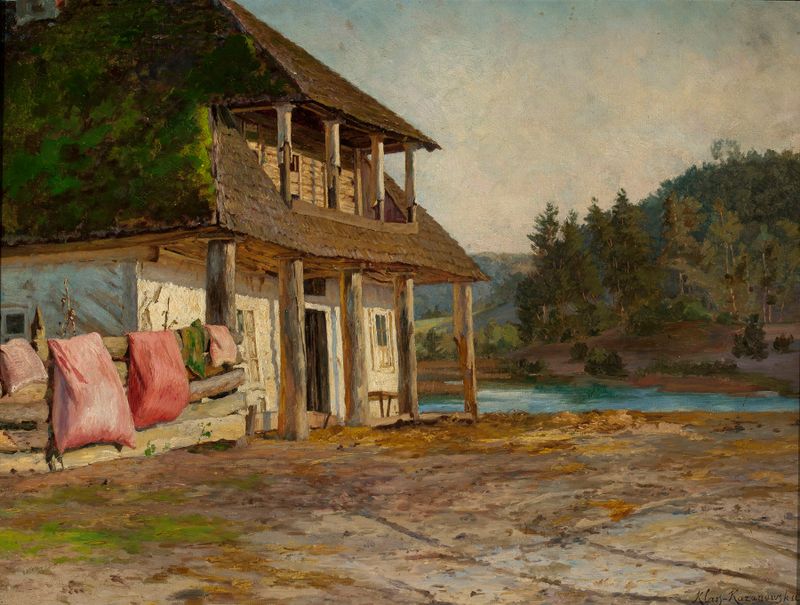
Who listens when art speaks of silence? In a world brimming with revolution, a stillness can evoke deeper truths than the loudest shout. Focus on the delicate wooden textures, where each line and grain seems to tell a story. The house, sturdy yet humble, occupies the center of the canvas, inviting the viewer's eye to explore its façade. Notice how the soft, muted palette creates an atmosphere of calm, contrasting with the tumult of the era it was painted in.
The use of light dances along the edges, highlighting the craftsmanship and inviting an intimate connection with the structure. Within this simple abode lies a profound commentary on the human experience. The wood, aged and weathered, speaks of resilience and history, a testament to the lives that have unfolded within its walls. The stillness of the house echoes the silence of those who have been displaced by change, embodying the tension between stability and upheaval.
As the revolution looms, this artwork becomes a sanctuary of reflection, a pause in the chaos, urging viewers to consider the cost of progress. In 1897, the artist captured this scene amidst a period of societal upheaval in Europe. With a keen eye for detail, she sought to portray the simplicity of rural life, even as the world around her surged toward modernity. This work stands as a testament to her ability to find beauty in quiet moments and to express the unvoiced struggles that accompany change.
More Artworks by Maria Klass-Kazanowska
Browse all →


More Architecture Art
Browse all →
The statue of Liberty
Frédéric Auguste Bartholdi

View of Houses in Delft, Known as ‘The Little Street’
Johannes Vermeer

View of Houses in Delft, Known as ‘The Little Street’
Johannes Vermeer

The Cathedral in Rouen. The portal, Grey Weather
Claude Monet

The yellow house
Vincent van Gogh

The Church in Auvers-sur-Oise, View from the Chevet
Vincent van Gogh