
Kenilworth Castle — History & Facts
Who listens when art speaks of silence? In Kenilworth Castle, a haunted stillness envelops the ancient stones, whispering tales of grandeur lost to time. Look to the left at the crumbling wall, where soft shadows dance across the aged stone. The muted palette of earthy greens and grays brings a somber beauty to the castle ruins, setting a tone of nostalgia and decay. Notice how the light subtly filters through the overcast sky, casting gentle shadows that create depth and texture, inviting you to contemplate both the structure and its history. Within this composition lies a profound emotional dichotomy.
The castle, once a symbol of power and fortitude, now stands vulnerable, an echo of the past. The juxtaposition of the robust architecture against the frail overgrowth emphasizes the relentless passage of time, while the looming shadows suggest forgotten stories, urging the viewer to reflect on what remains unspoken. Each detail, from the weathered stones to the encroaching foliage, serves as a reminder of nature’s quiet reclamation. In 1827, Peter De Wint created this work during a period where Romanticism was flourishing.
Living in England, he focused on landscapes, capturing the essence of his surroundings. At this time, there was a growing interest in historical ruins as a reflection of beauty intertwined with decay, reflecting the societal fascination with the past.
More Artworks by Peter De Wint
Browse all →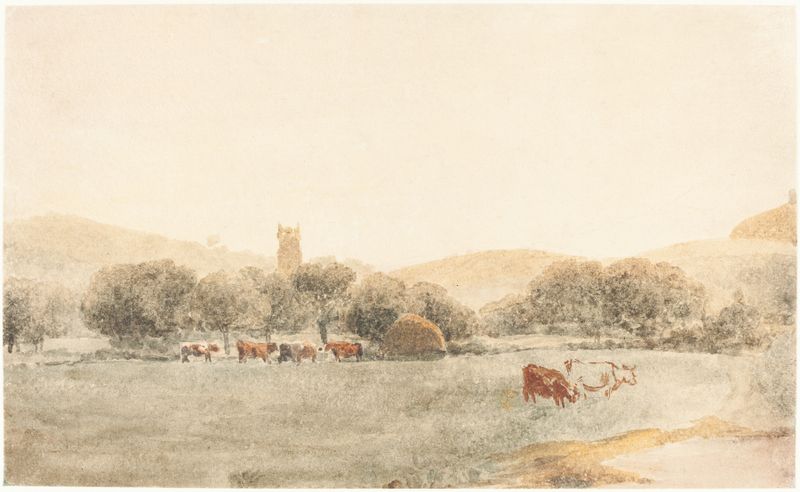
A Meadow with Cattle near Glastonbury
Peter De Wint
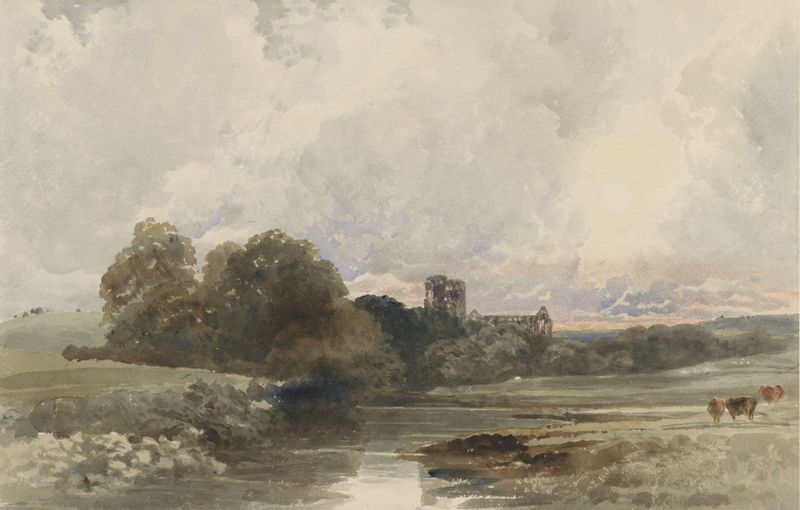
Avondlandschap met de ruïne van Kirkstall Abbey, Yorkshire
Peter De Wint
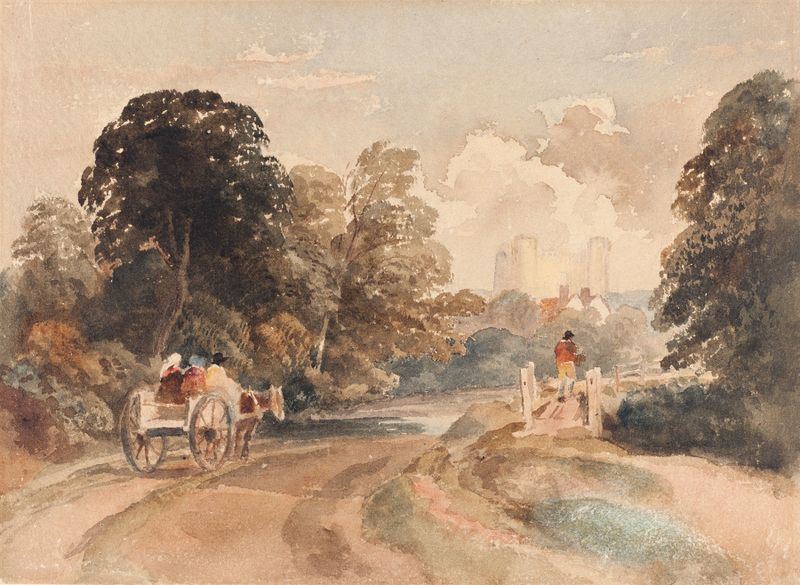
Landscape
Peter De Wint

Welsh Landscape with Cattle
Peter De Wint
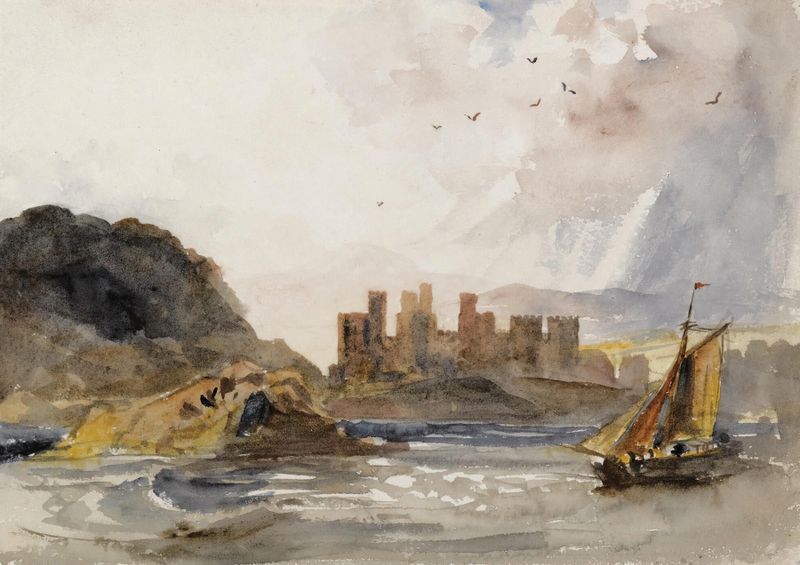
Conway Castle, North Wales
Peter De Wint

Evening on the Foss Dyke near Lincoln
Peter De Wint
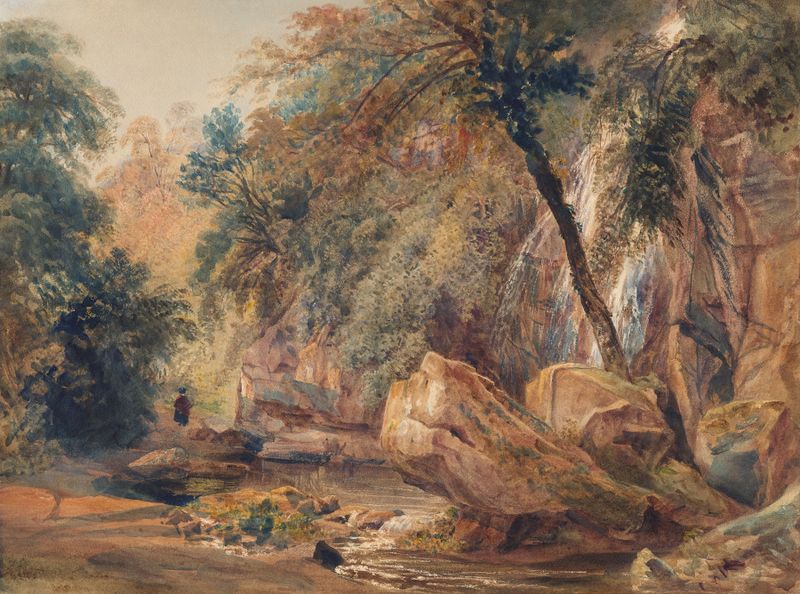
Waterfall in the Dingle at Badger Hall
Peter De Wint

Harvesting
Peter De Wint

Neath Abbey
Peter De Wint

Farmyard at Compton
Peter De Wint





