
Welsh Landscape with Cattle — History & Facts
The canvas doesn’t lie — it simply waits. In the quiet embrace of nature, how often do we find the divine nestled within the ordinary? Look to the warm hues of green and gold that sweep across the landscape, drawing your eye to the gentle slopes and distant hills. Notice how the soft, diffused light kisses the cows, creating harmonious silhouettes against the backdrop of a vast sky.
The delicate brushstrokes evoke a serene texture, allowing the viewer to feel the cool breeze that stirs the tranquility of the scene. Within this pastoral setting lies a poignant contrast: the anchored presence of the cattle juxtaposed against the ethereal expanse of the heavens. The grounded animals symbolize the earthly ties of existence, while the dynamic clouds whisper of transcendence. Each element contributes to a dialogue about the coexistence of life’s simplicity and the grandeur of nature.
The subtle interplay of light and shadow invites contemplation and beckons the viewer to explore the deeper essence of divinity in everyday life. Painted between 1807 and 1849, the artist explored themes of nature and its connection to the divine during a period of Romanticism in England. As he captured the Welsh landscape, De Wint was influenced by the burgeoning appreciation for rural life, reflecting a turn towards the sublime in the natural world. His work not only illustrates the pastoral beauty of the Welsh countryside but also serves as an invitation to behold the divine within the familiar.
More Artworks by Peter De Wint
Browse all →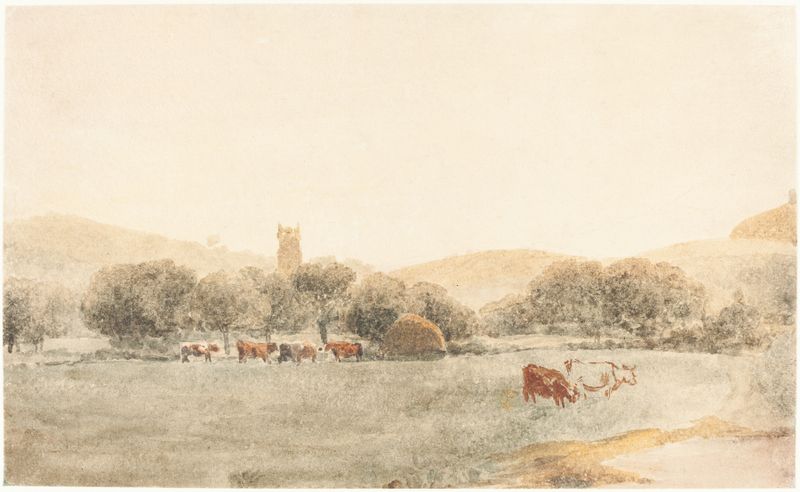
A Meadow with Cattle near Glastonbury
Peter De Wint
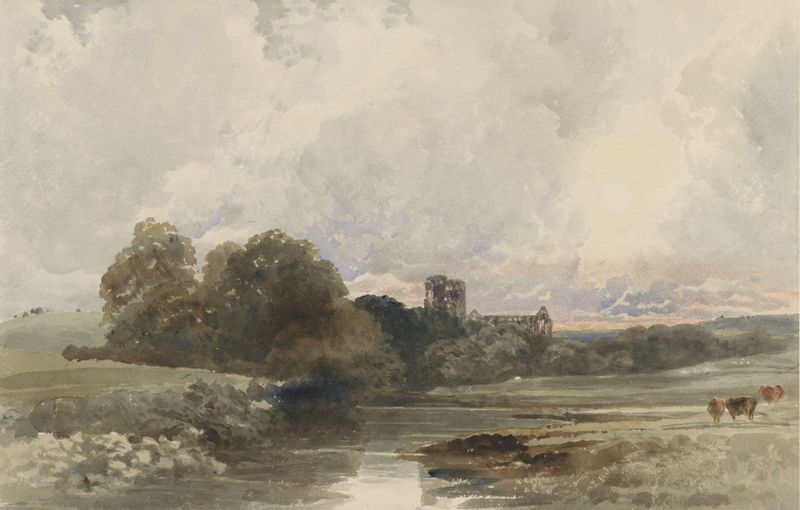
Avondlandschap met de ruïne van Kirkstall Abbey, Yorkshire
Peter De Wint
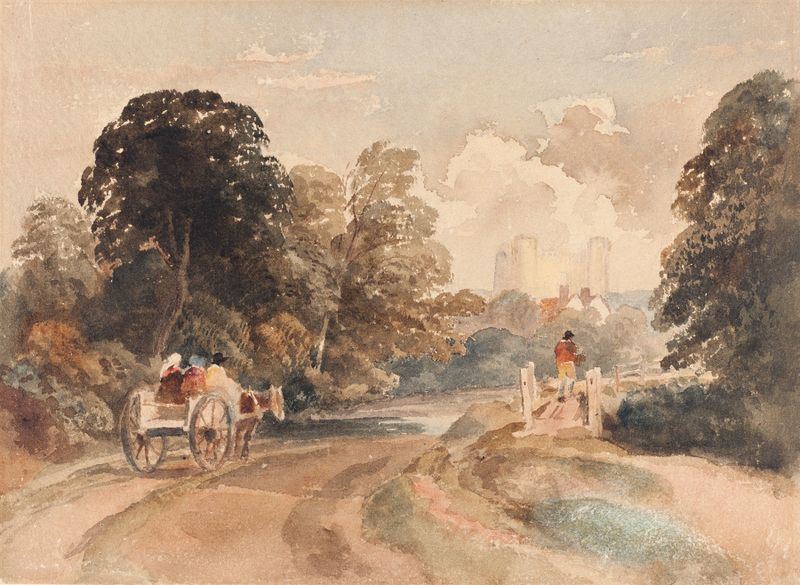
Landscape
Peter De Wint
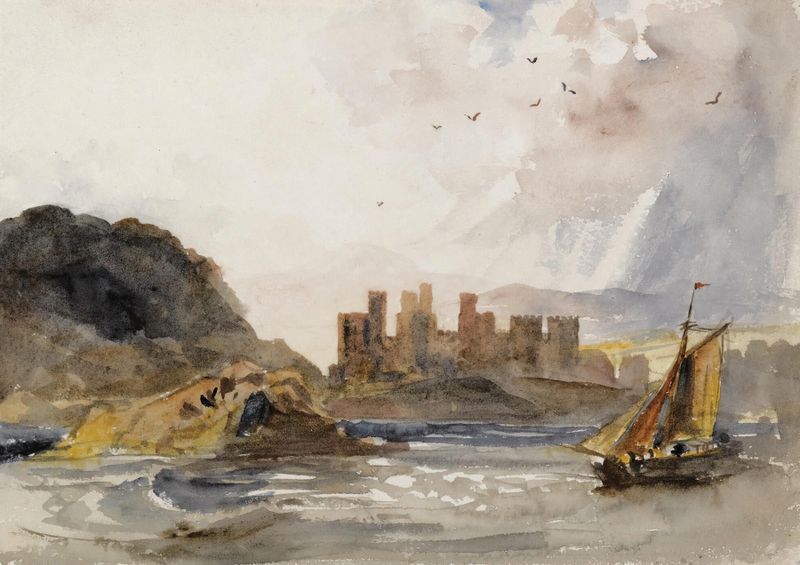
Conway Castle, North Wales
Peter De Wint

Evening on the Foss Dyke near Lincoln
Peter De Wint
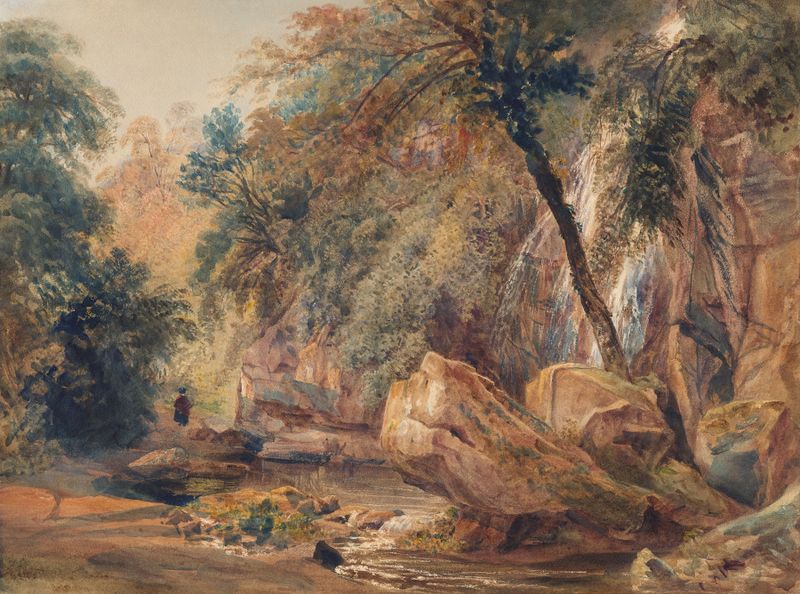
Waterfall in the Dingle at Badger Hall
Peter De Wint

Harvesting
Peter De Wint

Neath Abbey
Peter De Wint

Farmyard at Compton
Peter De Wint
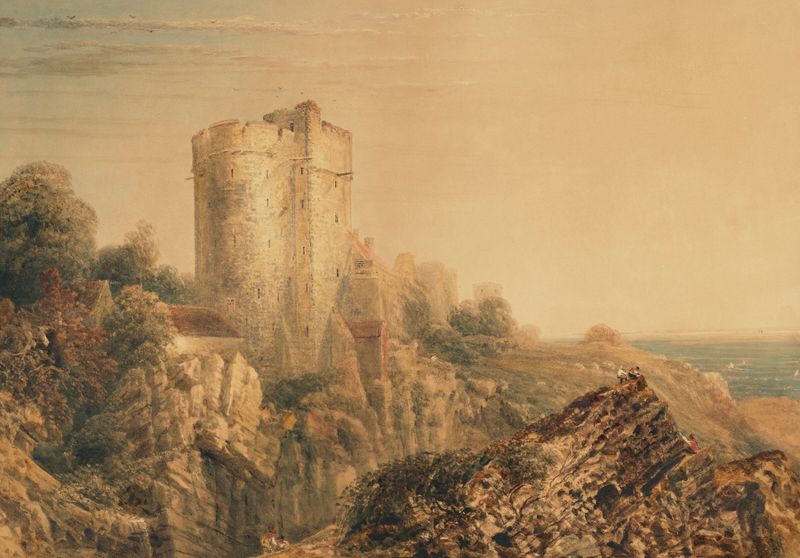
View of Lympne Castle, Kent
Peter De Wint





