
Kennis (Cognitio) — History & Facts
Did the painter know this moment would outlive them? In Kennis (Cognitio), the essence of rebirth emanates from every detail, whispering of knowledge and enlightenment that transcends time. Look to the center, where a figure, half-turned, engages deeply with an open book. The warm hues of gold and amber illuminate the pages, drawing the eye to the letters that seem to leap forth, inviting contemplation. Notice how the shadows play across the figure's face, suggesting an interplay between illumination and obscurity, underscoring the tension between knowing and unknowing.
Beham's meticulous use of woodcut techniques grants the composition a sharp clarity, with every line delicately etched to evoke both depth and dimension. Hidden within the folds of this artwork lies a striking contrast: the serene expression of the figure against the chaotic swirl of knowledge surrounding them. The book, a symbol of enlightenment, sits juxtaposed to the whispering figures on the periphery, representing distraction and the noise of ignorance. This delicate balance hints at the artist's understanding that true enlightenment requires focus amidst a cacophony of voices.
The viewer is left pondering the significance of the moment captured; is this a celebration of intellect or a lament for the noise that drowns it out? In 1539, Hans Sebald Beham painted this work amidst the burgeoning era of the Renaissance, a time marked by a revival of classical knowledge and inquiry. Living in Nuremberg, Beham found himself surrounded by intellectual fervor, yet faced political turbulence that shaped his artistic expression. His work reflects the pivotal transition from medieval constraints to a world eager for enlightenment, encapsulating a moment of rebirth that still resonates today.
More Artworks by Hans Sebald Beham
Browse all →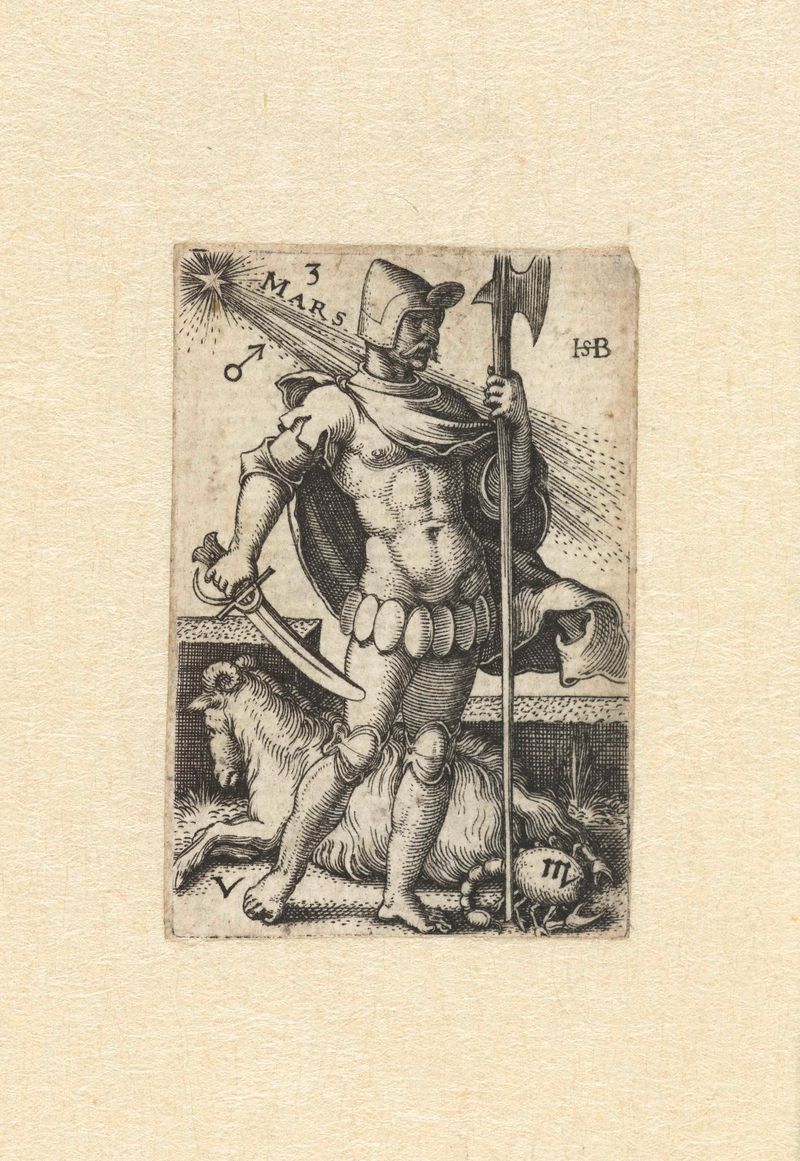
Mars met sterrenbeelden Ram en Schorpioen
Hans Sebald Beham

Achilles in gevecht met Hector
Hans Sebald Beham
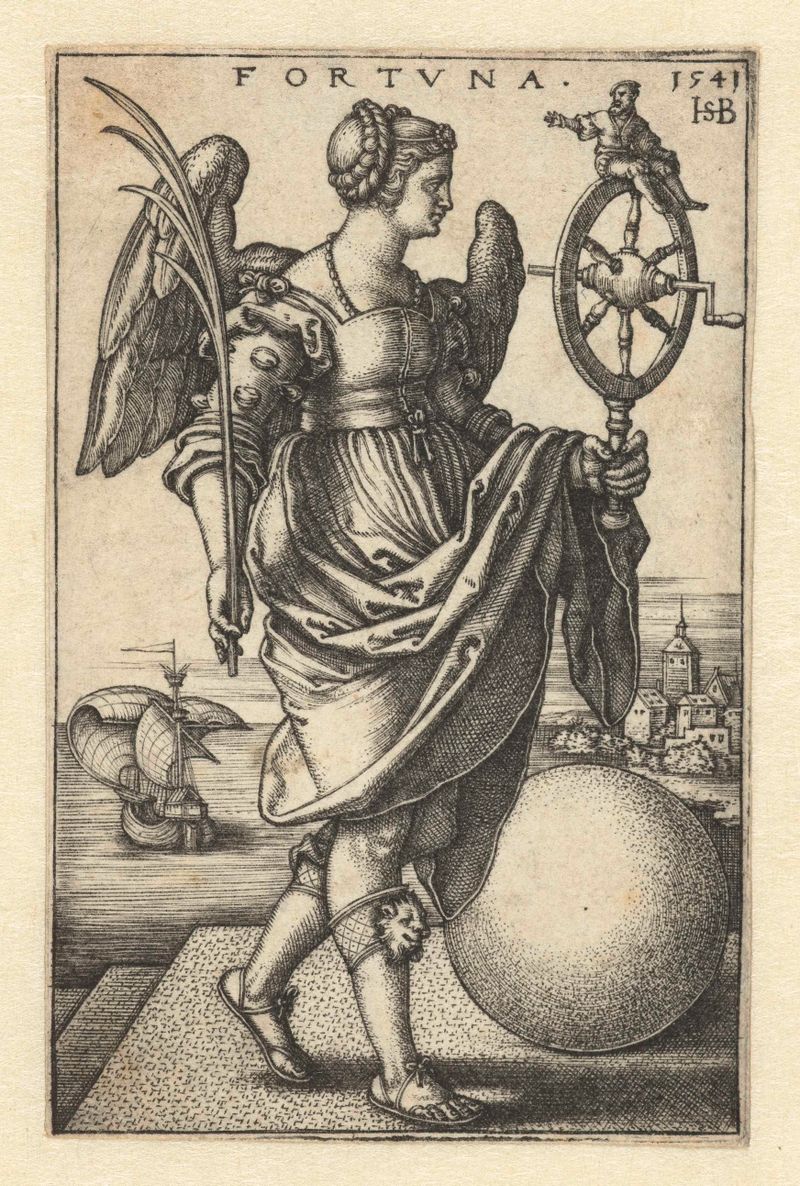
Fortuna
Hans Sebald Beham

Hercules worstelt met Antaeus
Hans Sebald Beham

Twee muzikanten met schalmey en doedelzak
Hans Sebald Beham

Voorzichtigheid (Prudentia)
Hans Sebald Beham

Hercules in gevecht met de Trojanen
Hans Sebald Beham
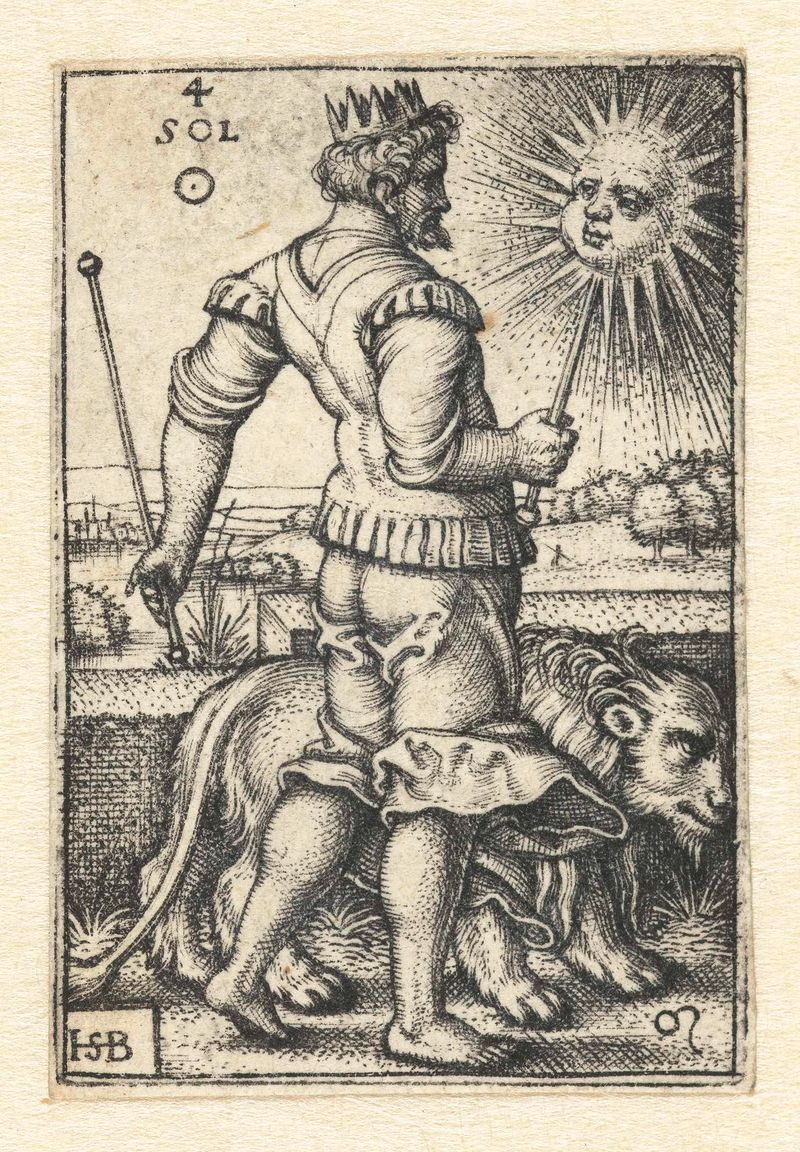
Apollo (Sol) met sterrenbeeld Leeuw
Hans Sebald Beham
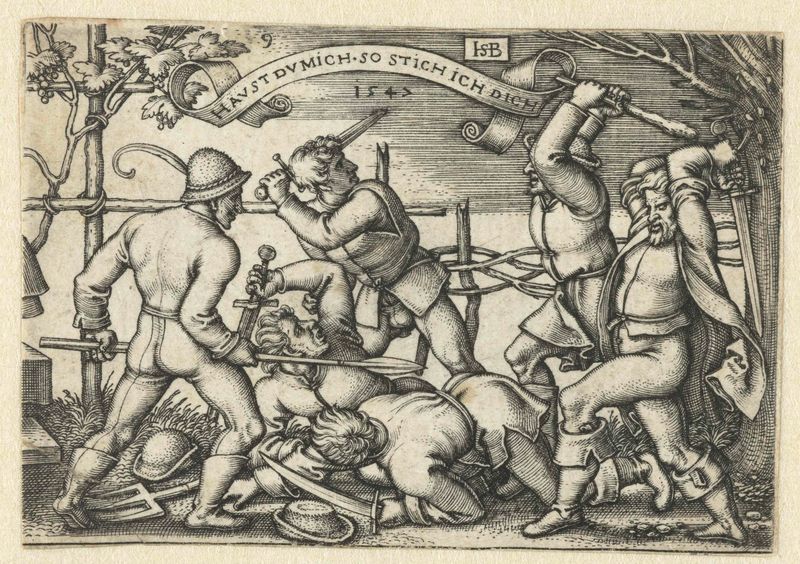
Vechtende boeren met zwaarden
Hans Sebald Beham
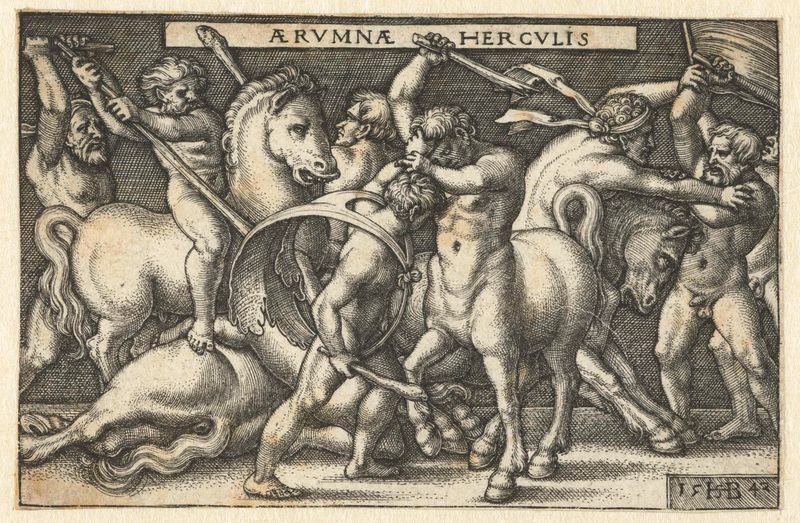
Hercules in gevecht met centaurs
Hans Sebald Beham





