
Kettle Falls, Columbia River — History & Facts
When did color learn to lie? The interplay of light and shadow weaves a tapestry of truth and deception in this landscape's embrace. Focus on the vibrant blues and greens that dominate the foreground, where the rushing waters of the Columbia River dance beneath the sun, alive with energy. Notice how the rocky outcrops to the left cast deep shadows, contrasting with the illumination of the cascading falls on the right. The brilliant hues are not mere reflections of nature, but a deliberate orchestration that invites us to ponder the essence of what we see. In the depths of this scene, there lies a tension between motion and stillness.
The flowing water symbolizes life’s relentless journey, while the shadows hold the secrets of the natural world. The painter’s choice of colors not only captures the beauty of the landscape but evokes an emotional connection to the viewer, inviting contemplation of the unseen forces at play. Here, nature reveals its duality—a vibrant surface concealing a profound, quiet depth. John Mix Stanley created Kettle Falls, Columbia River in 1854 while he was immersed in the exploration of the American West.
During this period, the nation was grappling with expansion and the complexities of identity, both personal and cultural. Stanley, a prominent figure in the westward movement of American artists, sought to depict the grandeur of the landscapes that were at once familiar and foreign, capturing the spirit of a transforming nation.
More Artworks by John Mix Stanley
Browse all →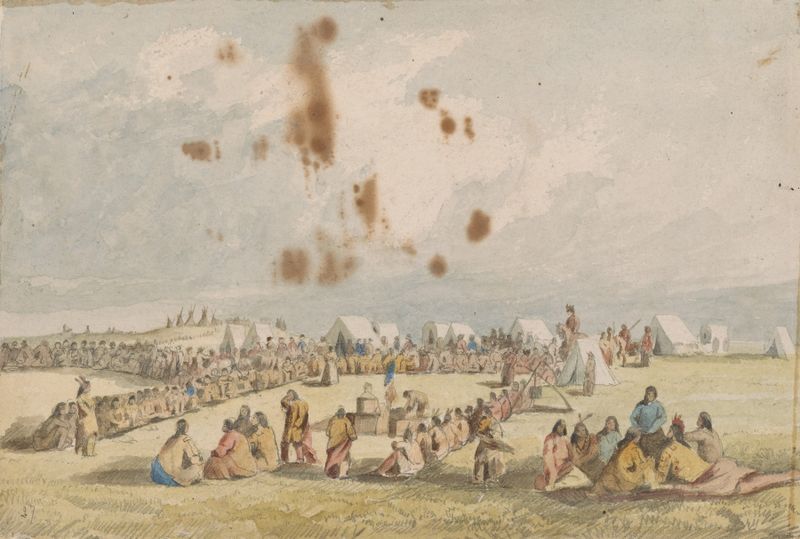
Distribution of Goods to the Assiniboins
John Mix Stanley
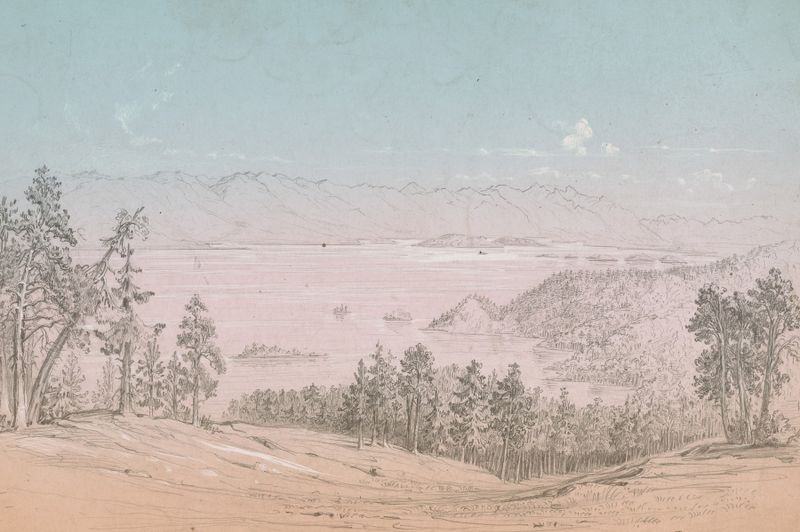
Flathead Lake, Looking toward the South
John Mix Stanley

A Morning in Milk River Valley
John Mix Stanley

Mount Rainier Viewed from Near Steilacoom
John Mix Stanley
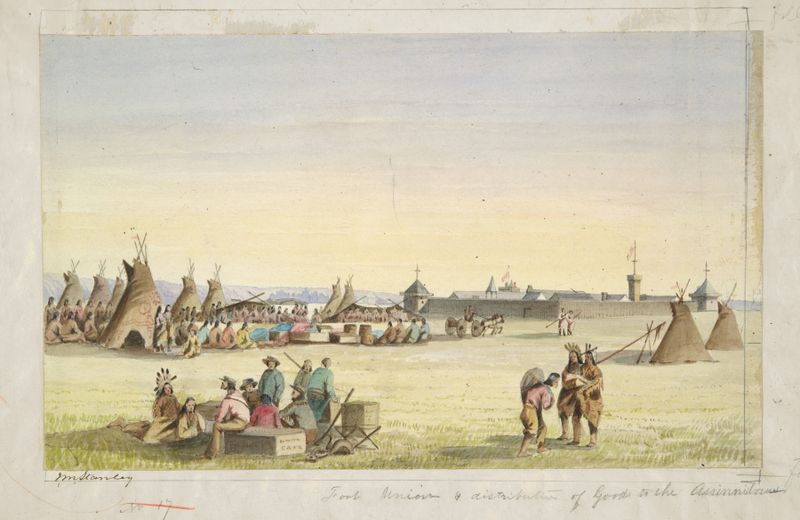
Fort Union and Distribution of Goods to the Assiniboins
John Mix Stanley

Pike Lake M.T.
John Mix Stanley
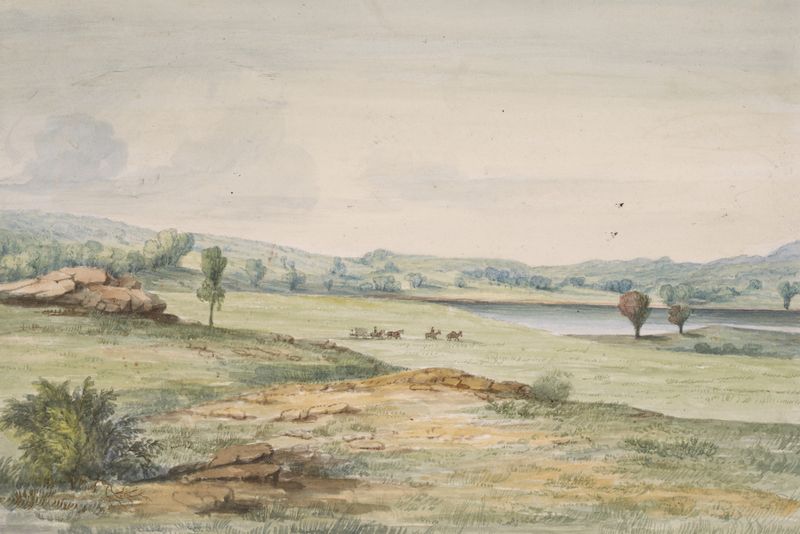
Sauk River
John Mix Stanley

Milk River – Bear’s Paw Mountain in Distance
John Mix Stanley

Fort Benton
John Mix Stanley
Sheyenne River
John Mix Stanley





