
Mount Rainier Viewed from Near Steilacoom — History & Facts
In a world swirling with change, nature’s resilience stands serene against the tide of time. The majestic Mount Rainier, steadfast and imposing, looms over the landscape, a silent witness to both the beauty and decay of human existence. Look to the foreground where soft grasses ripple gently in the wind, their subtle greens blending harmoniously with the rich browns of the earth. Notice how the mountain's icy peak, painted with delicate strokes, gleams against the azure sky, contrasting with the darker, tumultuous clouds gathering ominously behind it.
The delicate balance of warm and cool tones draws the eye upward, emphasizing the grandeur and isolation of the mountain, while the sprawling shadows hint at the encroaching decay of the world below. Within this composition lies a tension between the sublime and the transient. The vibrant life at the base, teetering on the edge of deterioration, juxtaposes the eternal majesty of the mountain. Each brushstroke not only depicts the scene but encapsulates a fleeting moment, suggesting that even nature, with all its grandeur, is subject to the ravages of time.
The careful placement of elements reflects an understanding of both the fragility and strength inherent in the natural world. In 1854, the artist painted this piece while living in the Pacific Northwest amidst a growing fascination with American landscapes. The mid-19th century marked a period of exploration and the expansion of the frontier, as well as a burgeoning interest in capturing the American wilderness through art. Stanley's work, a blend of romanticism and realism, served to document the untouched beauty of the region, even as the shadow of encroaching civilization began to loom over it.
More Artworks by John Mix Stanley
Browse all →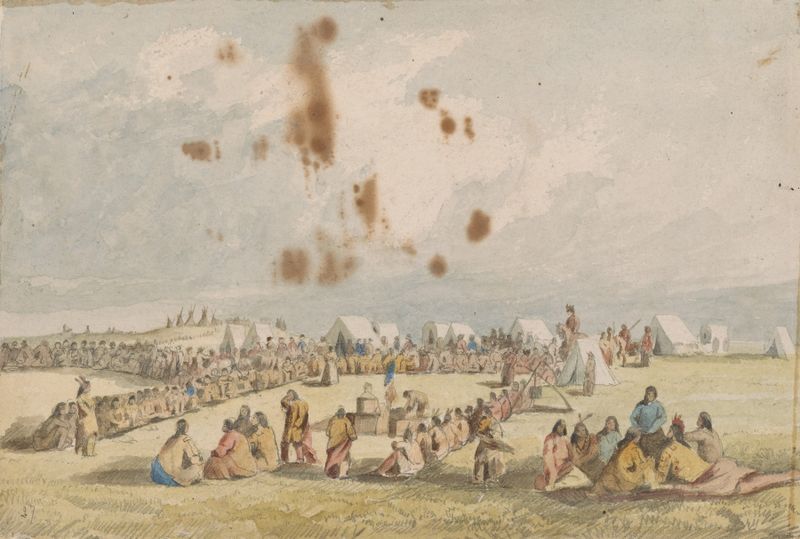
Distribution of Goods to the Assiniboins
John Mix Stanley
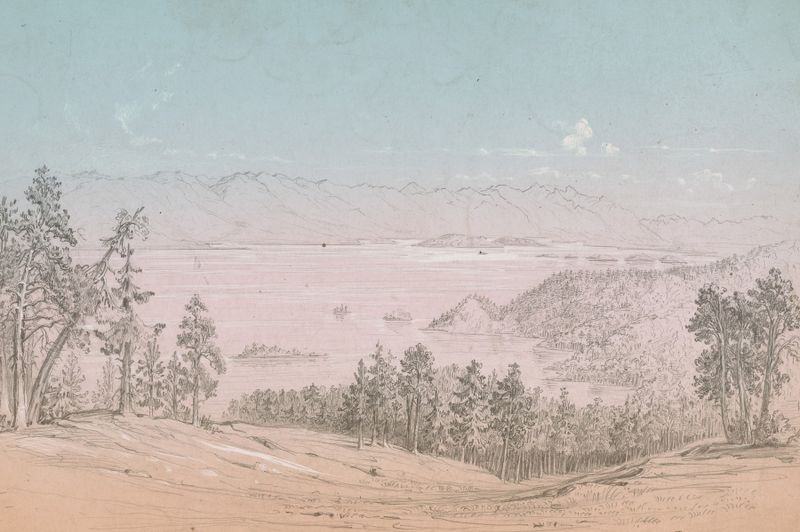
Flathead Lake, Looking toward the South
John Mix Stanley

A Morning in Milk River Valley
John Mix Stanley
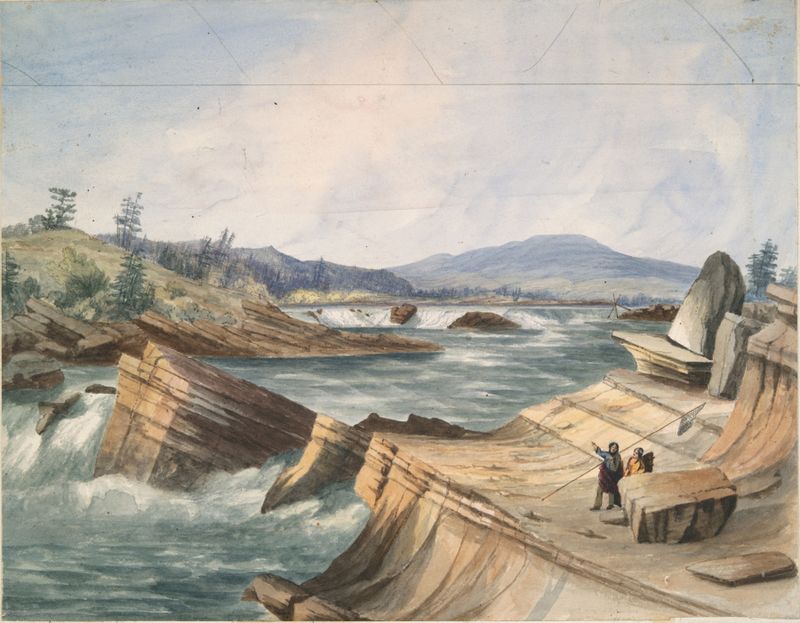
Kettle Falls, Columbia River
John Mix Stanley
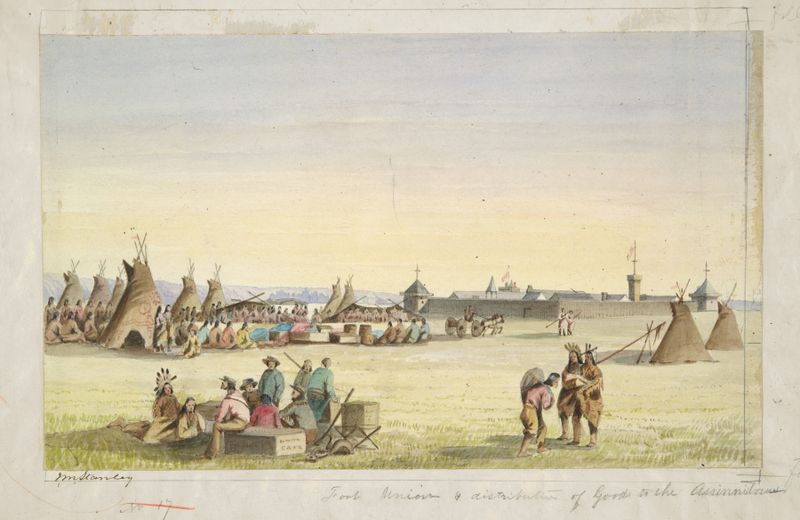
Fort Union and Distribution of Goods to the Assiniboins
John Mix Stanley

Pike Lake M.T.
John Mix Stanley
Sauk River
John Mix Stanley

Milk River – Bear’s Paw Mountain in Distance
John Mix Stanley

Fort Benton
John Mix Stanley
Sheyenne River
John Mix Stanley





