Killiecrankie Pass — History & Facts
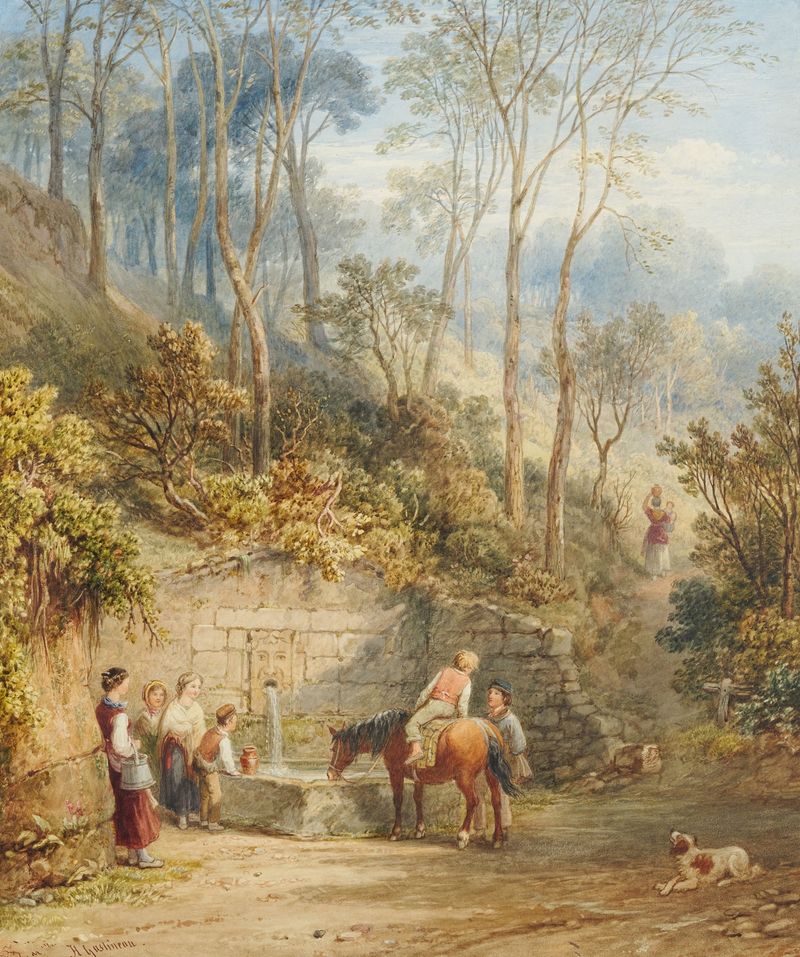
Where does light end, and longing begin? In the delicate balance of nature and emotion, the answer often flickers just at the edge of perception. Look closely at the sweeping expanse of Killiecrankie Pass, where the soft hues of green and earthy browns wrap around craggy cliffs, creating an enchanting embrace of the Scottish landscape. The distant mountains rise majestically, their peaks kissed by a veil of mist. Focus on the interplay of light cascading across the foreground, illuminating the path winding through the valley, inviting yet shrouded in mystery.
Every brushstroke seems deliberate, conjuring a sense of both serenity and anticipation in this tranquil yet stirring terrain. The painting encapsulates a profound dichotomy between the stability of nature and the fleeting nature of human emotion. The vibrant greens juxtaposed against the cool grays not only reflect the beauty of the landscape but also evoke a sense of yearning, as if the land itself is whispering secrets to those who dare to wander. The winding path hints at journeys yet to be taken, leading the viewer toward the promise of discovery, evoking both hope and wistfulness in the heart. Henry Gastineau created this evocative landscape during a prolific period from 1820 to 1879, capturing the essence of the Romantic movement.
This was a time when artists sought personal expression and connection to nature, moving away from the constraints of neoclassicism. Gastineau, influenced by the picturesque beauty surrounding him, celebrated the sublime in the natural world, reflecting the Romantic ideal of finding solace and inspiration in the wilderness.