Woodland Scenery — History & Facts
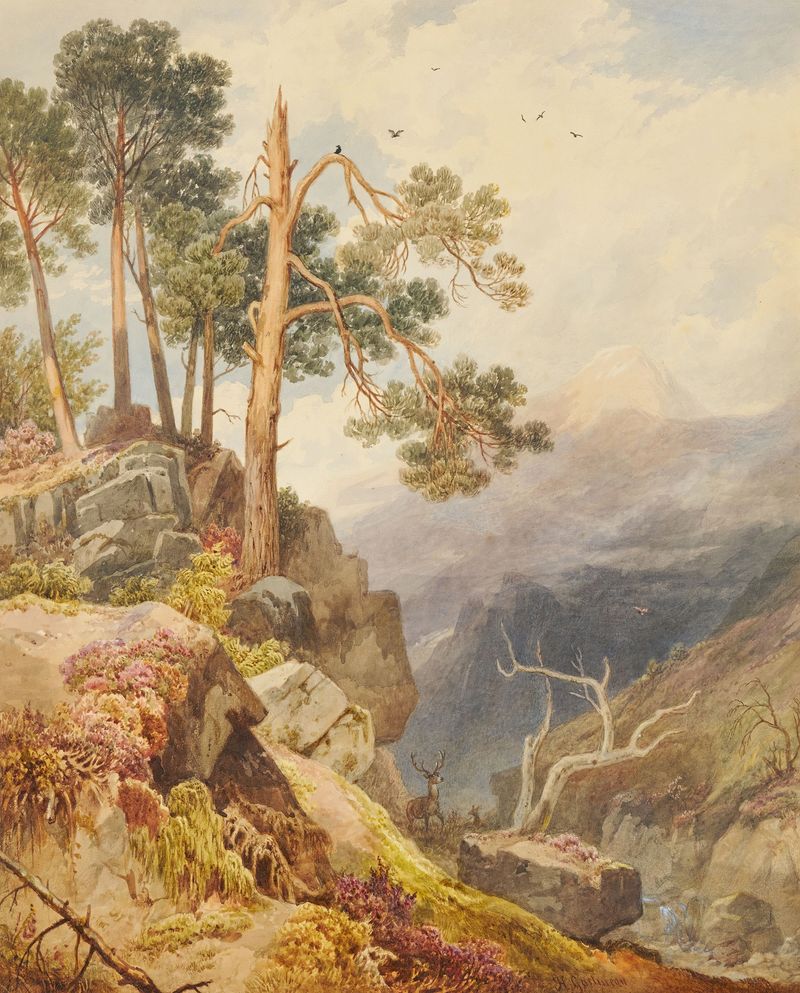
What secret hides in the quiet of the canvas? In the stillness of nature, silence speaks volumes, inviting the viewer to delve deeper into the heart of the woodland realm. Look to the left at the gentle curve of the stream, its surface mirroring the dappled light filtering through the canopy above. The lush greens dominate the scene, interspersed with warm browns, creating a balance that feels both serene and alive. Notice how the trees reach skyward, their trunks sturdy yet graceful, framing a sense of depth that draws your eye toward the horizon where soft, misty blues hint at distant mountains.
The brushwork is exquisite, with delicate strokes depicting foliage and texture that evoke a tactile experience of the forest. Beneath the surface lies a contrast between the vibrant life of the woodland and the void that looms in its shadows. The play of light and dark not only highlights the beauty of the environment but also suggests an underlying narrative of solitude and introspection. Each element, from the solitary bird perched on a branch to the quiet ripple of water, speaks to a deeper connection between humanity and the natural world, urging us to reflect on our place within it. Henry Gastineau painted this work between 1820 and 1876, during a period marked by a burgeoning appreciation for landscape art in England.
As industrialization began to encroach upon the natural world, artists like him sought to capture the tranquility and beauty of untouched landscapes. This painting reflects both a personal inclination toward the sublime and the broader cultural context of a society grappling with change, preserving a moment of stillness in an ever-evolving world.