
Kirk G boe Inn & ruins Faroe Island — History & Facts
Did the painter know this moment would outlive them? In Kirk Gboe Inn & Ruins Faroe Island, a delicate awakening unfolds, echoing the timeless beauty of a landscape shaped by nature and history. Focus on the weathered stones of the inn, standing resolute against the backdrop of sweeping hills and tumultuous skies. The artist employs a muted palette, with soft greens and grays reflecting both the rugged terrain and the melancholy of solitude. The light dances faintly across the surface, illuminating the inn's façade while casting deep shadows that hint at forgotten tales, inviting the viewer to step deeper into the narrative. Hidden within the ruins lies a poignant contrast between human endeavor and the relentless passage of time.
The remnants of the inn evoke a profound sense of nostalgia, suggesting stories of warmth and hospitality now lost to the elements. The billowing clouds overhead amplify the isolation, while the gentle undulations of the landscape speak to both beauty and decay, creating a tension that urges contemplation of resilience in the face of impermanence. In 1862, Bayard Taylor painted this work during a significant period in his life, when he was exploring the rugged terrains of the Faroe Islands. As a poet and writer, he sought to capture the essence of the landscapes he encountered, reflecting the Romantic ideals of the era while infusing his artistic voice.
The work stands not only as a testament to his talent but also as a snapshot of an ever-changing world, where nature reigns supreme over human creation.
More Artworks by Bayard Taylor
Browse all →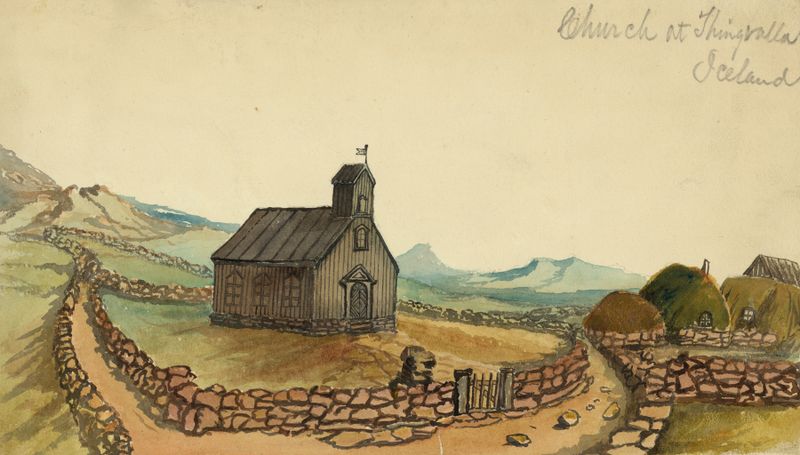
Church at Thingvalla Iceland
Bayard Taylor
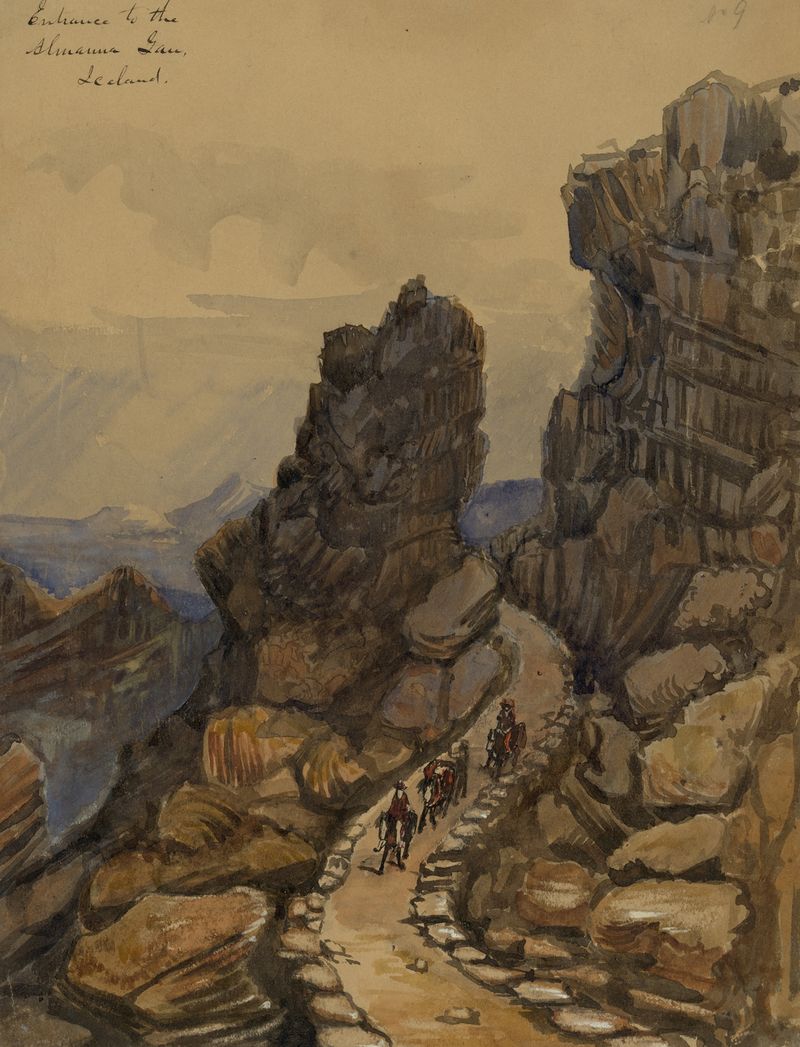
Entrance to the Almanna Gau, (e.g. Almannagjá) Iceland
Bayard Taylor
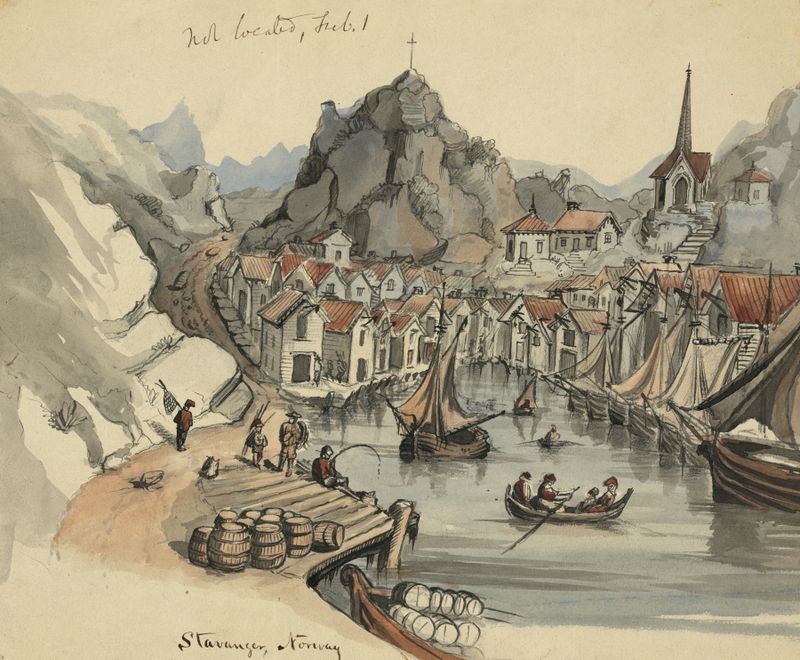
Stavanger, Norway
Bayard Taylor
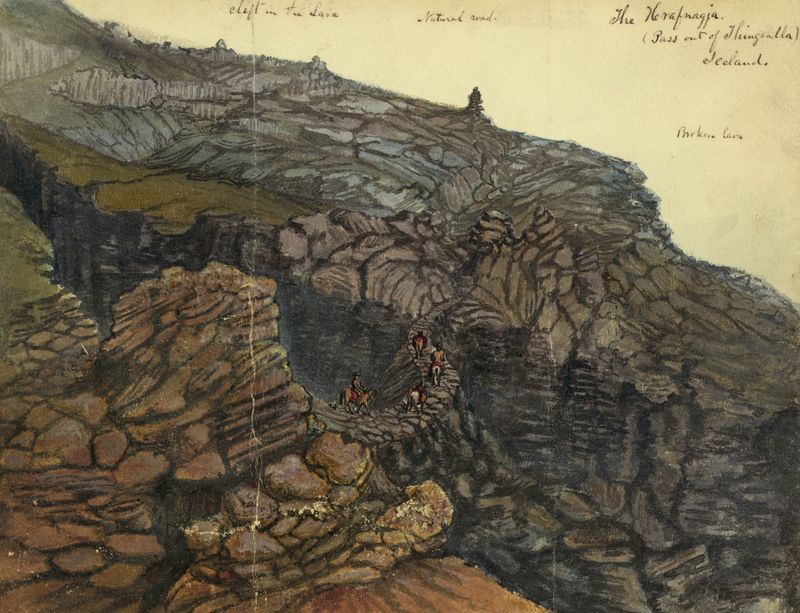
The Hrafnagja (pass out of Thingvalla Iceland)
Bayard Taylor
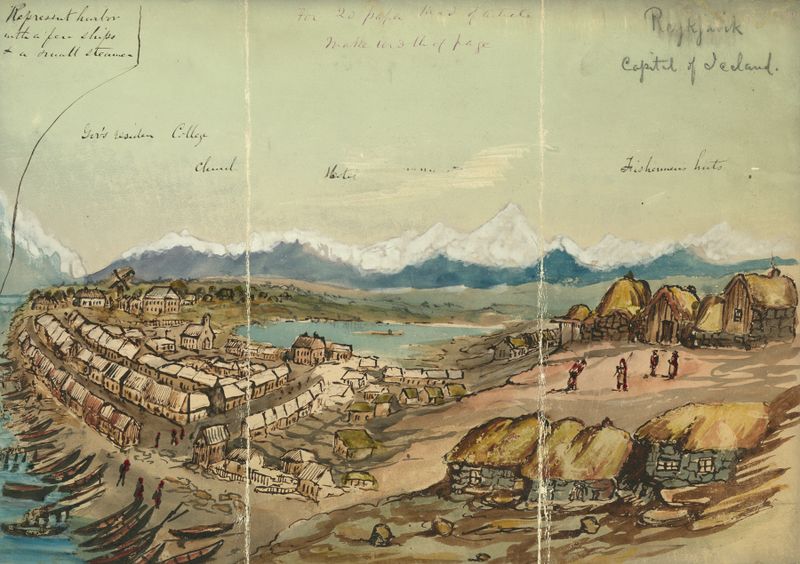
Rejkjavik capitol of Iceland
Bayard Taylor
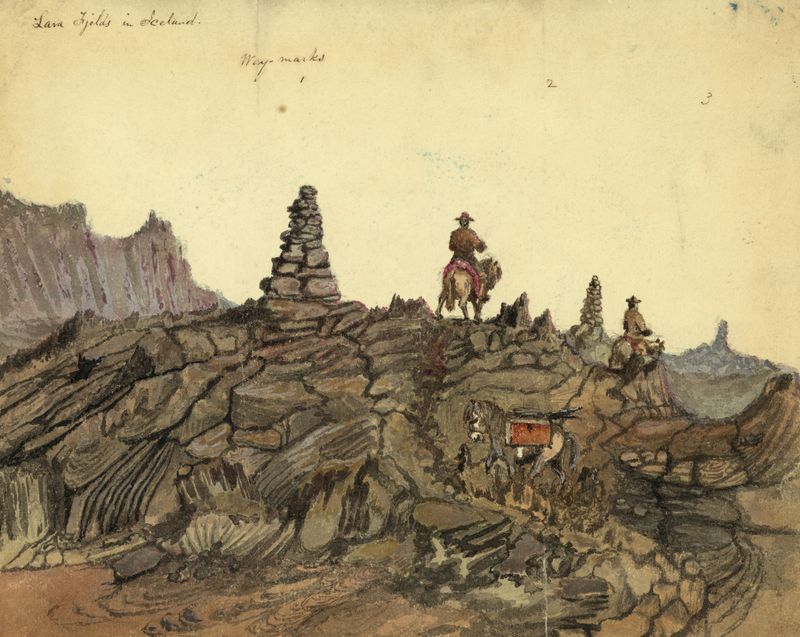
Lava fjelds in Iceland
Bayard Taylor
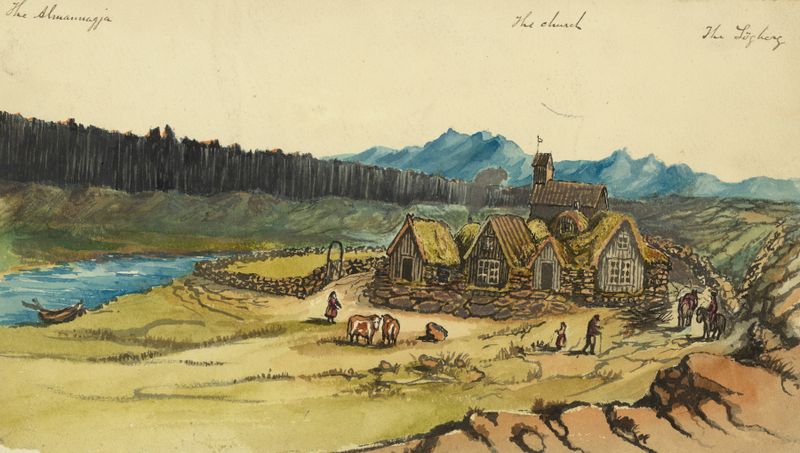
The Almannagjá the church the L’gherg
Bayard Taylor

The Tintron Rock, Iceland
Bayard Taylor
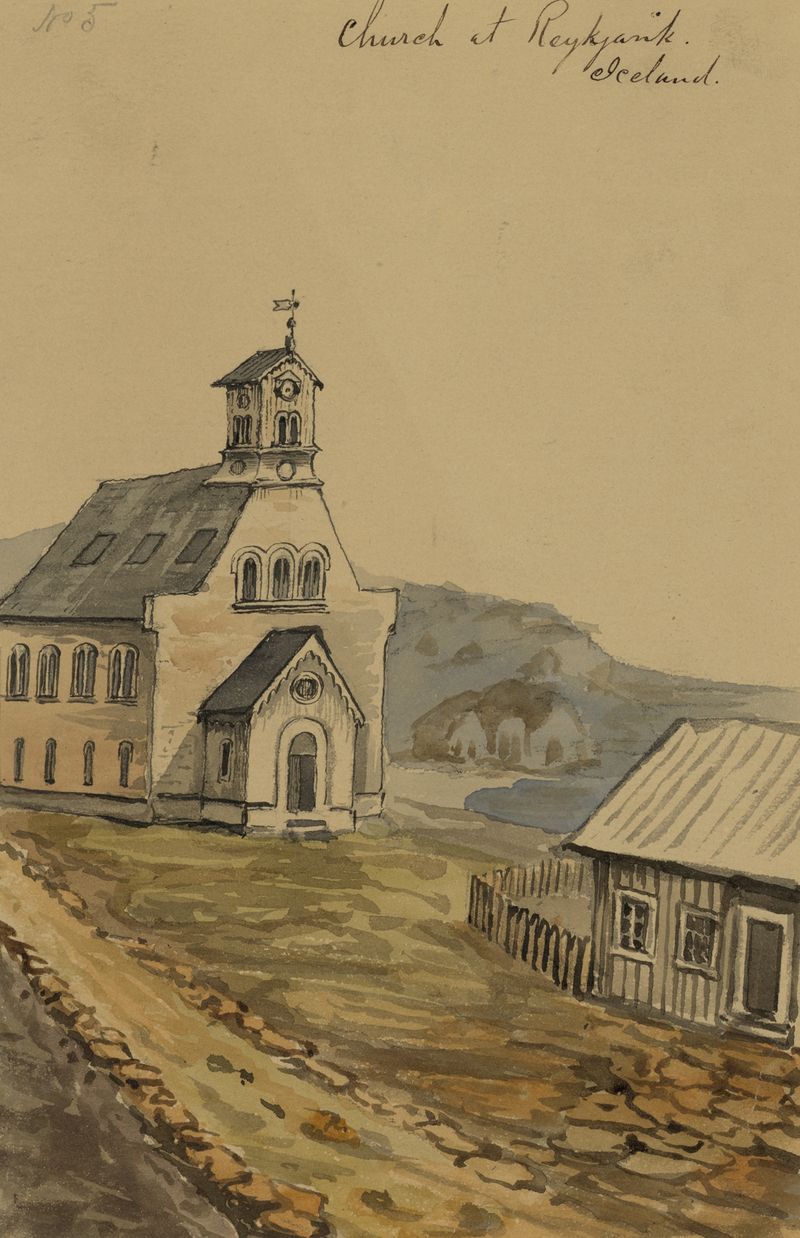
Church at Rejkjavik Iceland
Bayard Taylor

An Icelandic bog
Bayard Taylor





