Koffiekan met deksel, veelkleurig beschilderd met chinoiserieën en het wapen van de Venetiaanse familie Morosini — History & Facts
What if beauty was never meant to be finished? The allure of Koffiekan met deksel, with its vibrant chinoiseries and intricate wattle of the Morosini emblem, captures the fleeting essence of perfection, a testament to the madness of desire woven into porcelain. Look to the curved silhouette of the coffee pot, its surface alive with an explosion of color. The delicate brushwork dances across the porcelain, depicting exotic landscapes and whimsical figures that beckon the viewer closer. Notice how the bright greens and deep blues intertwine, creating a harmony that simultaneously sings of opulence and chaos.
The carefully polished lid, adorned with fine gold accents, seems to promise both preservation and concealment, inviting contemplation on what beauty truly encompasses. Beneath the surface lies a narrative of cultural exchange and ambition. The imagery reflects the East's enchanting mysteries, revealing the madness of the era’s fascination with foreign lands. The Morosini family's coat of arms anchors the work in a specific lineage, suggesting a collision between personal legacy and global artistry.
The contrast between the ornate decoration and the simplicity of its form evokes a tension between aspiration and reality, questioning whether such beauty can endure or if it is doomed to fracture under its own weight. In 1731, during the height of the Rococo movement, the artisans of Meissener Porzellan Manufaktur faced the challenge of transforming a utilitarian object into a work of art. Amidst the fervor for intricate craftsmanship and vibrant aesthetics, they navigated a landscape where porcelain became a canvas of ambition and identity, embodying both the chaos and creativity of the time.
More Artworks by Meissener Porzellan Manufaktur
Browse all →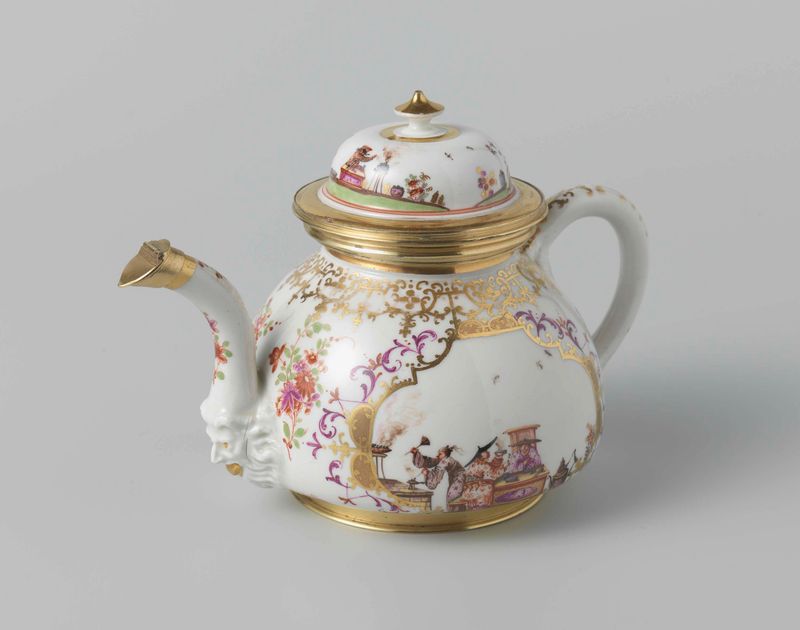
Theepot met deksel, veelkleurig beschilderd met chinoiserieën
Meissener Porzellan Manufaktur
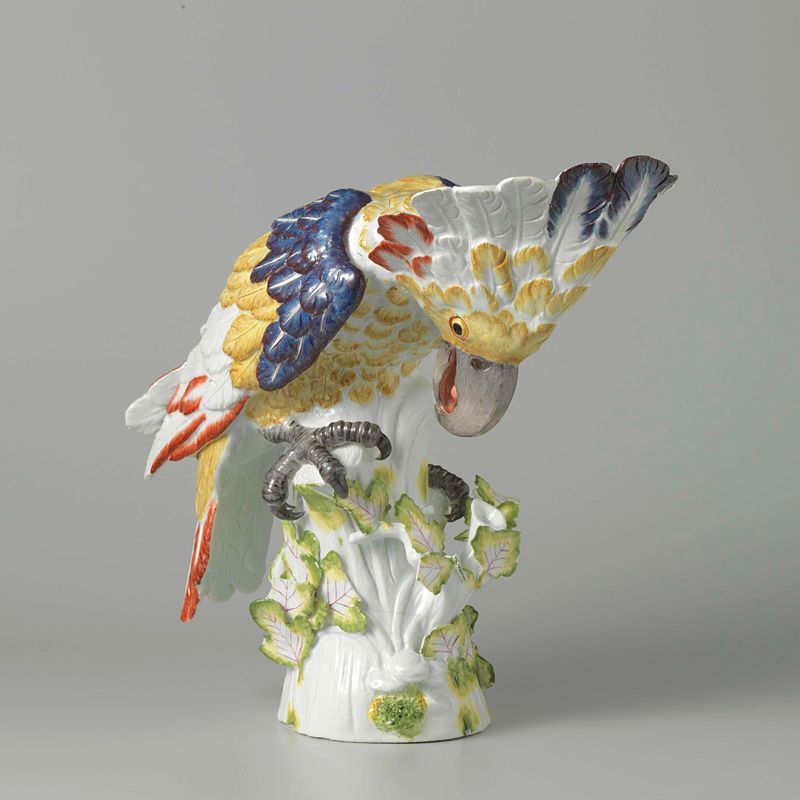
Cockatoo
Meissener Porzellan Manufaktur
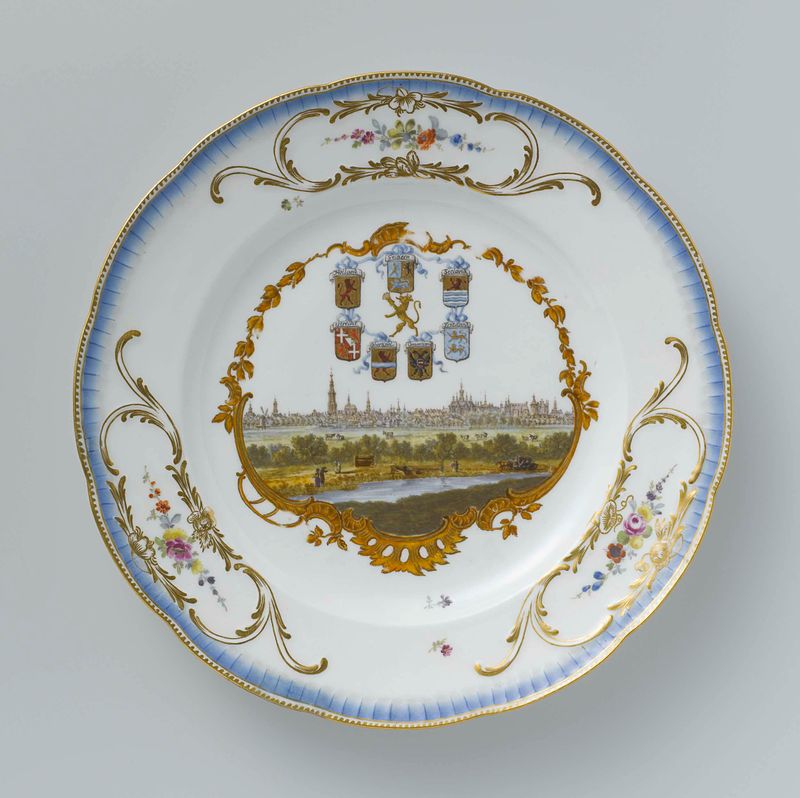
Seven plates from the service of Stadtholder William v
Meissener Porzellan Manufaktur
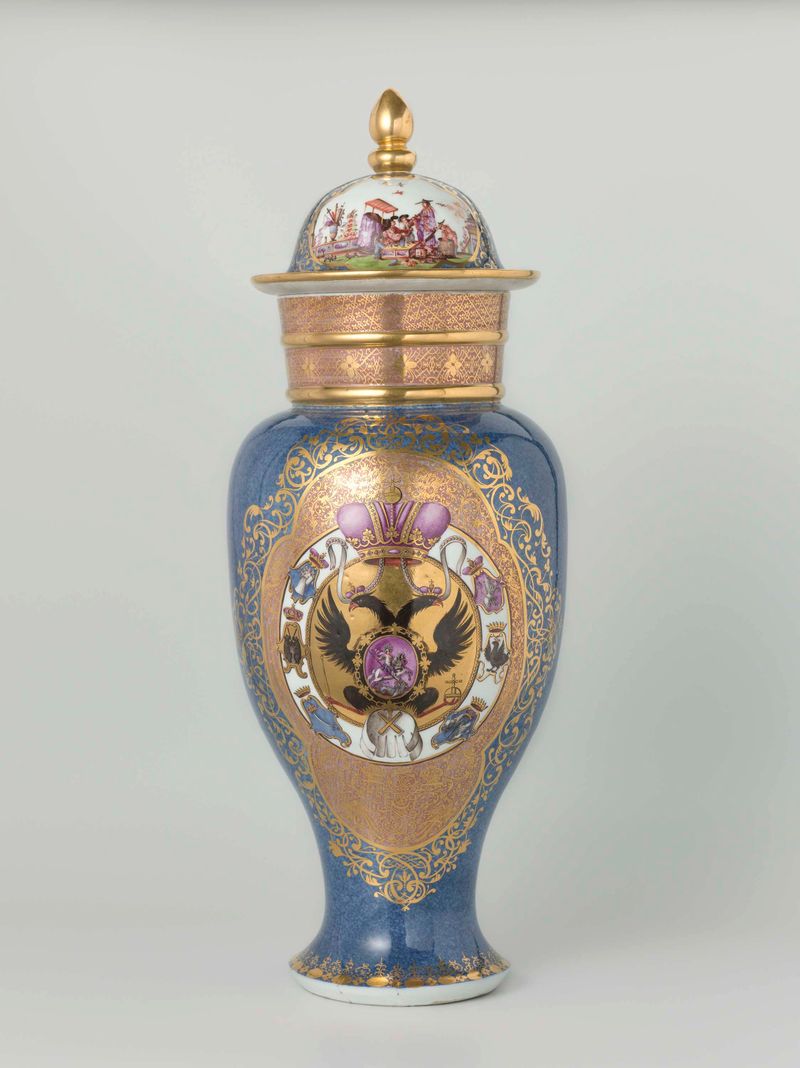
Lidded vase
Meissener Porzellan Manufaktur

Snuffbox with scenes of Saxon castles and a view of Dresden
Meissener Porzellan Manufaktur
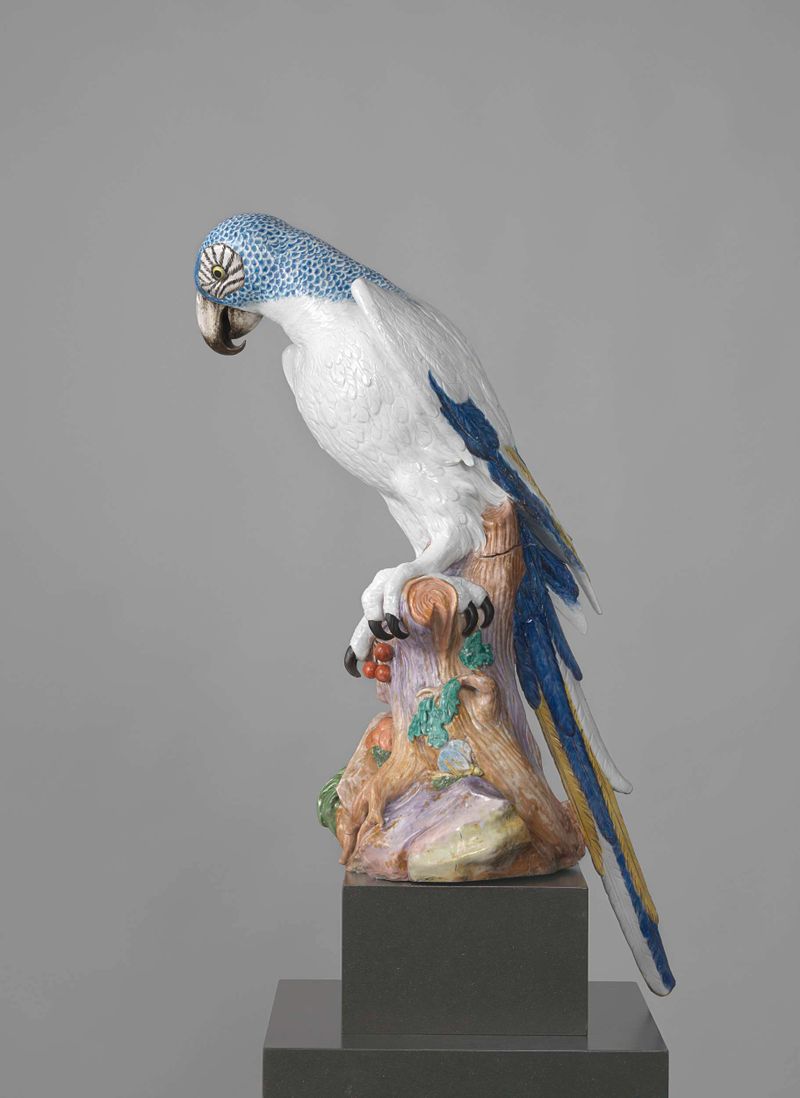
Blue Parrot
Meissener Porzellan Manufaktur
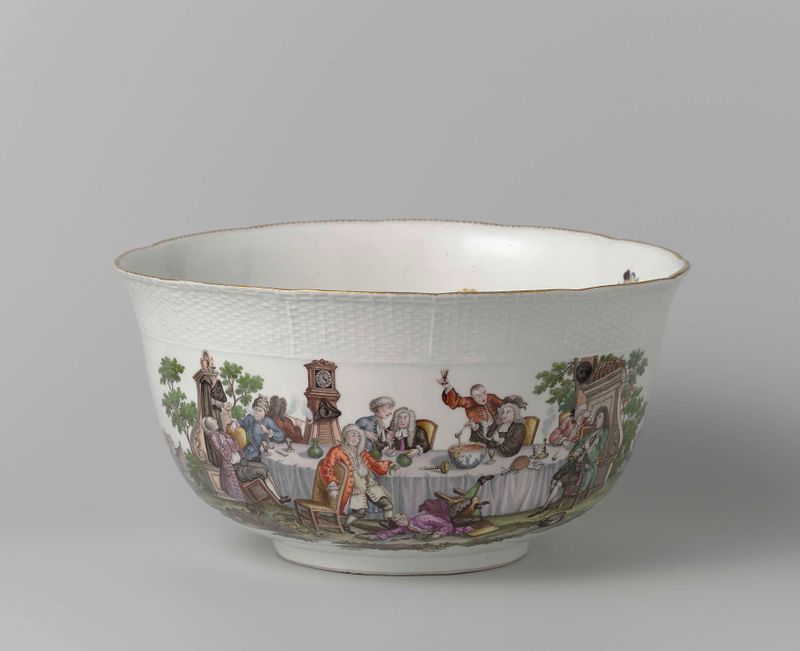
Bowl, with a depiction of ‘A Midnight Modern Conversation’ by William Hogarth (1697-1764)
Meissener Porzellan Manufaktur

Monkey with a snuffbox
Meissener Porzellan Manufaktur