
Koningin Wilhelmina in een rijtuig voor het Rijksmuseum, op weg naar de troonsbestijging te Amsterdam in 1898 — History & Facts
Did the painter know this moment would outlive them? In the heart of a changing world, where the whispers of revolution intertwined with the elegance of tradition, a single brushstroke captured the essence of a pivotal day. Look to the center of the canvas, where the imposing figure of Queen Wilhelmina dominates the scene. Her posture is one of poised authority, yet a flicker of vulnerability dances around her gaze. The rich, deep hues of her royal attire contrast sharply with the muted shades of the carriage and the surrounding figures, emphasizing her significance in this historical narrative.
Notice how the light tenderly embraces her form, creating a halo effect that signifies her ascent to power amidst a backdrop of uncertainty. Yet, the painting’s true depth lies in its contrasts. The carriage symbolizes the weight of tradition, while the anticipation of the viewers suggests a society standing on the brink of change. The gentle tension between the grandeur of monarchy and the stirring murmurs of the people encapsulates a moment pregnant with potential—a struggle not only for the throne but for the very essence of national identity.
The artist's subtle inclusion of onlookers hints at the collective experience of witnessing history being forged. In 1898, Greiner painted this work during a time of significant political transformation in the Netherlands. The nation was on the cusp of modernization, and the young queen's coronation represented both continuity and a new chapter. As art movements shifted towards realism and impressionism, Greiner's portrayal of this royal moment echoed the sentiments of an era grappling with its past while envisioning its future.
More Artworks by Albert Greiner
Browse all →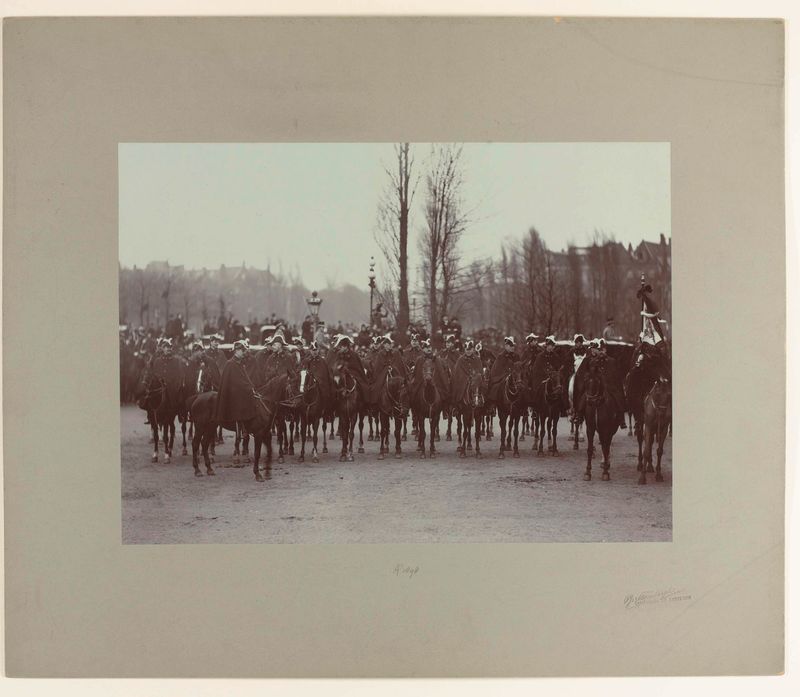
More Historical Art
Browse all →
The Night Watch Militia Company of District II under the Command of Captain Frans Banninck Cocq
Rembrandt van Rijn

Lincoln Memorial
Henry Bacon

The Third of May 1808
Francisco de Goya

Isaac and Rebecca, Known as ‘The Jewish Bride’
Rembrandt van Rijn

The Charge of the Mamelukes (1814)
Francisco de Goya

De vier ruiters van de apocalyps
Albrecht Dürer