Kussenblad met een symbolische voorstelling en het wapen van Voorne — History & Facts
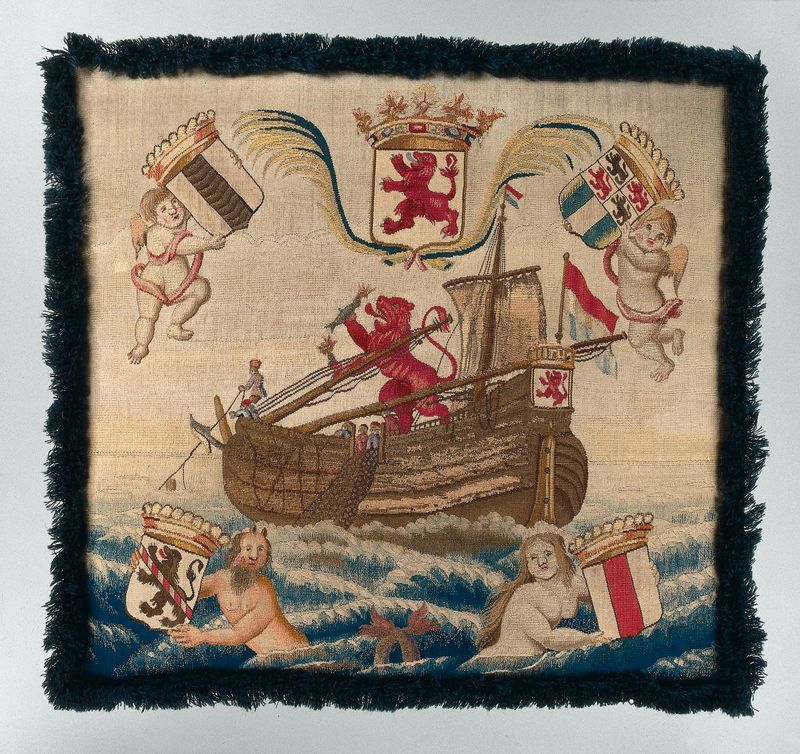
Where does light end, and longing begin? In the delicate interplay of reflection and symbolism, Kussenblad met een symbolische voorstelling en het wapen van Voorne offers a tapestry of meaning that provokes deeper thought. Look to the center of the cushion cover, where vibrant hues converge to form a radiant emblem. Notice how the intricate embroidery creates a sense of depth, drawing the eye to the juxtaposition of bright golds against deep blues. Each stitch captures light, imbuing the textile with a shimmering quality that suggests both precision and warmth.
The meticulous craftsmanship invites viewers to appreciate the artistry that transcends mere decoration. Yet, within the ornate details lie stories of aspirations and identity. The heraldic shield, prominently displayed, speaks to a historical lineage and the pride of a locality. Surrounding it, the floral motifs symbolize the transience of beauty, hinting at the cycle of life and death.
Together, they weave a narrative that reflects the complexity of belonging and the weight of heritage, urging one to ponder the connections between personal and communal histories. Created in 1710, this piece emerged during a period of cultural flourishing in the Netherlands, where decorative arts began to thrive alongside traditional painting. François Coppens was part of a vibrant artistic community that celebrated craftsmanship and innovation. The cushion cover embodies the era's fascination with symbolism and identity, offering a glimpse into the thoughts and aspirations of a society deeply rooted in its past.