La basse cour — History & Facts
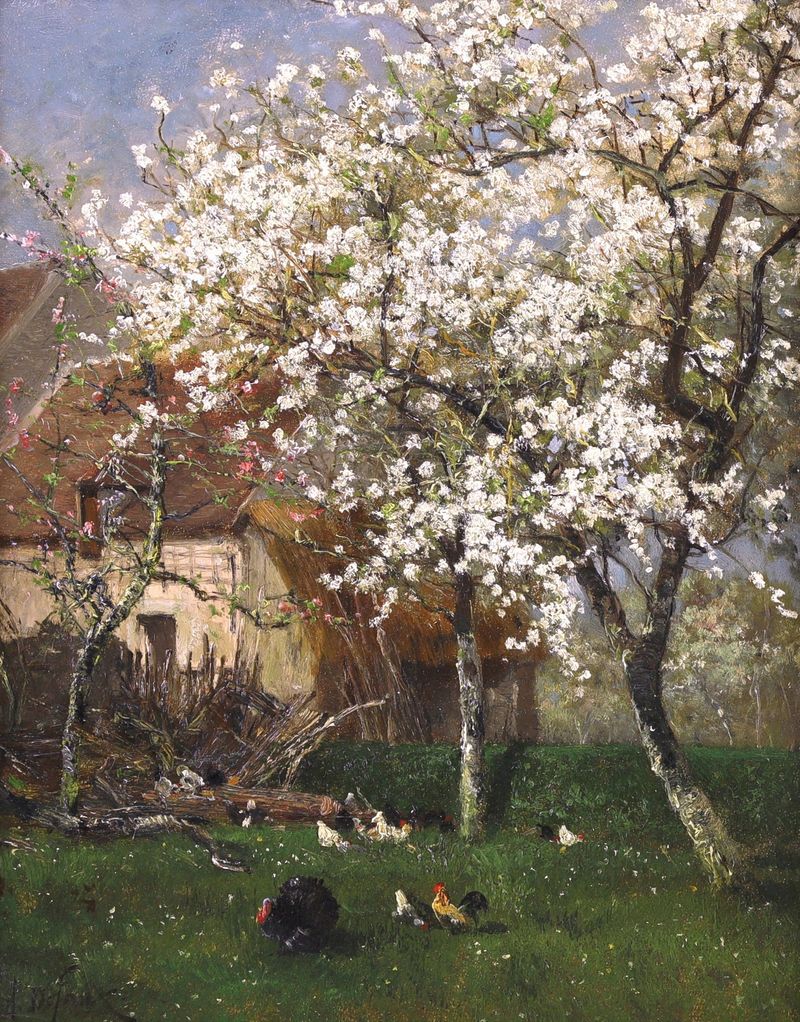
In the stillness of La basse cour, movement lingers just beneath the surface, echoing stories untold and lives entwined. The quiet clamor of the barnyard suggests a dance between nature and domesticity, where each being reveals secrets through their unspoken interactions. Look to the left at the gentle arch of a hen's neck, its feathers catching the soft glow of midday light. The artist’s brushstrokes convey texture, a delicate caress of paint that breathes life into the plump bodies of the fowl.
The warm earth tones invite the viewer's gaze across the scene, leading us into the sturdy wooden enclosure that shapes the setting. The composition is pleasingly balanced, with the interplay of light and shadow creating a rhythm, echoing the pulse of the animals’ movements as they traverse the foreground. With every glance, contrasts emerge—between the vibrant hues of the chickens and the muted backdrop of their surroundings, signifying the beauty found in simplicity. Each creature possesses a distinct personality, revealing not only their individual stories but also a collective narrative of coexistence.
The viewer is compelled to consider the vital role of movement in this pastoral life; it shapes relationships within the tableau and hints at the underlying harmony that defines the environment. Alexandre Defaux painted this work during the late 19th century, a period marked by a shift towards realism in art. Living in France, he was influenced by the burgeoning Impressionist movement, yet chose to focus on the intimate, often overlooked scenes of rural life. This choice reflects both personal experiences and the broader societal shifts of a time when the rural landscape was becoming increasingly intertwined with modernity.