La cascada del Iguazú — History & Facts
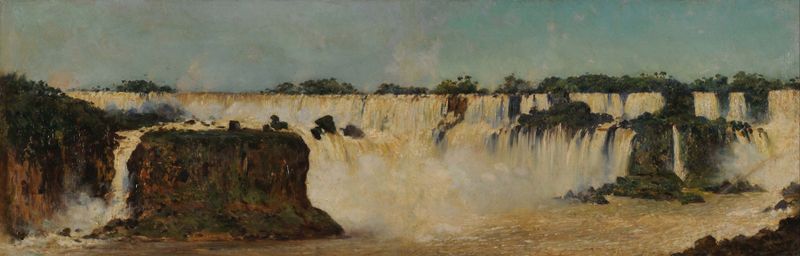
Could a single brushstroke hold eternity? In La cascada del Iguazú, the cascading waters mirror the relentless flow of time, suggesting that destiny dances on the edge of chaos. Look to the left at the tumultuous rush of water, where shades of blue and white collide, creating an almost palpable energy. The artist employs dynamic brushstrokes that capture the wildness of nature, while hints of lush greens frame the scene, inviting the viewer into the vibrant ecosystem surrounding the falls. The composition draws the eye upward, as the towering cliffs rise majestically, contrasting the softness of the water below, reflecting a world that teeters between serenity and turbulence. Within this landscape lies a profound tension between beauty and power.
The sheer force of the water represents nature's unyielding spirit, while the delicate play of light upon its surface hints at fleeting moments of peace amid chaos. The distant mist, rising from the base of the falls, evokes the idea of mystery, as if the waters hold secrets of the journey ahead. Each droplet is a whisper of destiny, reminding us of the fragility and majesty of life itself. In 1892, Augusto Ballerini crafted this masterpiece during a period of personal exploration and artistic transition, likely influenced by the Romantic movement that celebrated nature's grandeur.
As he painted in Argentina, the world of art was undergoing profound changes, embracing Impressionism and a newfound dedication to capturing the emotive essence of landscapes. Ballerini's work stands as a testament to this evolving vision, encapsulating the vibrant soul of Iguazú Falls within his brushstrokes.