
La cour du Dragon — History & Facts
Did the painter know this moment would outlive them? In a world where time flows relentlessly forward, La cour du Dragon lingers, holding a poignant yearning within its frame. Focus on the left, where shadows wrap around the figures huddled in conversation, their postures dense with unvoiced emotions. Notice how the warm hues of ochre and sienna mingle with cooler blues, creating a compelling tension that draws the eye deeper. The intricate brickwork of the courtyard enhances the sense of enclosure, while the delicate play of light and shadow hints at secrets whispered just out of reach.
Each stroke is deliberate, guiding viewers through an intimate space that feels both vibrant and haunted. Look closely at the expressions of the figures—one gazes longingly into the distance, while another clutches a letter, its significance heavy in the air. This duality between hope and despair creates a palpable emotional contrast, evoking the bittersweet nature of human connection. The courtyard, a seemingly mundane setting, transforms into a stage for the complexities of desire and regret, capturing a fleeting moment that echoes through time. Victor Marec painted La cour du Dragon in 1901 while living in Paris, a city brimming with artistic innovation and social change.
This period marked Marec's exploration of intimate settings, reflecting the broader trends in art where emotional authenticity began to overshadow grand historical themes. His work resonates with the tension of an era where traditional forms were being challenged, embodying the yearning for connection in both personal and societal realms.
More Artworks by Victor Marec
Browse all →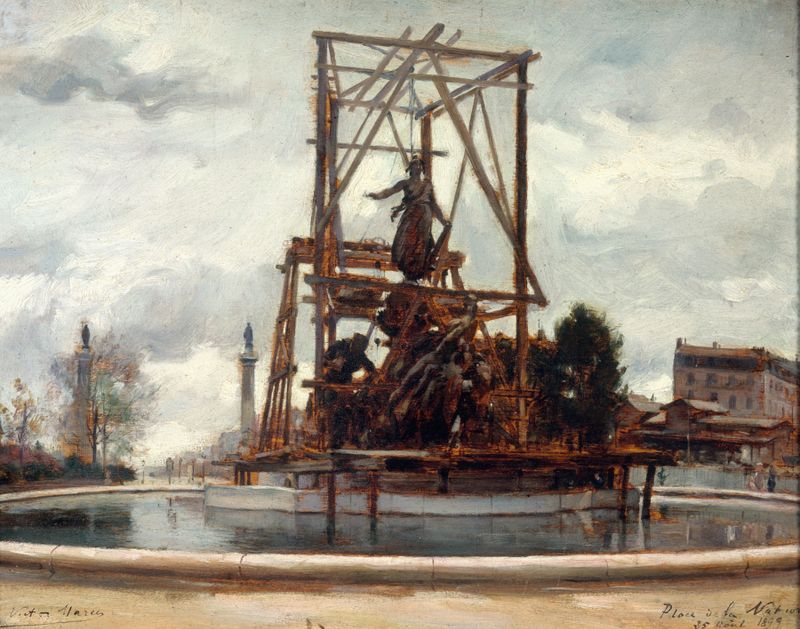
Mise en place du monument du ‘Triomphe de la République’ de Jules Dalou, place de la Nation
Victor Marec

L’embarcadère de l’Ouest, gare de Paris à Saint-Germain
Victor Marec
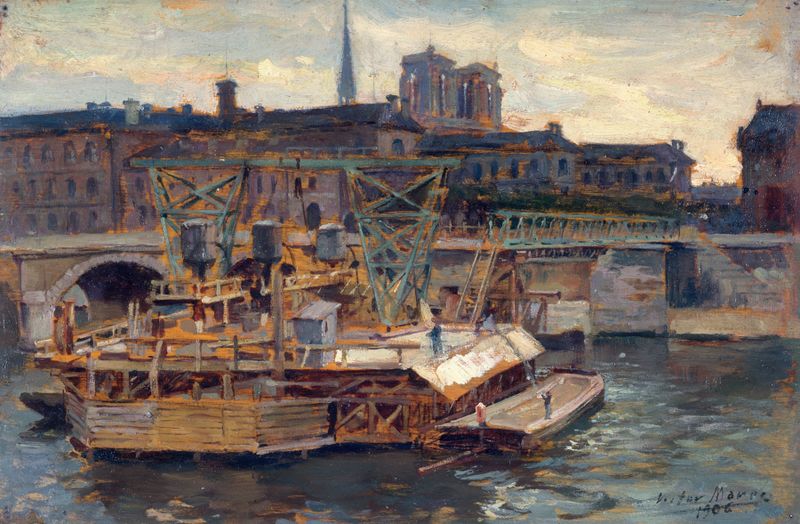
Les travaux du métropolitain au pont Notre-Dame
Victor Marec
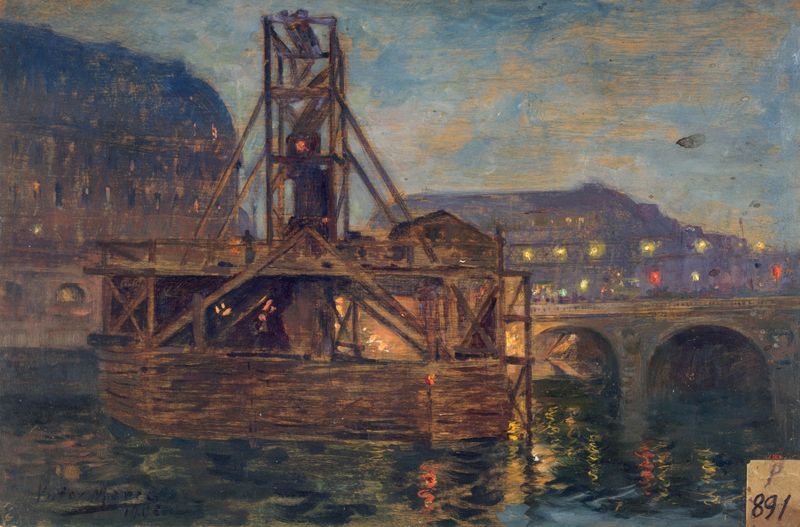
Les travaux du métropolitain au pont Saint-Michel
Victor Marec
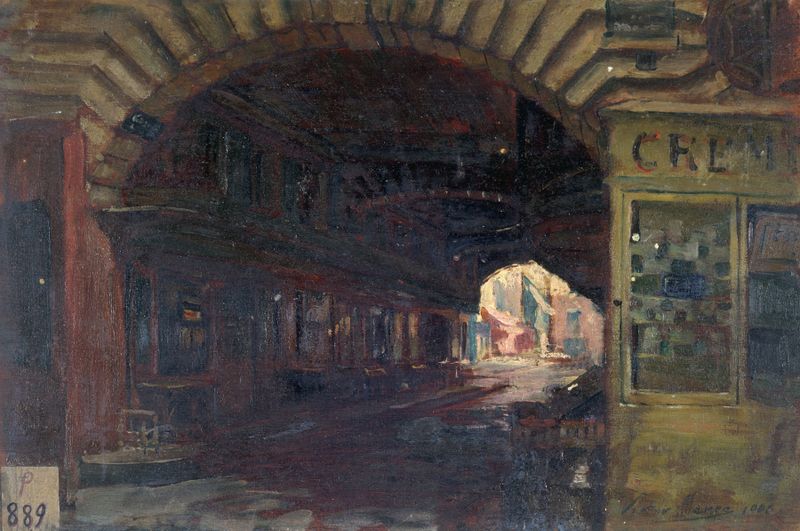
Entrée du cloître Saint-Honoré, rue des Bons-Enfants
Victor Marec
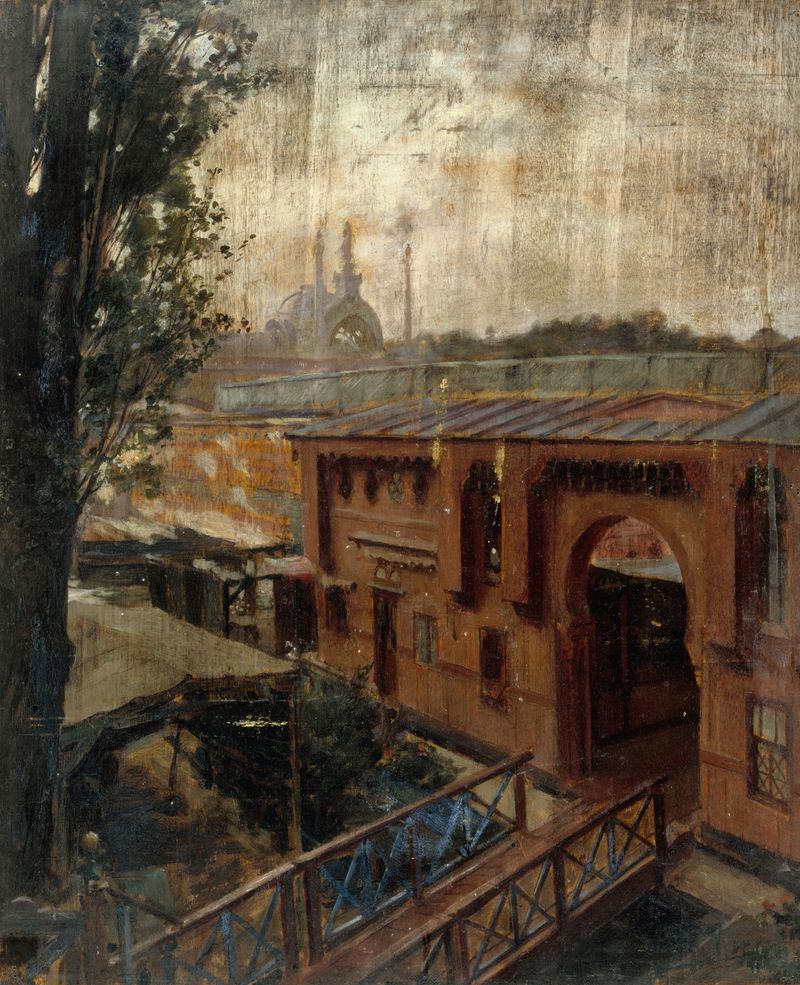
Les bains Deligny, au quai d’Orsay
Victor Marec

La cour de l’auberge du Cheval-Blanc, rue Mazet
Victor Marec
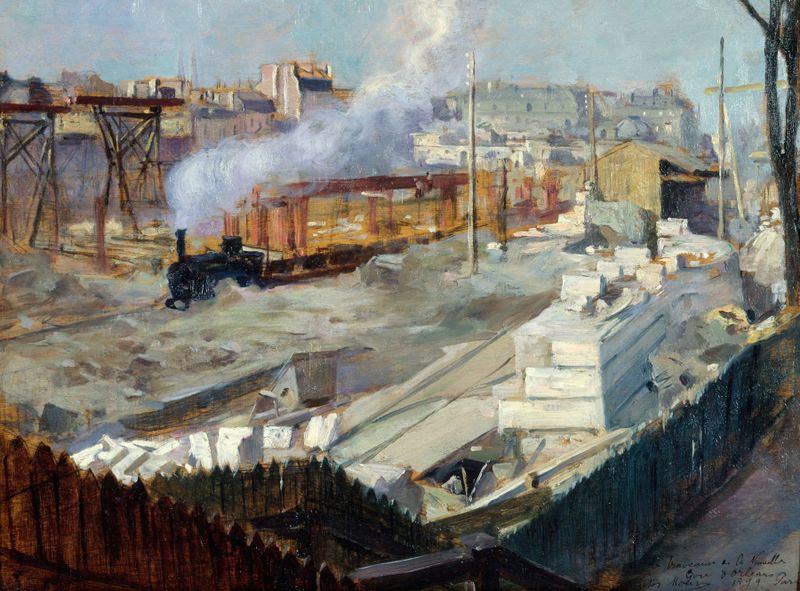
Les travaux de la nouvelle gare d’Orléans
Victor Marec

Le cimetière de Picpus et le champs des Martyrs, où furent enterrées les victimes de la Révolution, guillotinées à la barrière du Trône
Victor Marec

Entrée de l’auberge du Cheval-blanc, rue Mazet
Victor Marec





