La Cour Lacordaire, Au Couvent Des Carmes, Rue De Vaugirard — History & Facts
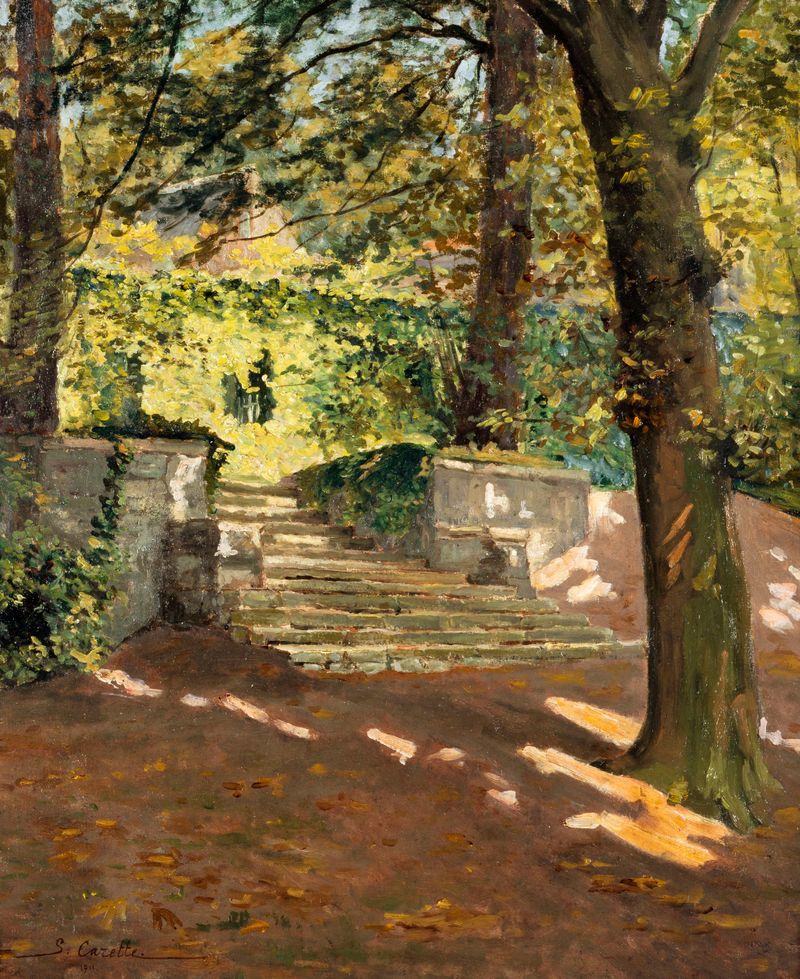
Did the painter know this moment would outlive them? In La Cour Lacordaire, captured by Georges-Émile Carette, time seems suspended, an illusion woven into the fabric of an idyllic courtyard. The viewer is invited into a serene embrace of light and shadow, where the echoes of history resonate softly against the stone walls. Focus your gaze on the soft interplay of sunlight filtering through the trees, dappling the cobblestones with patterns that dance like whispers. The composition draws your attention to the figures seated on the bench, their leisurely posture contrasting with the stillness of the surrounding architecture.
Observe how the muted palette of greens and browns creates a harmonious backdrop, while highlights of white and cream impart an ethereal quality, suggesting a world gently cradled in tranquility. Beneath this calm exterior lies a tension between presence and absence. The figures may seem to belong to the moment, yet their stillness hints at a contemplative solitude; they are both part of the scene and distinctly apart from it. Consider the juxtaposition of nature and manmade structure, as the trees reach skyward, perhaps yearning for something beyond.
This reflective atmosphere evokes a deeper contemplation of time and the fleeting nature of experience. Carette painted La Cour Lacordaire in 1911, during a period marked by a shift toward modernity in the art world. Living in Paris, he was surrounded by the burgeoning movements of Impressionism and Post-Impressionism, drawing on their influences while carving out his unique approach. At this time, the artist was exploring themes of calm and reflection, captured beautifully in this tranquil courtyard scene, a moment that now continues to resonate through the years.