
La Piazzetta, the Ducal Palace, Venice — History & Facts
The first thing that catches the eye in La Piazzetta, the Ducal Palace, Venice by Antonietta Brandeis is the clarity of Venetian light, as if the city itself has been rinsed in morning. The painter leads us into the square, where the pale stone seems to glow, and the shadows fall in long, deliberate stripes. Figures drift through the scene: some strolling, others pausing to feed pigeons, a few gathered at café tables in the shade.
The two columns—one crowned by the winged lion of Saint Mark, the other by Saint Theodore—stand as sentinels at the water’s edge, guiding the gaze across the lagoon to the sunlit façade of San Giorgio Maggiore. Every architectural detail is rendered with precision, yet the mood is gentle, almost weightless, as if the city is pausing between tides. Works like this, painted by a hand as meticulous as Brandeis, belong to a tradition of vedute—city views prized by travelers and collectors since the eighteenth century, when Venice was a magnet for artists and tourists alike. Such paintings were souvenirs and status symbols, capturing the city’s famous vistas for those who longed to carry a piece of Venice home.
The exact date of this work remains unknown, and history has kept few traces of its journey, save for its appearance in the Bonhams collection. Yet the painting’s careful observation and luminous palette speak to a moment when Venice was both a living city and an idea—an image to be admired, remembered, and, above all, looked at again.
Sources: Wikidata Q112625138 · Image source (Wikimedia Commons)
More Artworks by Antonietta Brandeis

Venice, a View of San Giorgio Maggiore
Antonietta Brandeis
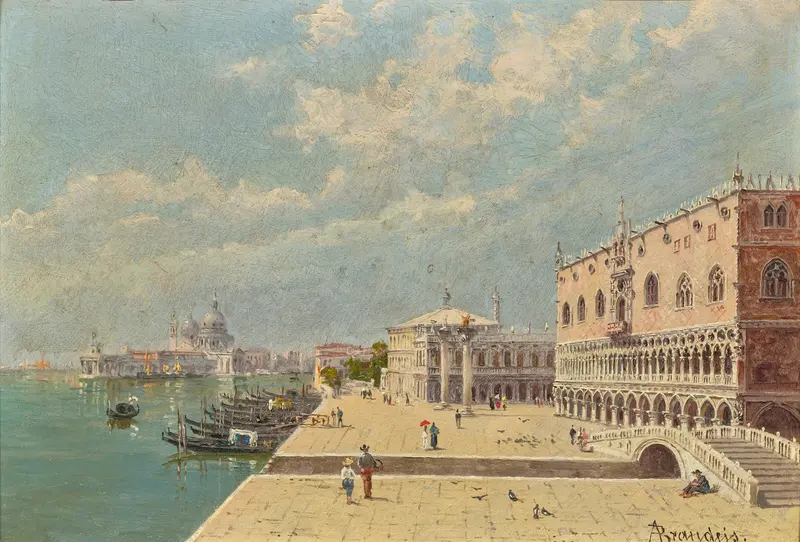
View of Venice; The Palazzo Ducale, The Piazzetta San Marco And The Basilica Santa Maria Della Salute From The Riva Degli Schiavoni
Antonietta Brandeis
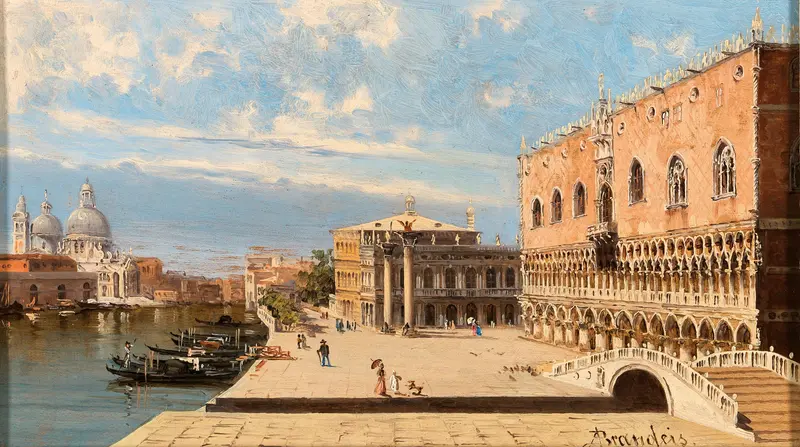
Il Palazzo Ducale Venezia
Antonietta Brandeis

Ca’ Vendramin Calergi from the Grand Canal, Venice
Antonietta Brandeis
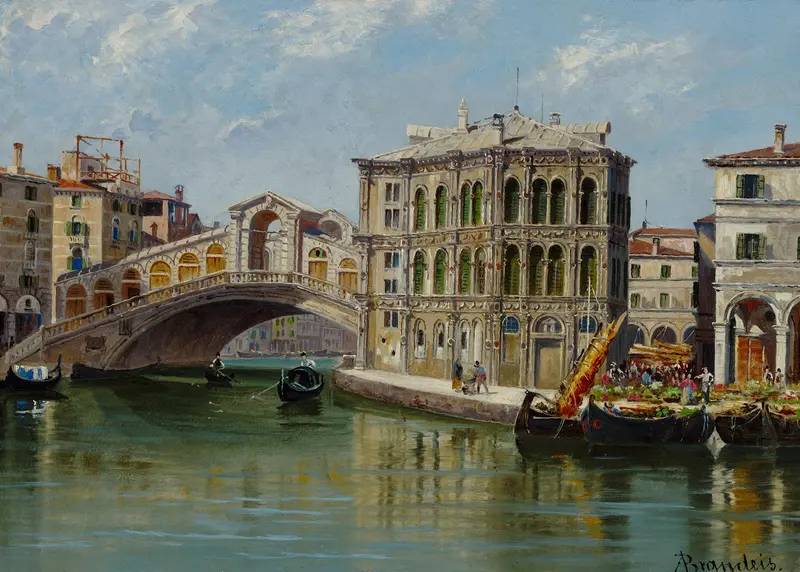
St Mark’s, Venice
Antonietta Brandeis
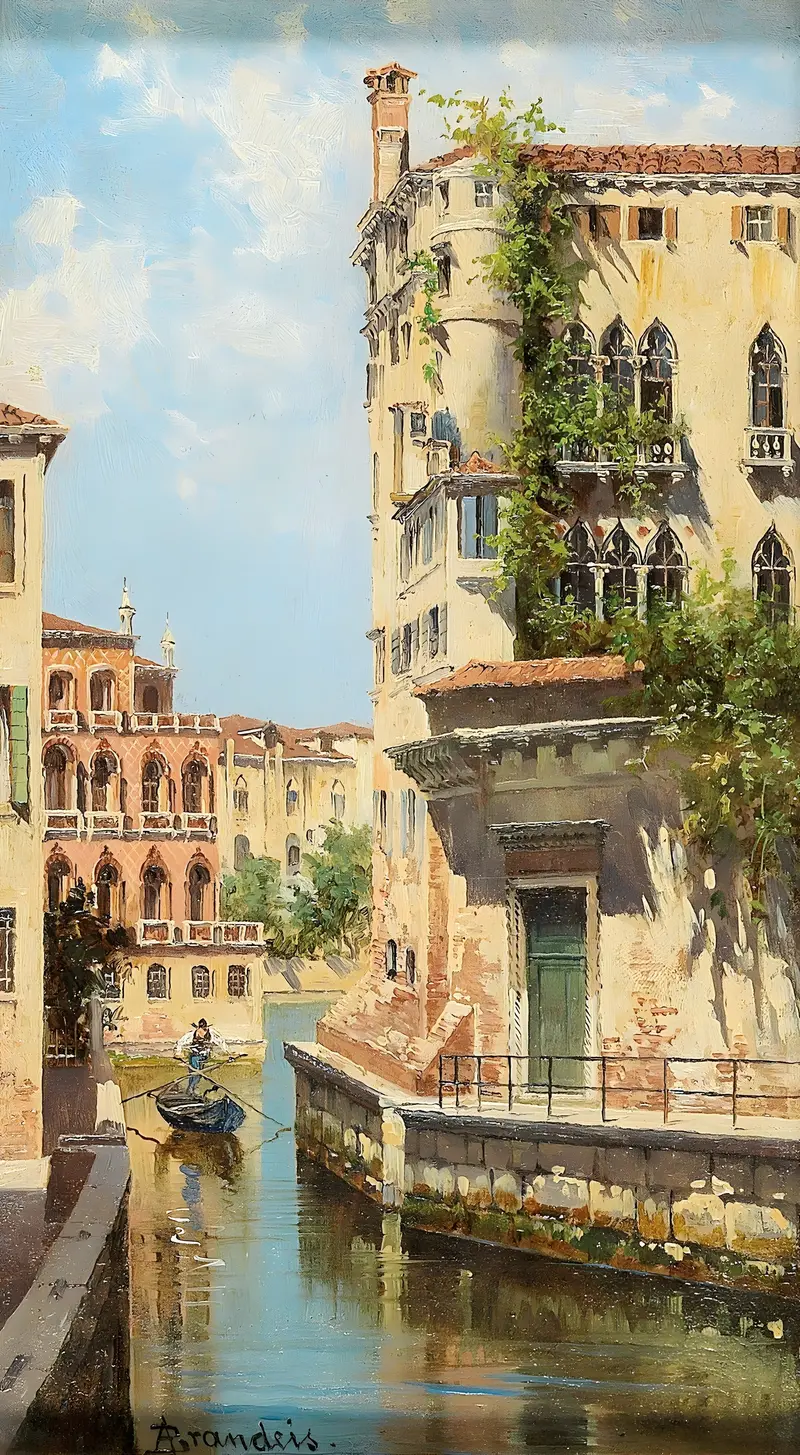
Canal In Venice With View Of The Back Of The Palazzo Rocca
Antonietta Brandeis

The Grand Canal, Venice
Antonietta Brandeis
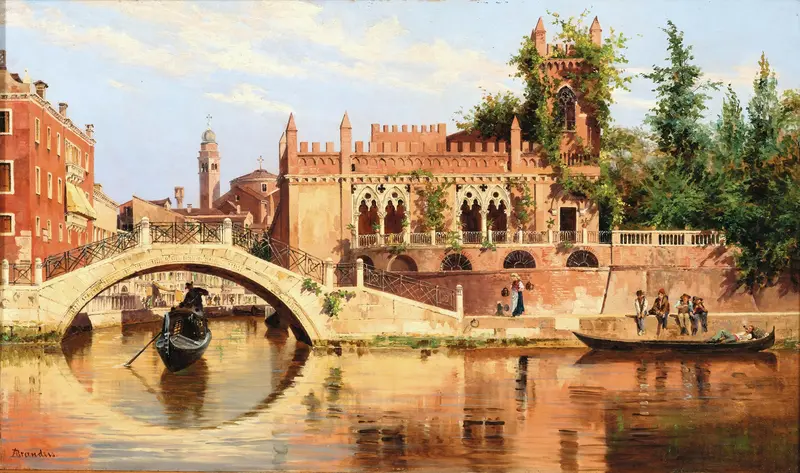
Venice, a View of Ponte de la Calcina on Rio di San Vio
Antonietta Brandeis
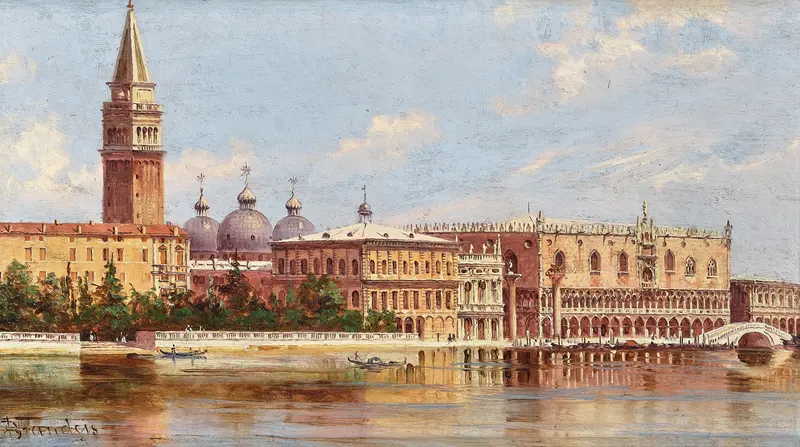
Venice, a View of the Bacino di San Marco
Antonietta Brandeis
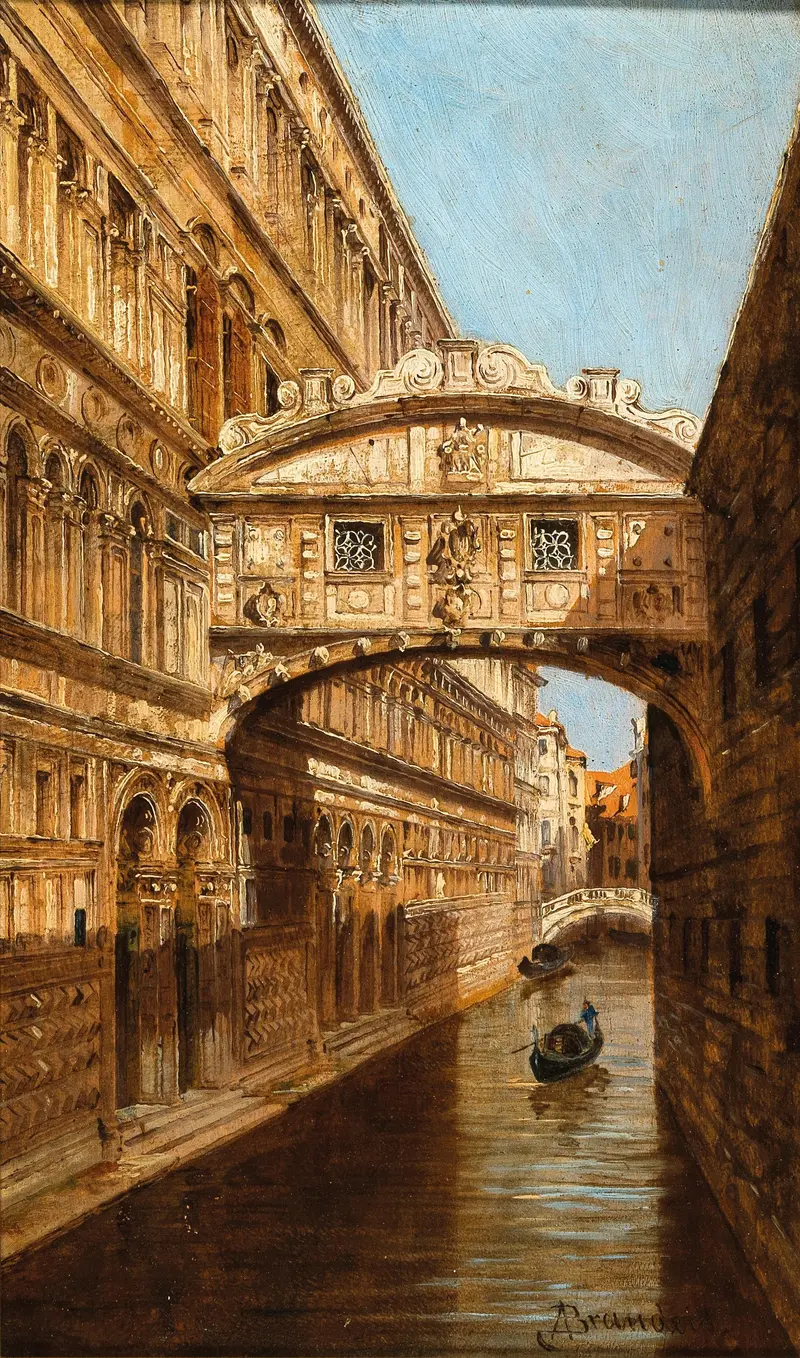
Venice, Le ponte dei Sospiri, Venezia
Antonietta Brandeis





