
La place de la Bastille — History & Facts
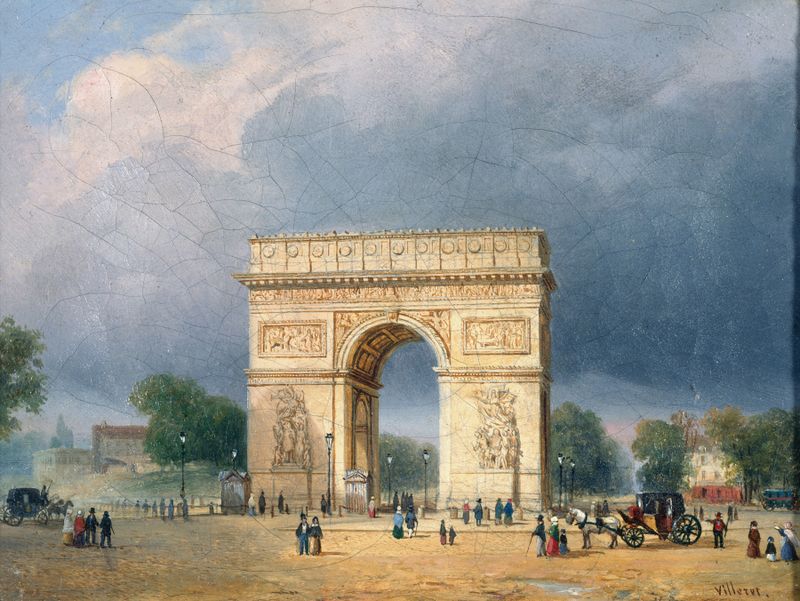
In a realm where reality bends and perception dances, art holds a mirror to our inner truths, revealing layers of illusion beneath the surface. Look to the expansive sky at the top of the canvas, where the warm hues of dawn bleed into soft blues, creating a tapestry that seems alive with the promise of a new day. Notice how the spire of the July Column stands tall in the center, commanding attention, its golden statue capturing the first light. The bustling crowd below, painted with energetic strokes, reflects both movement and pause, a symphony of figures that vibrates with the pulse of the city.
The use of color here evokes both warmth and tension, suggesting a pivotal moment teetering between celebration and uncertainty. Delve deeper into the myriad figures populating the square, each one a story unto itself yet collectively forming a narrative of hope and revolution. The contrast between the jubilant expressions and the shadows cast across their faces hints at an underlying tension, a struggle for freedom that transcends the moment. The smoke rising in the background whispers of past conflicts, while the joyous gestures of the crowd speak to an illusion of peace that remains fragile, ephemeral. François Etienne Villeret created this piece in 1840, during a time of political upheaval in France following the July Revolution.
As artists sought to capture the shifting tides of society, Villeret was influenced by Romanticism, focusing on emotional resonance and the dynamic interplay between people and their environment. This painting not only encapsulates a historical moment but also reflects the artist’s commitment to portraying the vibrant life of Paris in a period marked by both promise and peril.
More Artworks by François Etienne Villeret
Browse all →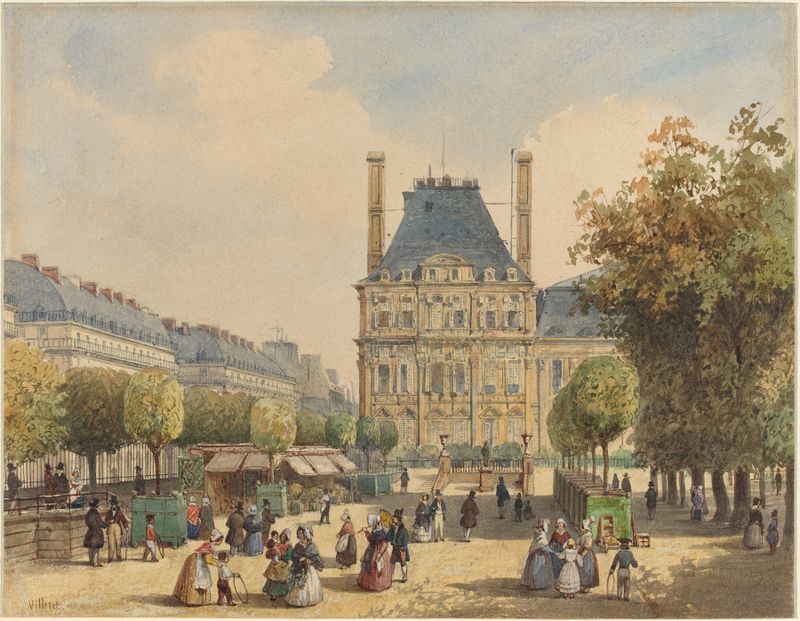
More Architecture Art
Browse all →
The statue of Liberty
Frédéric Auguste Bartholdi

View of Houses in Delft, Known as ‘The Little Street’
Johannes Vermeer

View of Houses in Delft, Known as ‘The Little Street’
Johannes Vermeer

The Cathedral in Rouen. The portal, Grey Weather
Claude Monet

The yellow house
Vincent van Gogh

The Church in Auvers-sur-Oise, View from the Chevet
Vincent van Gogh