
L’Arc de Triomphe de l’Étoile — History & Facts
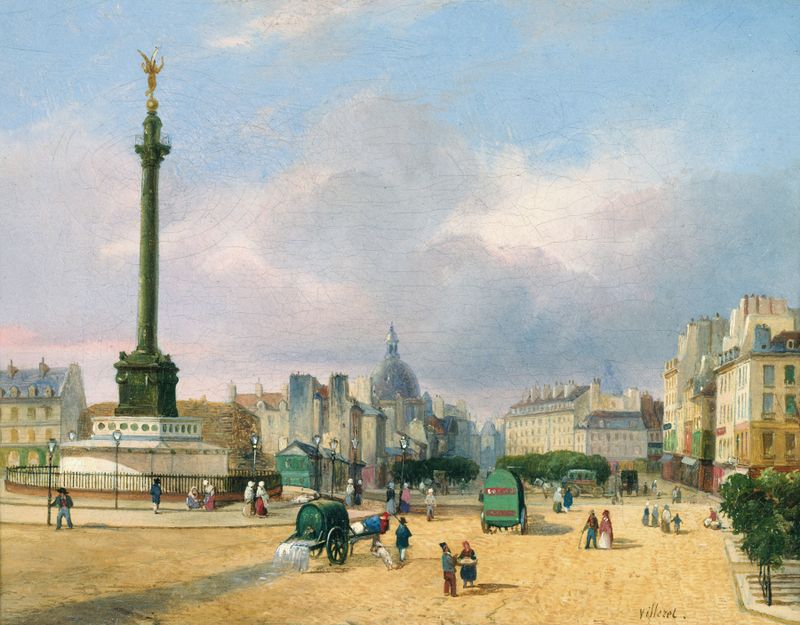
Is this a mirror — or a memory? In L’Arc de Triomphe de l’Étoile, the vibrant arch stands defiantly, embodying not just a monument but the essence of a city’s heartbeat, pulling us into its depths. Focus on the majestic archway at the center, commanding attention with its intricate carvings and grand proportions. Notice how the light dances across its surfaces, illuminating the detailed reliefs that narrate France’s storied past. The rich palette of earthy tones contrasts with the soft blues of the sky, anchoring the scene in both time and place, while the composition draws the viewer’s eye upward, evoking a sense of aspiration. Yet beyond its architectural grandeur lies an obsession with legacy.
The bustling streets encircling the monument are teeming with figures—each a thread in the fabric of history, yet small against the colossal arch. This juxtaposition highlights a tension between the permanence of human achievement and the fleeting nature of existence. The arch stands as both guardian and observer, a silent witness to the stories unfolding around it. In 1840, François Etienne Villeret captured this iconic structure amidst a burgeoning wave of nationalism and romanticism in France.
Having established himself in Paris, he painted during a time when the country was undergoing significant social and political transformations. The period saw artists grappling with the interplay of memory, identity, and the collective experience, a theme poignantly encapsulated in this masterful work.
More Artworks by François Etienne Villeret
Browse all →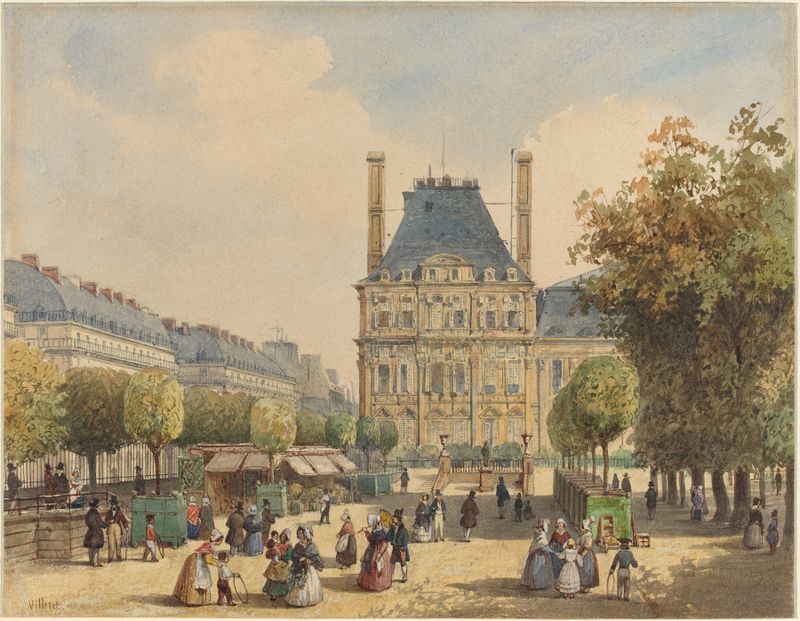
More Architecture Art
Browse all →
The statue of Liberty
Frédéric Auguste Bartholdi

View of Houses in Delft, Known as ‘The Little Street’
Johannes Vermeer

View of Houses in Delft, Known as ‘The Little Street’
Johannes Vermeer

The Cathedral in Rouen. The portal, Grey Weather
Claude Monet

The yellow house
Vincent van Gogh

The Church in Auvers-sur-Oise, View from the Chevet
Vincent van Gogh