
La place de la Bastille et le Canal — History & Facts
Can beauty exist without sorrow? In La place de la Bastille et le Canal, the notion of awakening is vividly explored, inviting the viewer to ponder the delicate balance between joy and grief in the ever-shifting tapestry of life. Look to the foreground where vibrant hues of green and blue dance across the canvas, capturing the essence of a bustling day in Paris. The delicate interplay of light and shadow reveals the gentle ripples of the canal, reflecting the surrounding architecture as if whispering secrets of the past. Notice the soft strokes that form the trees and the human figures, each one seemingly lost in their own world, yet collectively creating a scene teeming with life and energy. The contrasting elements of movement and stillness in this piece evoke a sense of longing, as the figures appear both engaged and introspective.
The bright colors evoke a sense of vitality, while the absence of a clear focal point creates a disquieting tension, suggesting that even in moments of beauty, an underlying sadness lurks. The vibrant blooms of spring, representing renewal, sit amid the more muted tones of the buildings, hinting at a complex relationship between urban life and nature. Frank Myers Boggs painted this piece during a time of exploration and innovation in the late 19th century, when Impressionism was reshaping artistic conventions. Living in Paris, the epicenter of artistic revolution, he was influenced by the vibrant atmosphere and the changing landscape of the city.
This period marked an awakening, both personally and within the broader context of art, as artists sought to capture fleeting moments with emotional depth and authenticity.
More Artworks by Frank Myers Boggs
Browse all →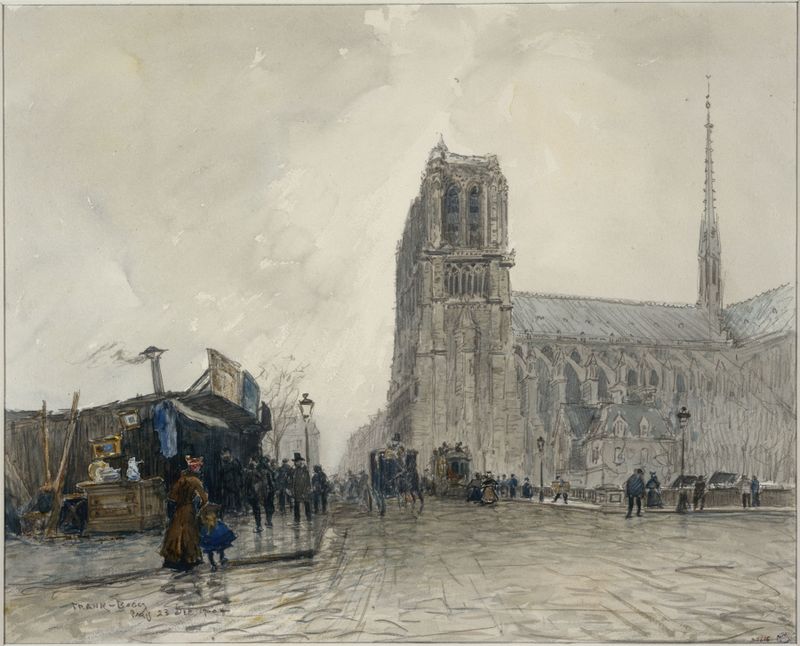
Notre-Dame vue du Pont au Double
Frank Myers Boggs
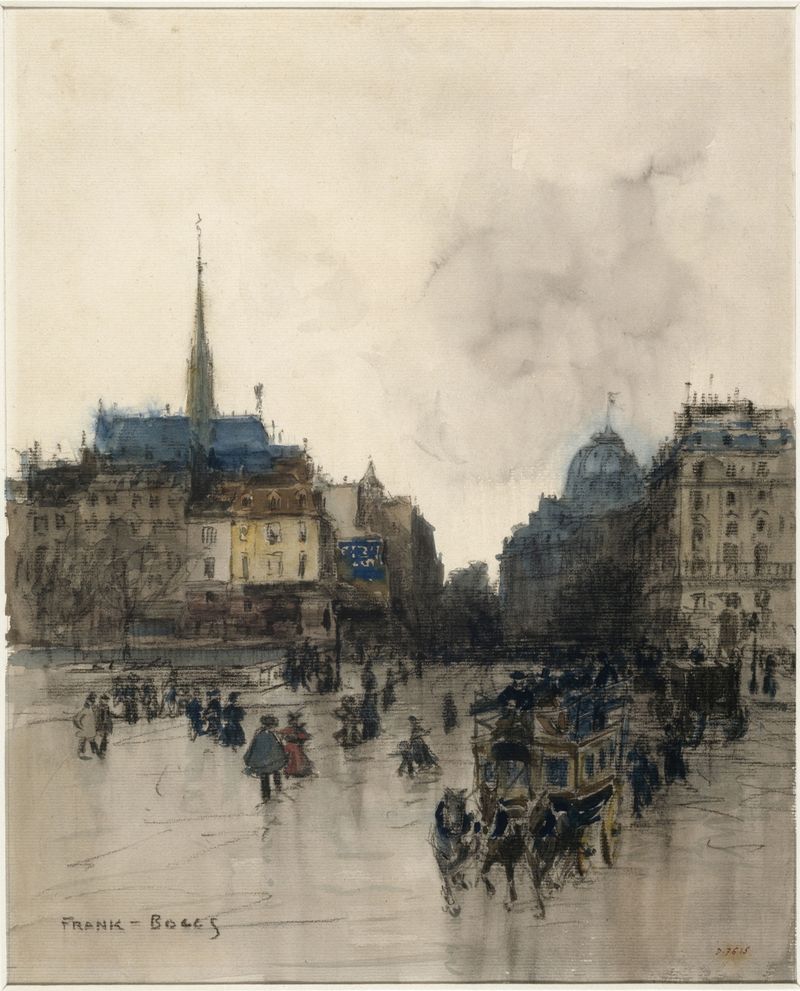
Le pont Saint-Michel
Frank Myers Boggs
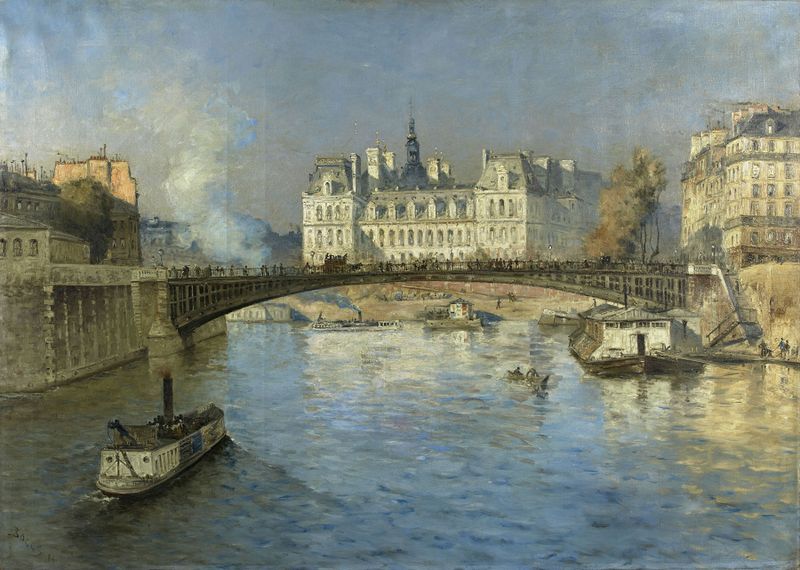
Paris, la Seine et l’Hôtel de Ville
Frank Myers Boggs
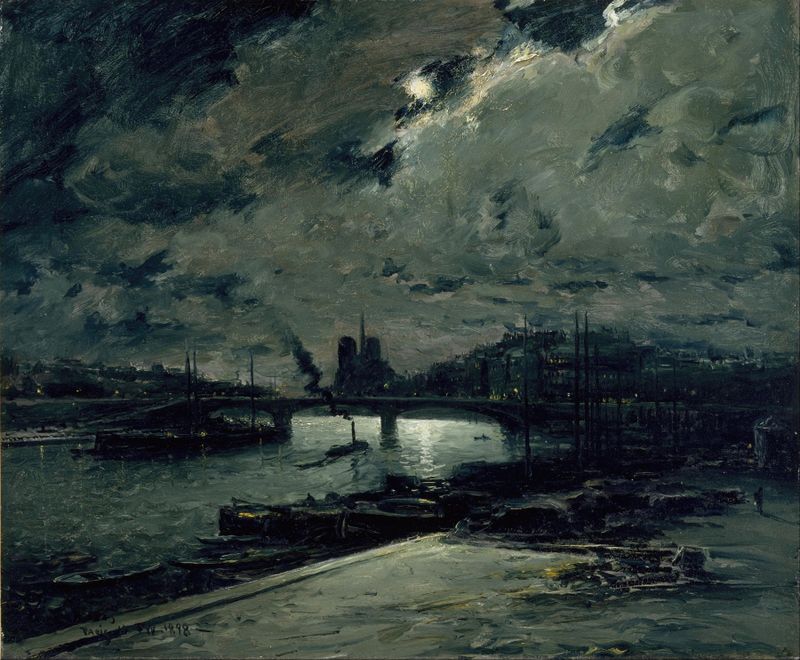
Quai de la Seine, Paris, au Clair de Lune
Frank Myers Boggs
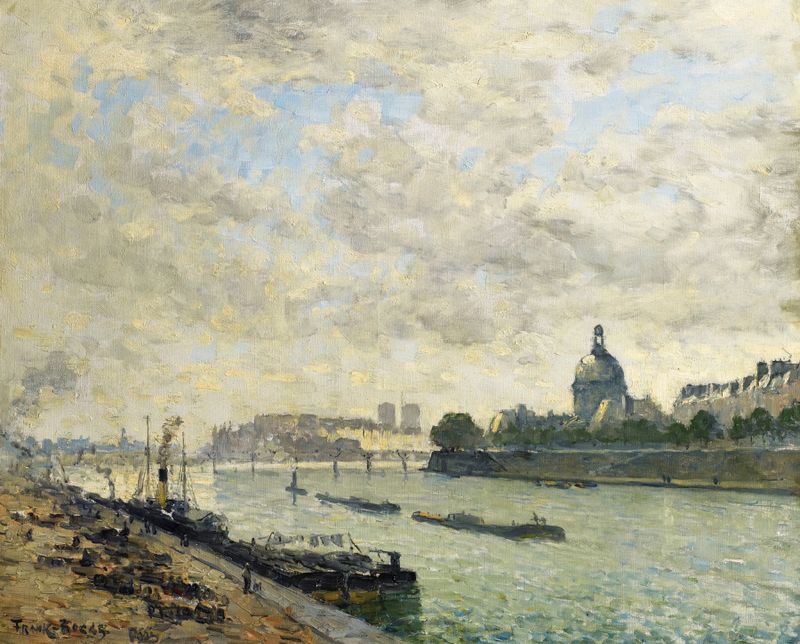
Les quais de Seine à Paris
Frank Myers Boggs
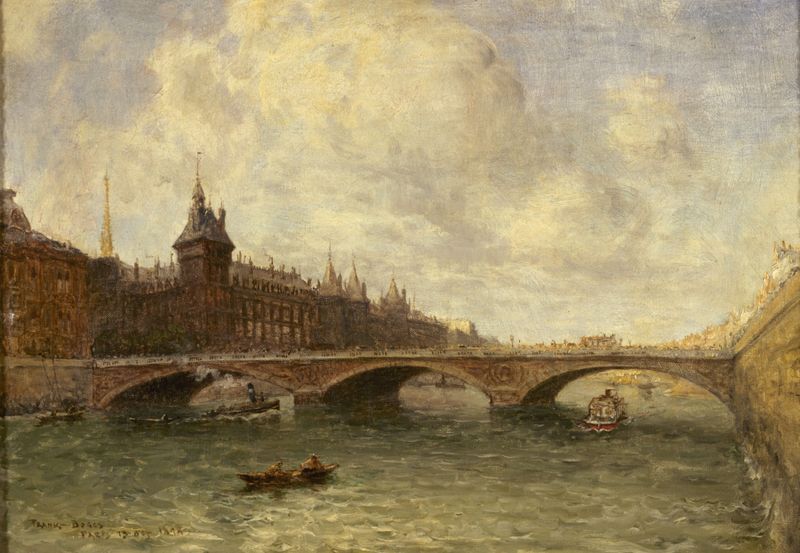
Le pont au change et le quai de l’horloge
Frank Myers Boggs
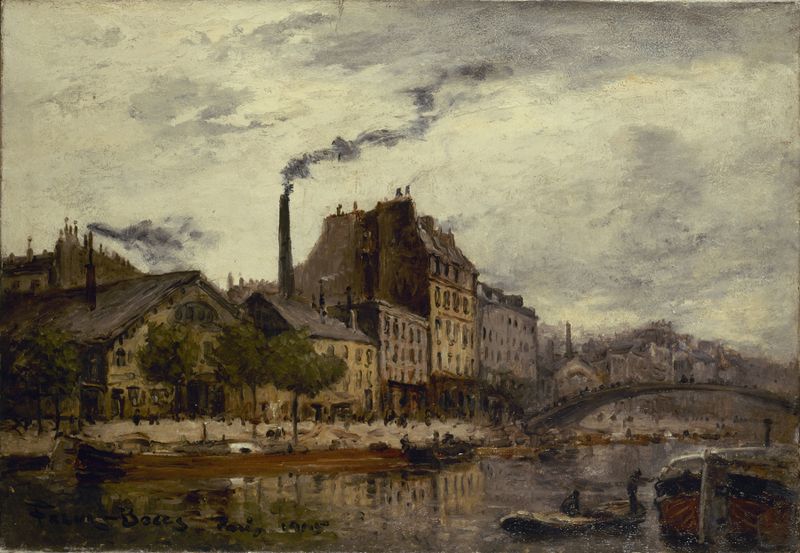
La démolition de l’ancien pont de la Tournelle
Frank Myers Boggs
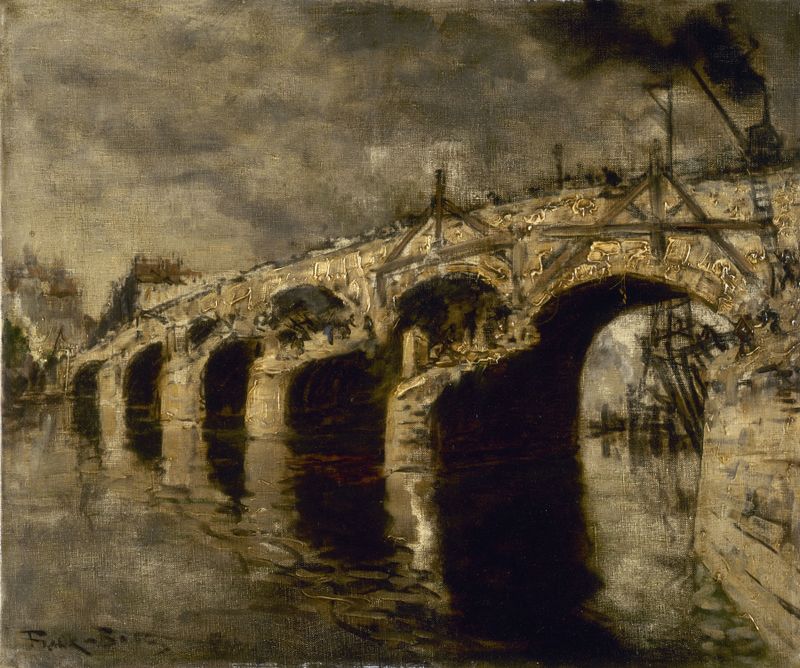
La démolition de l’ancien pont de la Tournelle
Frank Myers Boggs

La tour Saint-Jacques
Frank Myers Boggs
Le Moulin de la Galette
Frank Myers Boggs





