
La place de la Concorde, vue de la terrasse du bord de l’eau ; le roi Louis-Philippe traverse la place en voiture — History & Facts
Where does light end, and longing begin? In the delicate interplay of shadow and illumination, we discover the pulse of history captured within a single moment. Look to the center of the canvas, where a carriage glides across the cobblestone square, its silhouette elegantly framed against the sprawling architecture of the Concorde. The artist's brushwork captures a soft glow, as golden light bathes the figures, casting elongated shadows that stretch across the ground. Notice how the sky transitions from deep cerulean to a fading blush, enveloping the scene in an ethereal warmth, inviting viewers to step into this vibrant tableau of daily life. Yet, beneath this serene exterior lies a tension of contrasts—the grandeur of the royal presence against the ordinary bustle of Parisian life.
The horse-drawn carriage, emblematic of power, juxtaposes the seemingly unremarkable figures in the foreground, who are engaged in their own stories of longing and aspiration. Each detail—the flutter of a scarf, the tilt of a hat—whispers of aspirations unmet and hopes dashed, while the distant architecture stands as a silent witness to the passage of time. In 1846, while capturing this significant moment, the artist found himself in a politically charged Paris, where the reign of Louis-Philippe was drawing to a close amid turmoil and change. Geslin's work reflects the transition of an era, contrasting the weight of monarchy against the vibrant pulse of the city.
This painting not only immortalizes a moment in time but also serves as a lens through which we perceive the fragile threads of human experience interwoven with the fabric of history.
More Artworks by Jean-Charles Geslin
Browse all →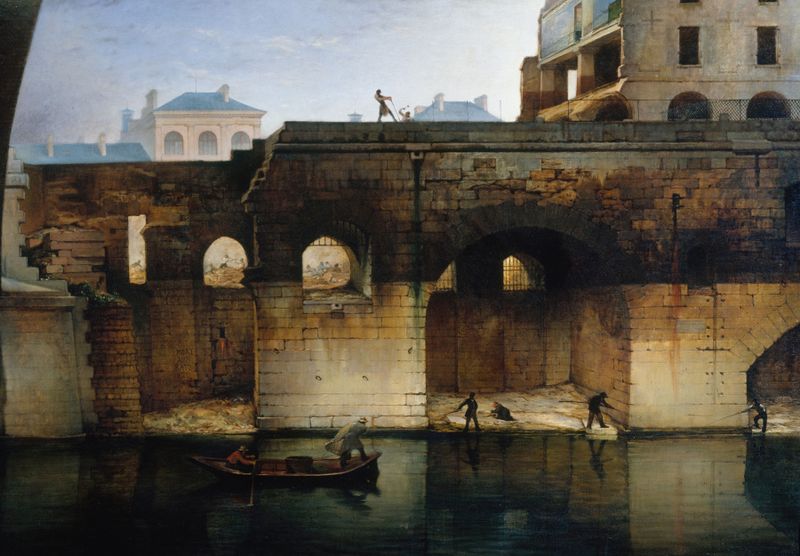
More Historical Art
Browse all →
The Night Watch Militia Company of District II under the Command of Captain Frans Banninck Cocq
Rembrandt van Rijn

Lincoln Memorial
Henry Bacon

The Third of May 1808
Francisco de Goya

Isaac and Rebecca, Known as ‘The Jewish Bride’
Rembrandt van Rijn

The Charge of the Mamelukes (1814)
Francisco de Goya

De vier ruiters van de apocalyps
Albrecht Dürer