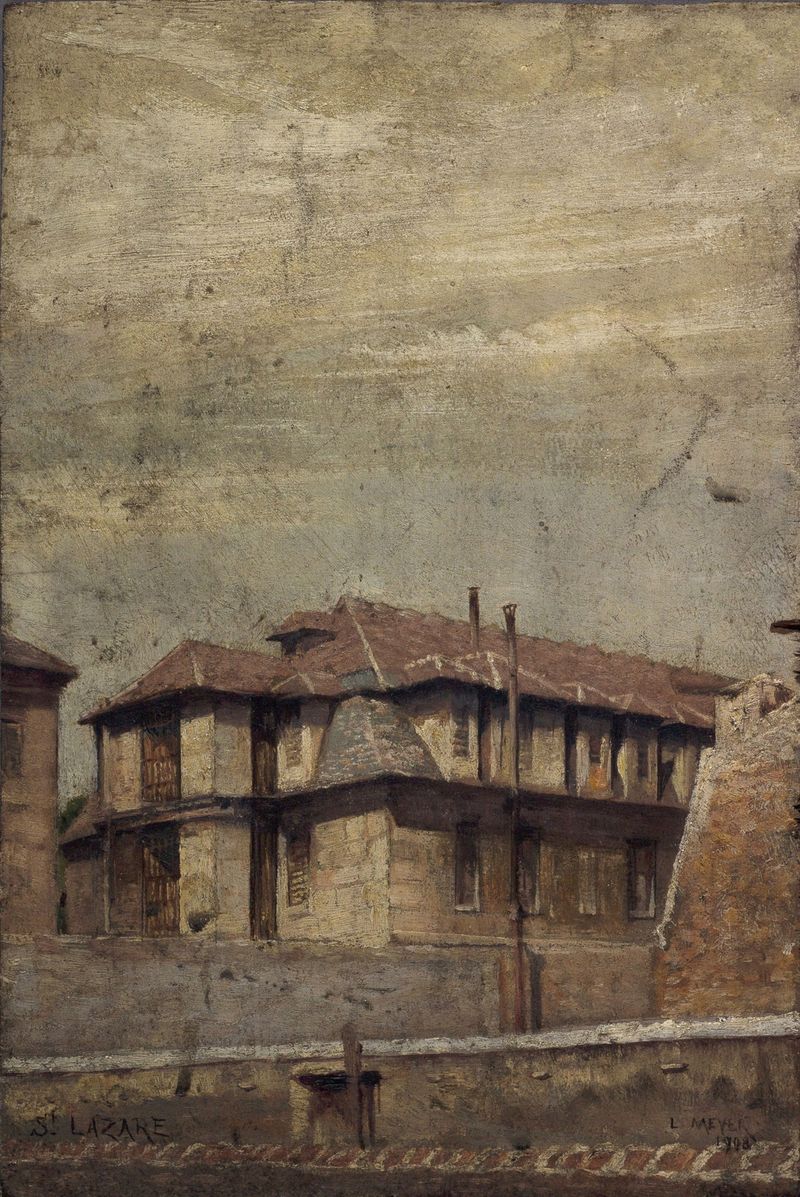
La Prison Saint-Lazare. — History & Facts
In La Prison Saint-Lazare, we confront the shadows of confinement, the weight of memory, and the flickering hope of transcendence. Begin by focusing on the center of the canvas, where somber figures huddle together, their expressions etched with resignation yet tinged with an undercurrent of yearning. Notice how the muted palette of grays and browns envelops them, representing their bleak reality. The light, seeping through barred windows, casts delicate patterns on the floor, leading the eye towards the illuminated faces, revealing the human spirit in both despair and resilience. As you explore the composition, consider the stark contrasts at play: the harshness of their surroundings versus the softness of the light illuminating their faces.
Each figure tells a story; their hands, clasped or reaching out, speak of connection and isolation simultaneously. The juxtaposition of light and shadow serves to intensify the emotional gravity, while the subtle brushwork captures fleeting moments of vulnerability and strength, inviting us to ponder the invisible chains that bind the soul. Created in 1908, this work emerged during a period of personal and artistic struggle for the artist. At that time, he was delving deep into themes of human suffering and resilience, reflecting the societal issues of a rapidly industrializing world.
La Prison Saint-Lazare stands as a poignant testament to this exploration, urging viewers to confront the echoes of history while seeking the light of hope within the darkest of places.