La Prison Saint-Lazare — History & Facts
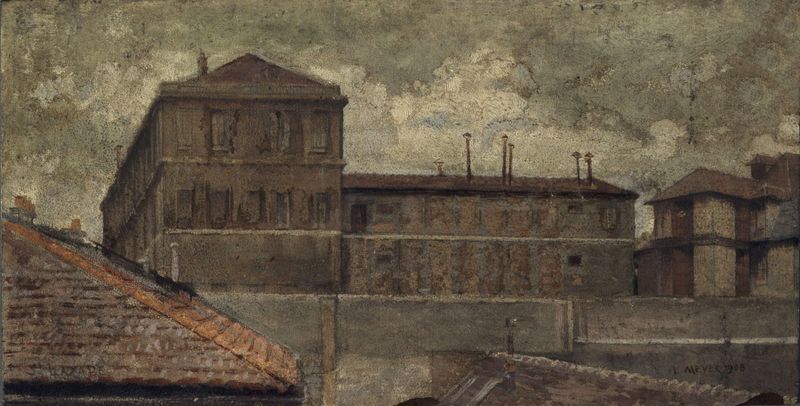
Could a single brushstroke hold eternity? In La Prison Saint-Lazare, decay becomes a poignant witness to the passage of time, as the haunting remnants of confinement linger in the layers of paint. Look closely at the center, where the pale, crumbling walls of the prison rise from the canvas, stark and oppressive. The muted palette of grays and browns evokes a sense of desolation, while soft strokes of light struggle to penetrate the dim atmosphere, casting long shadows across the floor. Notice how the brushwork captures both the texture of the walls and the weight of solitude, inviting you to feel the oppressive silence that echoes within this forgotten space. The cracks in the plaster tell stories of despair, whispering of lives marked by confinement and the slow, inevitable erosion of hope.
Contrasting with the decay are subtle hints of life in the form of delicate, almost imperceptible blooms of color; they suggest resilience amidst despair. This interplay between decay and vitality speaks to the human spirit’s capacity to endure, to find fragments of beauty in the bleakest of surroundings. Lazar Meyer painted this piece in 1908, during a time when the art world was grappling with the transition from Impressionism to more abstract movements. Living in France, he was influenced by the burgeoning modernist spirit yet chose to reflect on the weighty themes of decay and confinement, foreshadowing the existential struggles that would come to define the 20th century.
In a society increasingly aware of its own fragility, this work serves as a powerful commentary on the human condition.