
La rue Beethoven, à Passy — History & Facts
What if silence could speak through light? In the gentle glow of twilight, a forgotten street invites us to linger in its embrace, a moment suspended in time. Look to the left at the soft hues of the fading sky, where warm pinks and deep blues blend seamlessly. The delicate interplay of light and shadow creates a serene atmosphere, while the cobblestone path beckons the viewer into the scene. Notice how the trees arch gracefully overhead, their leaves whispering stories of the past, framing the view with a nostalgic embrace.
The subtle brushstrokes evoke a sense of tranquility, pulling us into this intimate corner of a bygone era. As you absorb the details, you may find the contrast between the permanence of the architecture and the ephemeral nature of the fading light. Each structure stands proud, reminiscent of a world that once thrived, yet the overall composition speaks of transience, as dusk cloaks the neighborhood in a gentle veil of memories. The juxtaposition of warmth and coolness encapsulates the bittersweet nature of nostalgia, inviting contemplation of what has come and gone. Created in 1884, this work emerged when the artist was residing in Paris, a city alive with artistic experimentation and impressionism's growing influence.
Boggs focused on capturing light and mood, reflecting societal shifts toward modernity and the quiet beauty that persisted amidst change. It was a time when artists were exploring the nuances of everyday life, infusing their works with personal memory and emotion, setting the stage for future generations to appreciate the poignancy of place.
More Artworks by Frank Myers Boggs
Browse all →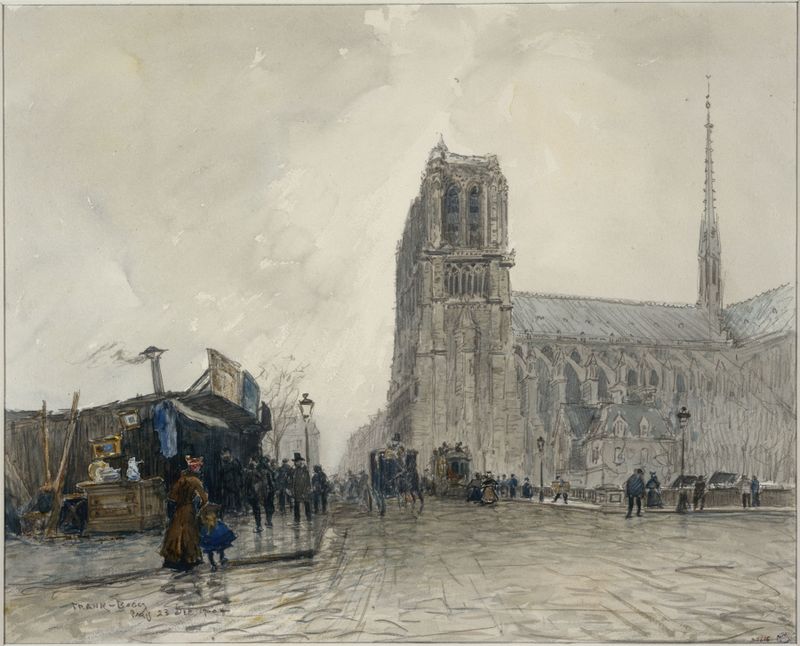
Notre-Dame vue du Pont au Double
Frank Myers Boggs
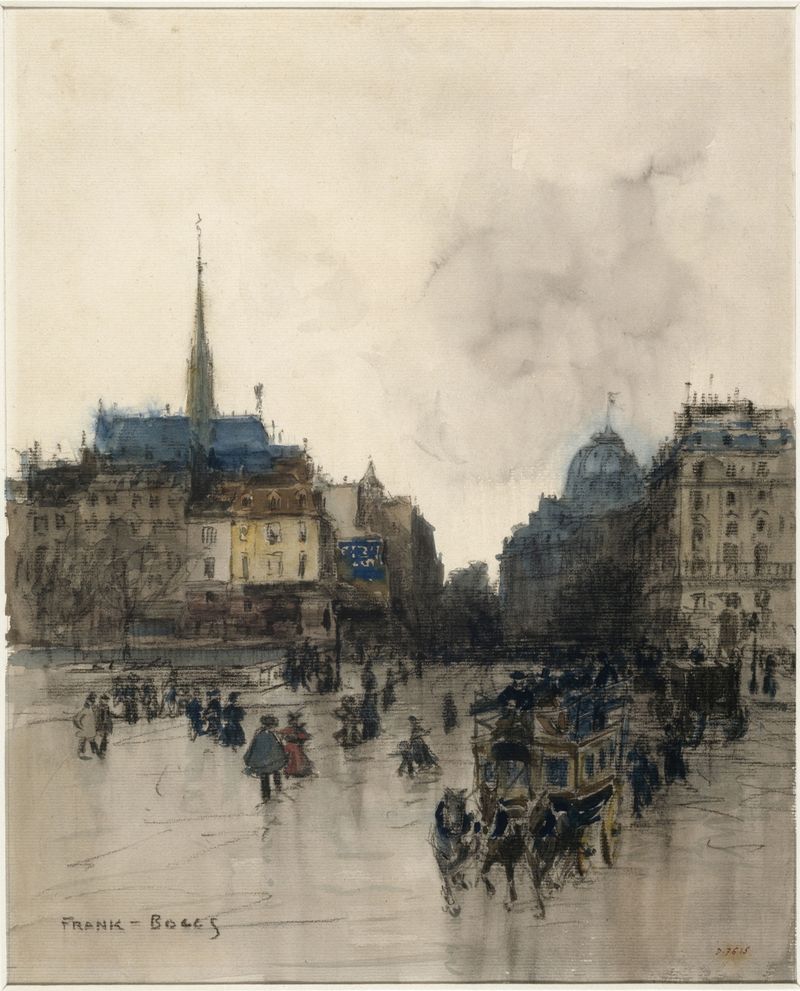
Le pont Saint-Michel
Frank Myers Boggs
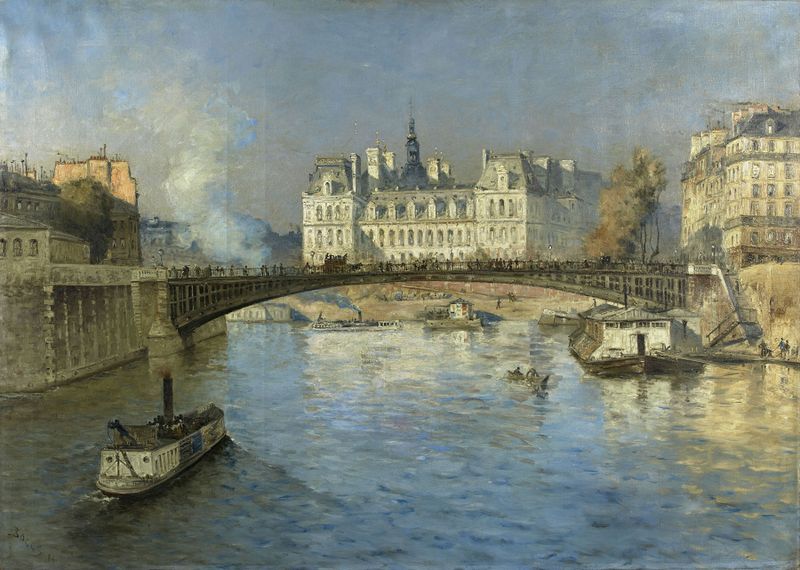
Paris, la Seine et l’Hôtel de Ville
Frank Myers Boggs
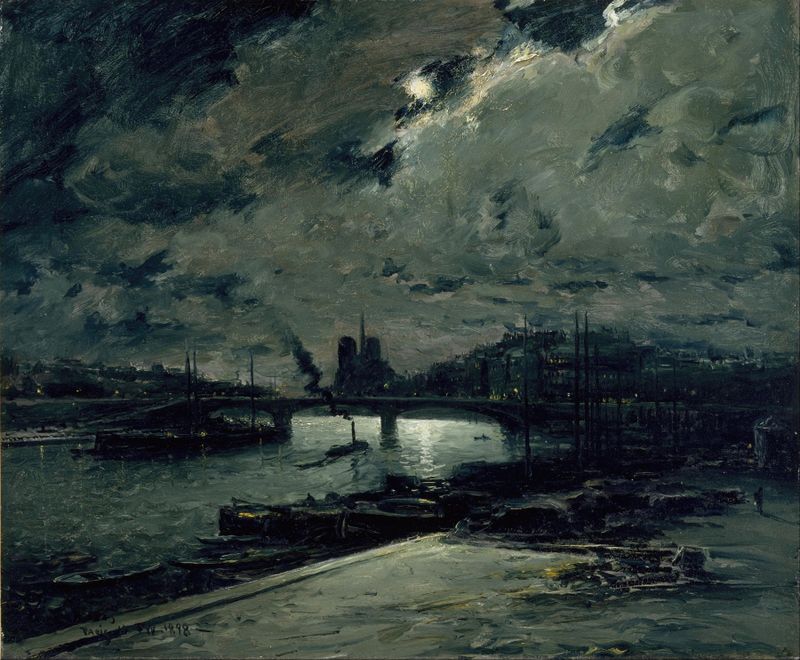
Quai de la Seine, Paris, au Clair de Lune
Frank Myers Boggs
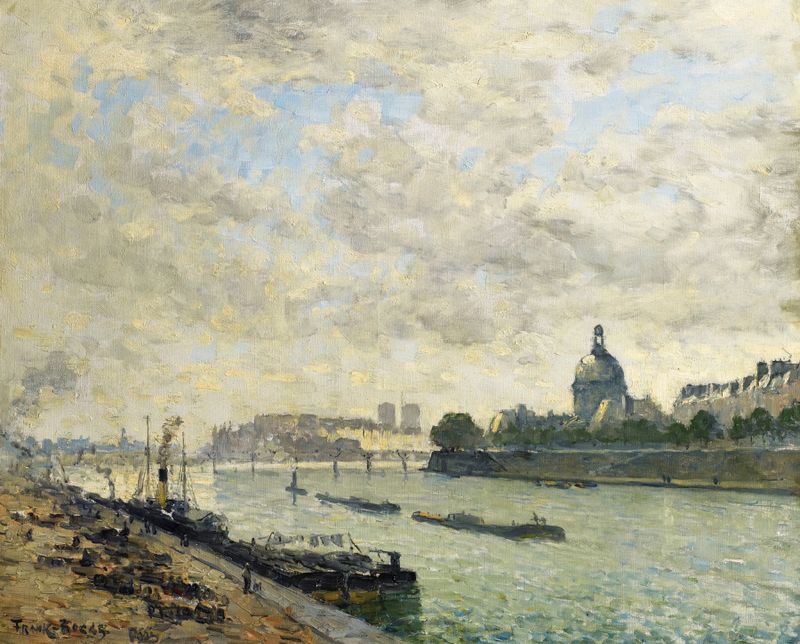
Les quais de Seine à Paris
Frank Myers Boggs
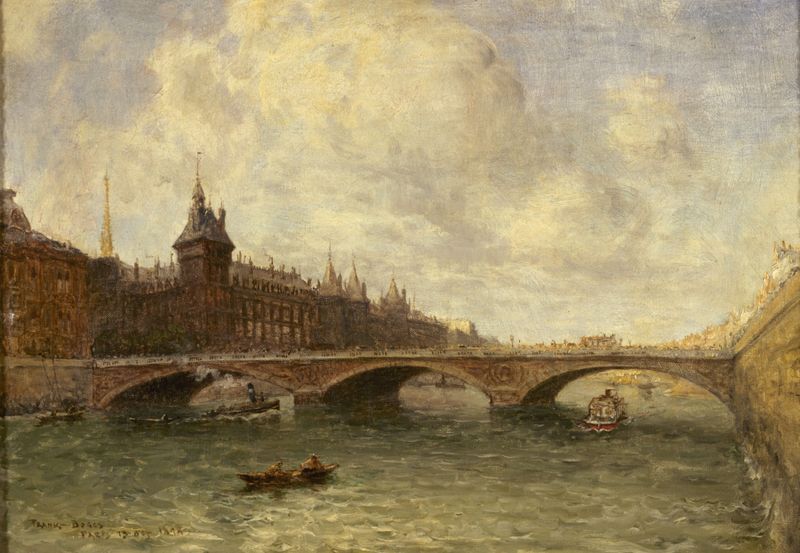
Le pont au change et le quai de l’horloge
Frank Myers Boggs
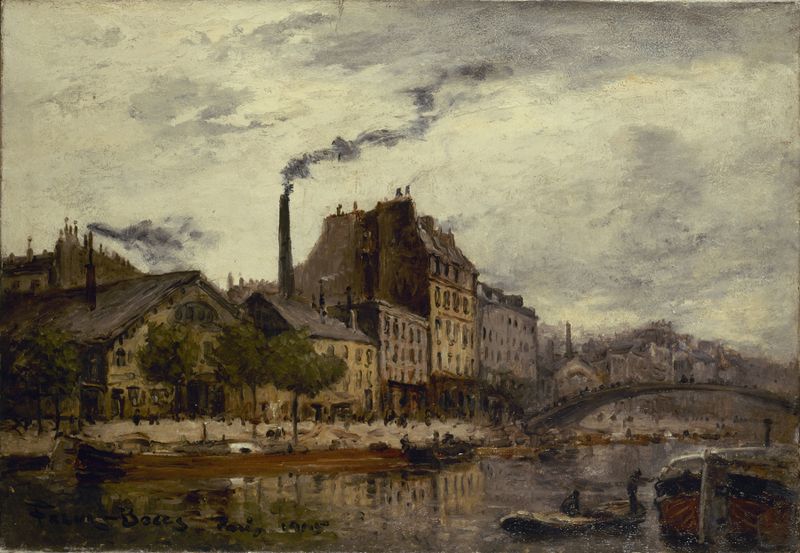
La démolition de l’ancien pont de la Tournelle
Frank Myers Boggs
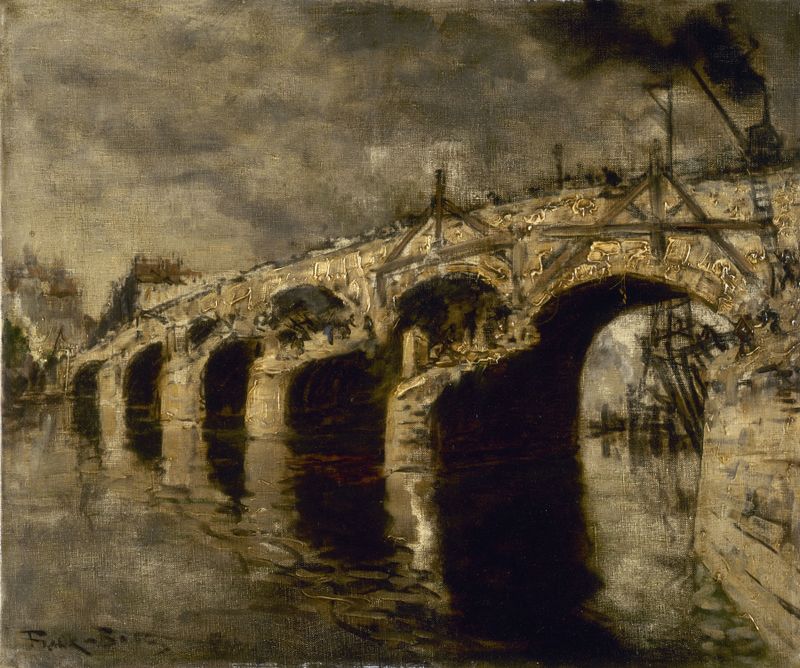
La démolition de l’ancien pont de la Tournelle
Frank Myers Boggs

La tour Saint-Jacques
Frank Myers Boggs
Le Moulin de la Galette
Frank Myers Boggs





