
La rue des Prouvaires et l’église Saint-Eustache — History & Facts
Can paint confess what words never could? In La rue des Prouvaires et l’église Saint-Eustache, the silent streets echo with an unspoken fear, as if the very cobblestones hold their breath beneath the looming shadows of the church. Look to the foreground, where the narrow street narrows even further, drawing the eye toward the towering silhouette of Saint-Eustache. Notice how the soft, muted colors of early morning light caress the buildings' facades, creating a stark contrast against the darker, ominous depth of the sky. The brushwork reveals a judicious blending of hues, where the grays and browns dominate yet allow bursts of ochre and cream to breathe life into the scene. Upon closer inspection, the delicate interplay of light and shadow reveals a deeper narrative, one that whispers of isolation and uncertainty.
The absent figures that might typically populate a Parisian street evoke a palpable tension, suggesting a society caught between hope and despair, perhaps haunted by the recent political upheaval of the era. The towering church looms not only as a symbol of faith but also as a reminder of the ever-present specter of fear that shrouds the urban landscape. Giuseppe Canella painted this scene in 1828, a period marked by the repercussions of the July Revolution in France. Working in Paris amid a burgeoning Romantic movement, he sought to capture the essence of urban life and the emotional atmosphere surrounding it.
The tension of his brushstrokes reflects not only his personal experiences as an artist navigating a complex cultural landscape but also the collective anxieties of a city grappling with change.
More Artworks by Giuseppe Canella
Browse all →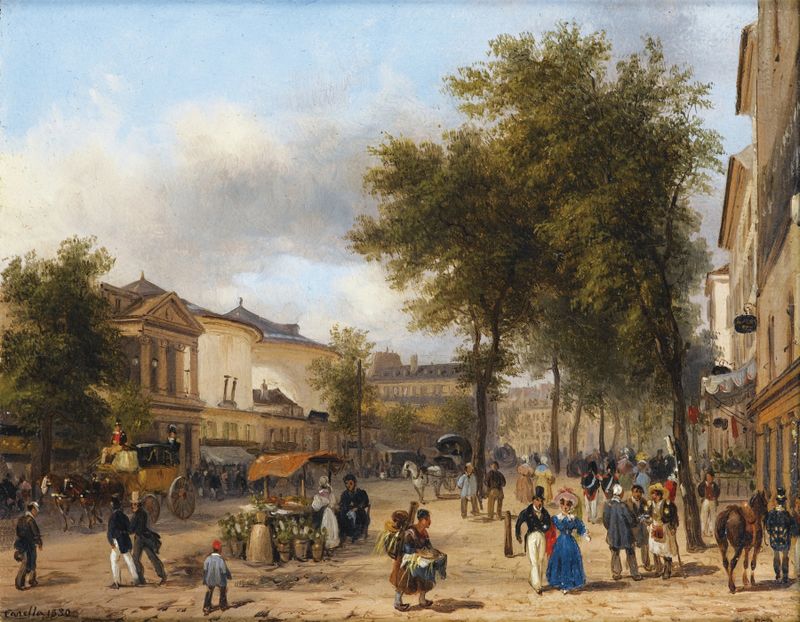
Paris, Vue du Théâtre des Variétés sur le Boulevard Montmartre
Giuseppe Canella

L’Hôtel de Ville et la place de Grève, vus de l’Ile de la Cité
Giuseppe Canella
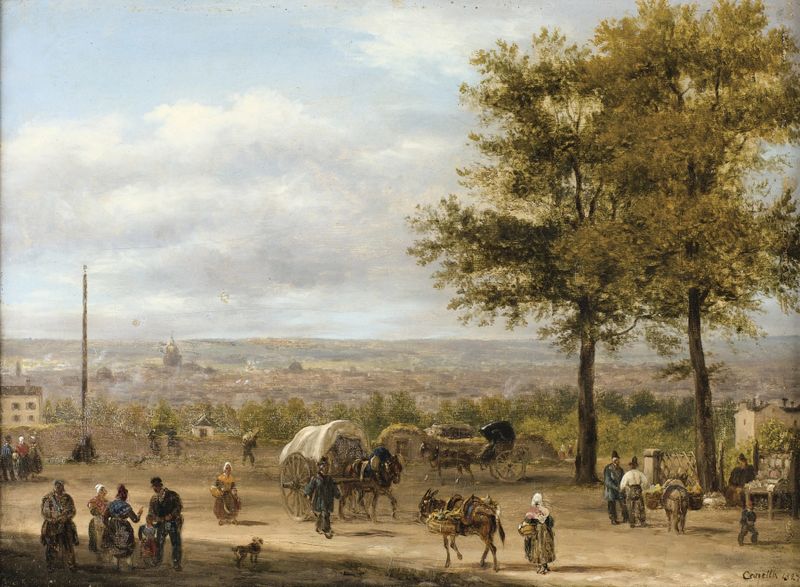
Vue des hauteurs de Paris
Giuseppe Canella
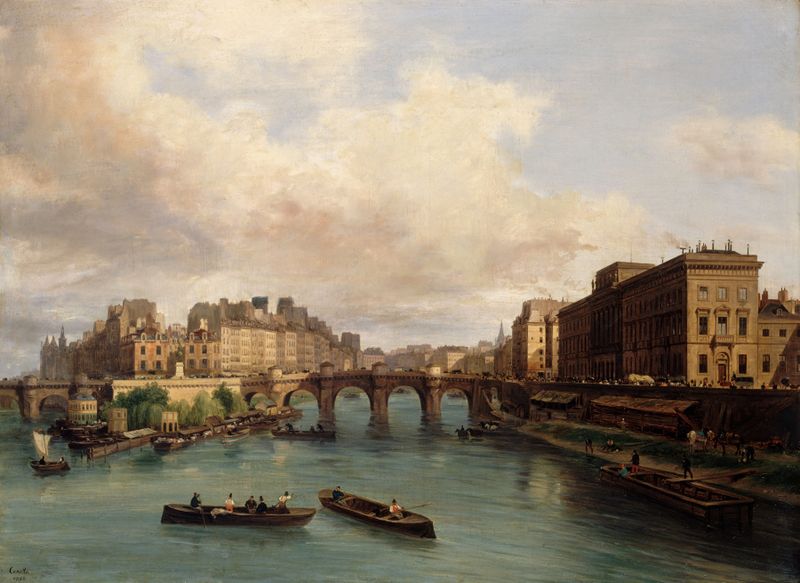
L’Ile de la Cité et le quai Conti, vus de la passerelle des Arts
Giuseppe Canella

Amsterdam, A View of the Royal Palace
Giuseppe Canella

Les Halles et la rue de la Tonnellerie
Giuseppe Canella
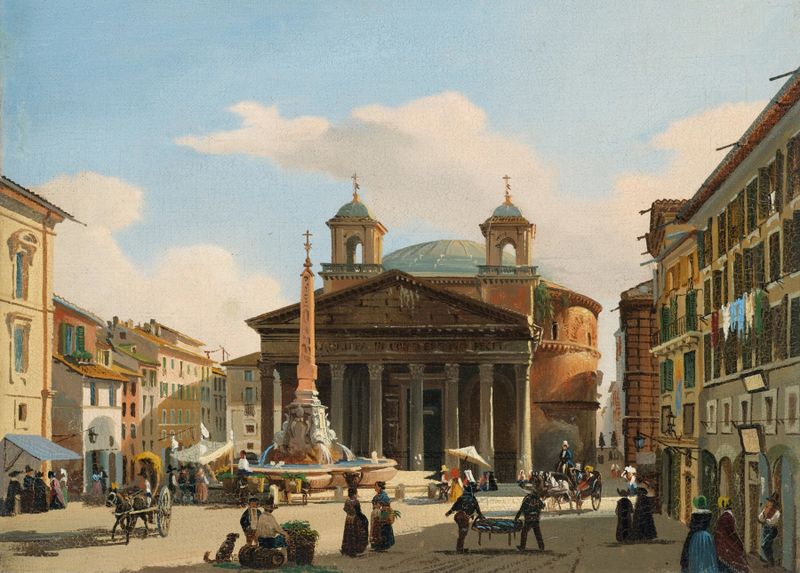
Vue du Panthéon à Rome
Giuseppe Canella
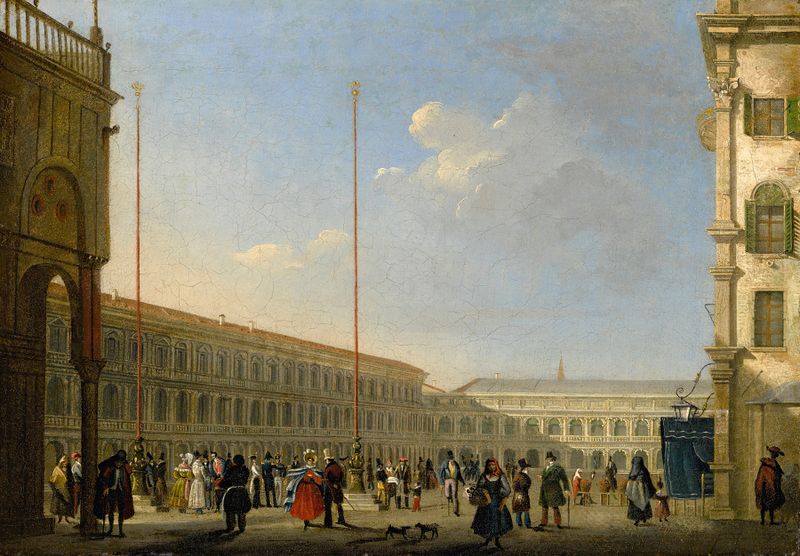
Venice, A View Of Piazza San Marco From Piazzetta Dei Leoncini
Giuseppe Canella
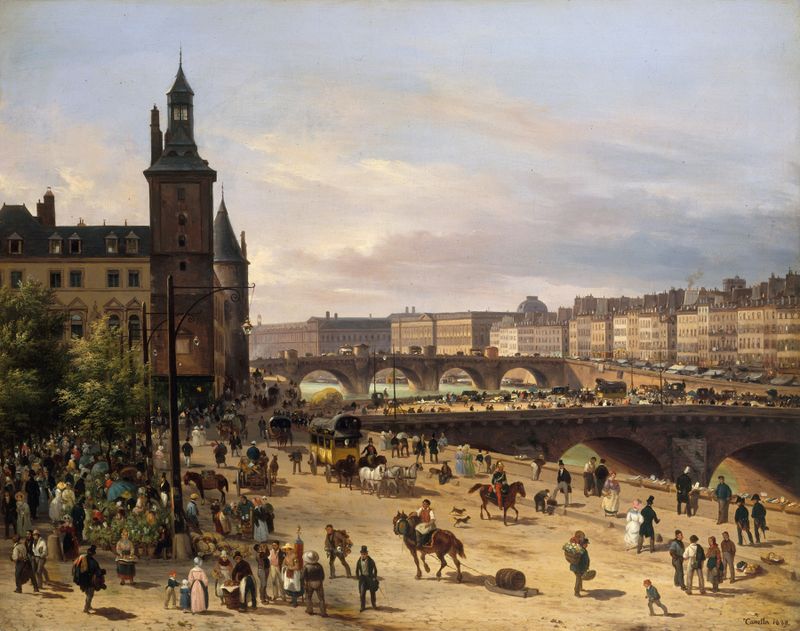
Le marché aux fleurs, la Tour de l’Horloge, le Pont au Change et le Pont-Neuf
Giuseppe Canella

A Venetian scene with a gondola on a lagoon
Giuseppe Canella
More Architecture Art
Browse all →
The statue of Liberty
Frédéric Auguste Bartholdi

View of Houses in Delft, Known as ‘The Little Street’
Johannes Vermeer

View of Houses in Delft, Known as ‘The Little Street’
Johannes Vermeer

The Cathedral in Rouen. The portal, Grey Weather
Claude Monet

The yellow house
Vincent van Gogh

The Church in Auvers-sur-Oise, View from the Chevet
Vincent van Gogh