La Salle du XIIIe siècle au musée des Monuments Français — History & Facts
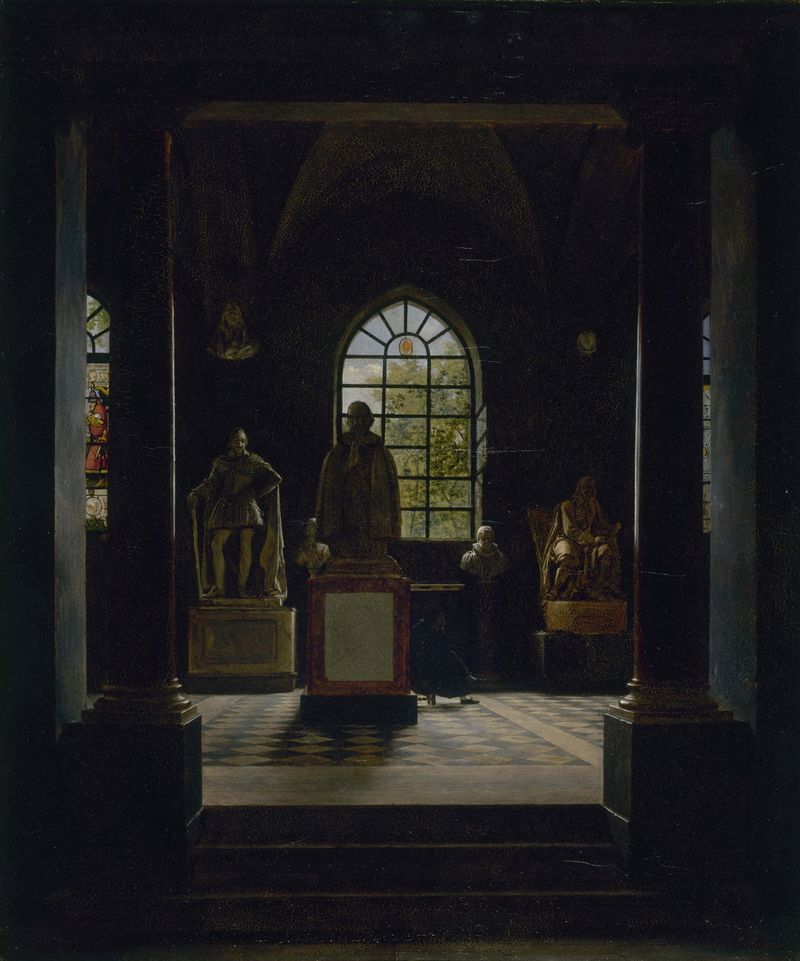
In the hushed corners of history, obsession weaves its threads, binding the past to the present in an eternal embrace. The painted scene invites reflection on the layers of time, urging us to confront the echoes of lives once lived, the stories left untold. Look to the center of the composition, where the vaulted ceiling draws your gaze upward. Notice the intricate details that dance between light and shadow, revealing a sanctuary of craftsmanship.
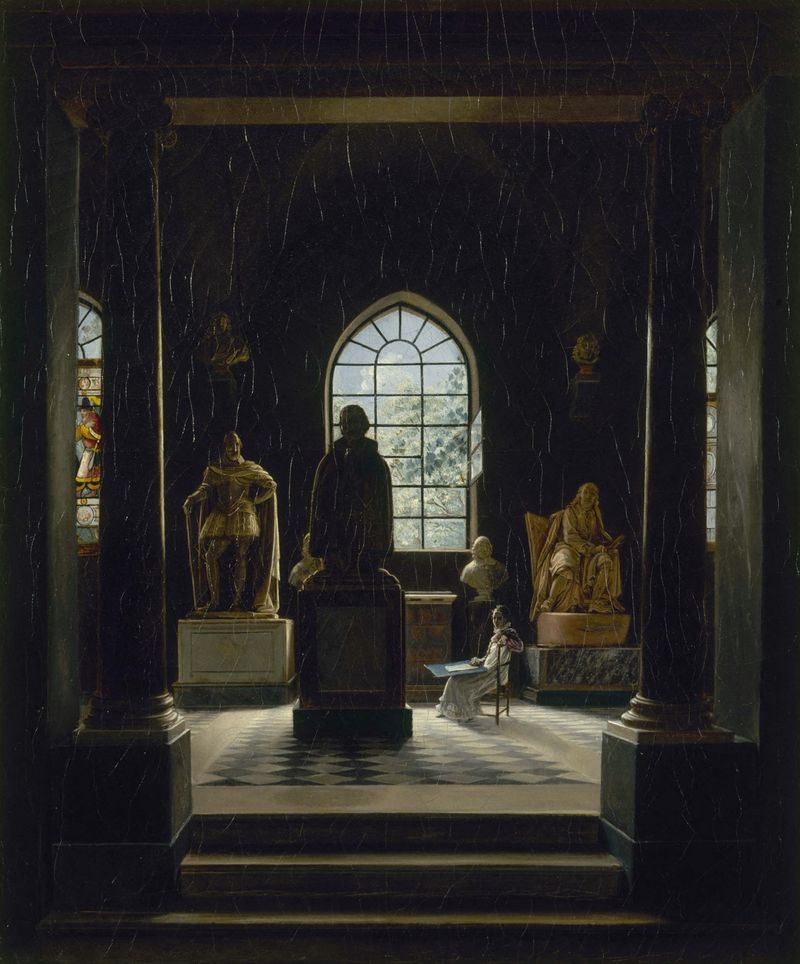
The subdued palette, layered with earthy tones, enhances the solemn ambiance, while the soft illumination highlights the delicate arches and ornate sculptures that speak of a bygone era. Each brushstroke captures not just the physical space, but also the whispers of those who once occupied it. Consider how the juxtaposition of architectural grandeur and the emptiness of the room creates an emotional tension. The absence of figures in this grand hall amplifies a haunting solitude, suggesting a reverence for the past and an obsession with preservation.
The meticulous attention to detail evokes a sense of longing, as though the artist desires to hold onto each fragment of history, capturing both beauty and decay in his reverent gaze. In 1816, Léon-Mathieu Cochereau painted this work during a time when France was deeply engaged in the preservation of its cultural heritage. It was a period marked by a revival of interest in historical architecture and national identity after the upheavals of the Revolution. Cochereau’s dedication to depicting the intricate beauty of the past reflects the fervent passion of an artist navigating the complexities of his era.