La Salle du XVIIe siècle au musée des Monuments Français — History & Facts
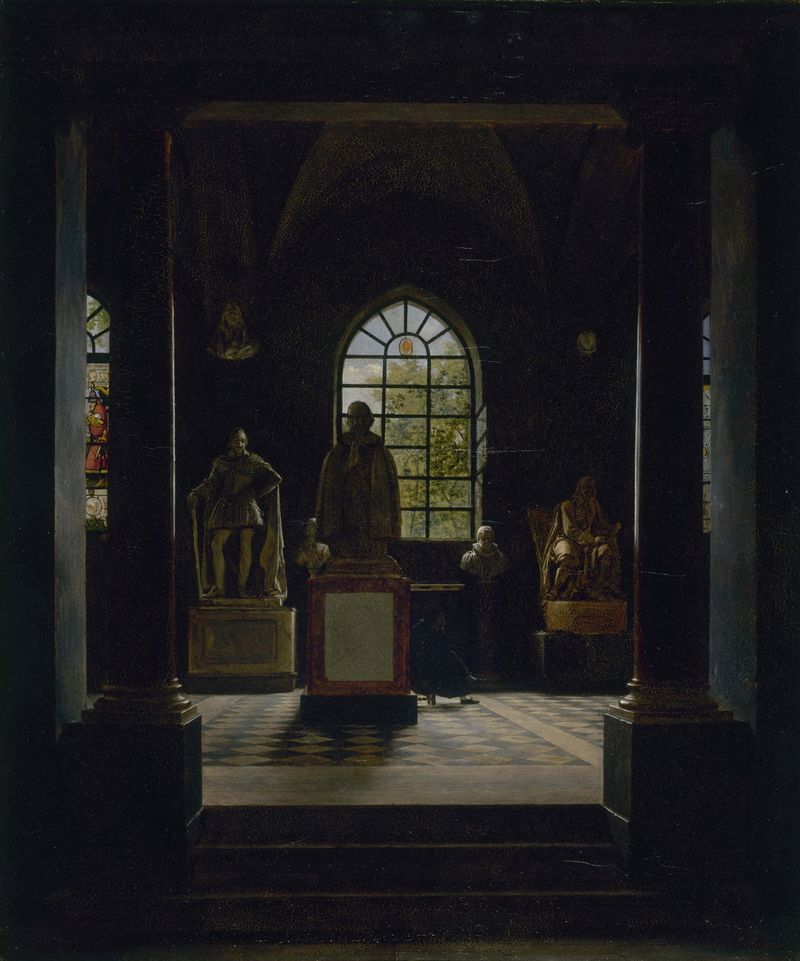
Within this echoing space, the past unfolds, revealing whispers of creation and craftsmanship embedded in each meticulously chosen detail. Look to the center of the canvas where a grand archway serves as a portal to history. The warm hues of ochre and gold wash over the aged stone, illuminating the intricate moldings and sculptures that adorn the walls. Notice how the light filters through the soft drapery, casting delicate shadows that suggest the passage of time.
Each artifact, whether a weathered statue or an ornate chair, beckons the viewer to explore the layers of stories hidden within this chamber. Beneath the surface, the juxtaposition of decay and reverence invites contemplation on the nature of preservation. The aged materials speak of resilience, while the artist's deliberate composition reflects a longing to immortalize the ephemeral. Cochereau’s brush strokes capture not only the physical presence of these historic elements but also a deep-seated nostalgia for cultural heritage, urging us to engage with the remnants of our past. In 1816, Cochereau painted this masterpiece while immersed in a France still grappling with the aftermath of the Revolution.
This was a time when the importance of national identity and cultural restoration surged to the forefront of artistic dialogue. The artist, deeply invested in the preservation of French heritage, sought to document these monuments as symbols of resilience and continuity, framing a pivotal moment in both his life and the evolving narrative of art.