Lake Geneva — History & Facts
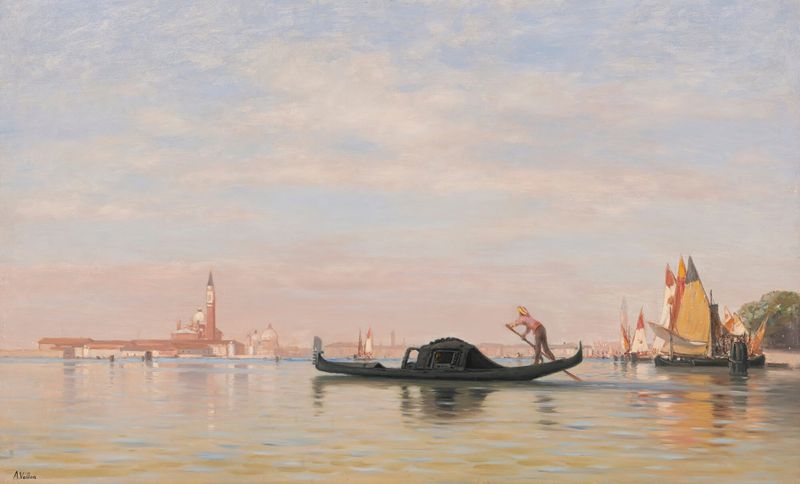
In the tranquility of a lake, where water meets sky, transformation lingers like a whisper just below the surface. Look to the left at the horizon, where soft blues and gentle greens meld seamlessly, creating an ethereal transition that captures the essence of serenity. The brushwork is fluid, suggesting movement just as the light glimmers on the water's surface, inviting viewers to breathe in the ambiance of this idyllic scene. The composition guides the eye across the canvas, emphasizing the balance between the earth and the sky, where depth is achieved through a masterful layering of color. Delve deeper, and you’ll find contrasts that speak to the nature of change.
The placid surface of Lake Geneva mirrors the stillness of the surrounding landscape, yet hints at the transformative forces beneath—the rippling effects of wind or the distant stirrings of life. Shadows dance along the shoreline, evoking a sense of impermanence, while the warm light breaks through, symbolizing hope and renewal in the midst of stillness. At the time of creating this work, Veillon was navigating a period of artistic exploration, influenced by the Romantic movement's emphasis on emotion and nature. Painting in the late 19th century, he sought to capture the sublime beauty of landscapes, responding to a world that was rapidly changing with industrialization.
The quiet yet powerful presence of Lake Geneva reflects his desire to connect with nature’s timelessness amidst the chaos of his era.