The banks of the nile — History & Facts
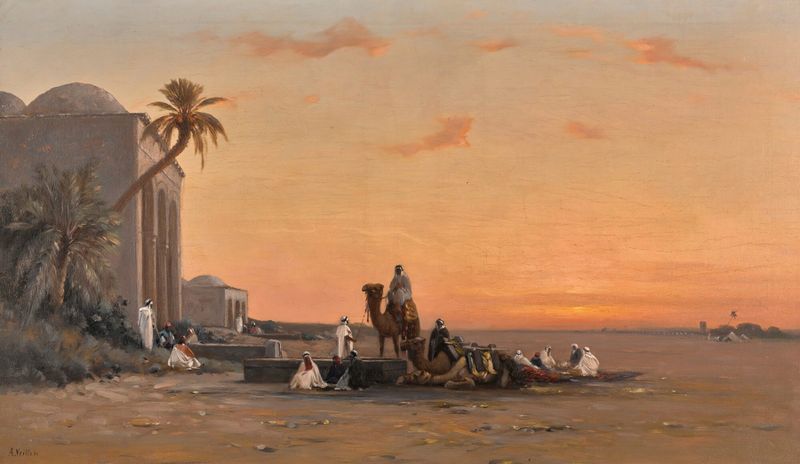
What if beauty was never meant to be finished? In the interplay of vibrant colors, the essence of an eternal landscape reveals a world that exists on the edge of completion, teasing the imagination with its infinite possibilities. Look closely to the left, where a cascade of deep greens and ochres brings the lush banks of the Nile to life. The hues blend seamlessly, evoking the richness of the river's fertile embrace. As your gaze travels across the canvas, notice how the light dances upon the water’s surface, shimmering with reflections of cerulean skies.
Each brushstroke captures not just a scene, but an atmosphere, where time feels suspended and the natural world breathes. Delve deeper into the subtle contrasts within the work. The juxtaposition of the vibrant foreground against the muted background creates a layered sense of depth. The figures, though small and somewhat elusive, hint at the lives that intertwine with the river, suggesting narratives of connection and continuity.
The colors themselves seem to pulse, evoking a sense of warmth and vitality, while simultaneously inviting contemplation of the passage of time and the transient nature of beauty. During the period when this piece was created, the artist found himself in an era of burgeoning interest in the lush landscapes of Egypt. Though the exact date remains uncertain, Veillon was likely influenced by the romantic fascination with the exoticism of the Nile, reflecting a growing desire among artists to capture the essence of distant lands. His work sits within a broader context of 19th-century Romanticism, where emotional expression and the celebration of nature took center stage, marking a shift in artistic exploration.