Lake George — History & Facts
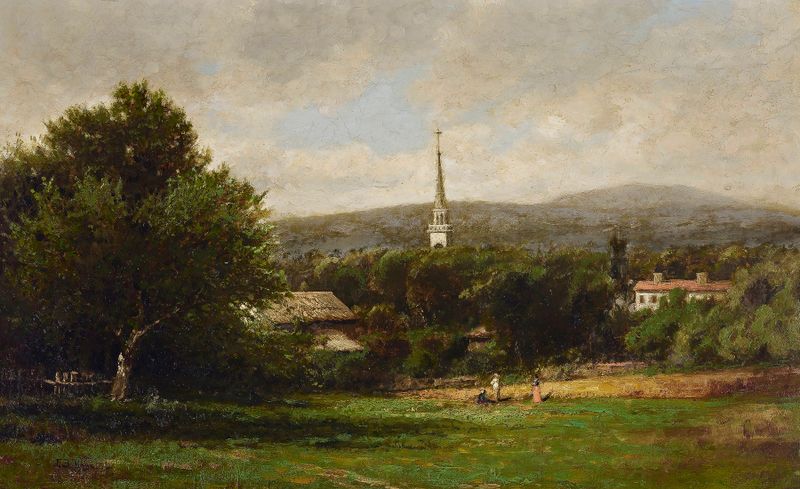
What if silence could speak through light? Lake George captures a moment of serene rebirth, where nature's tranquility whispers the promise of new beginnings. Look to the foreground, where the gentle ripples of the lake reflect the soft hues of dawn—pinks, soft blues, and inviting lilacs interplay like a delicate conversation. The painter’s brushstrokes create a sense of movement in the water, while trees stand sentinel on the banks, their rich greens grounding the ethereal landscape. Notice how the light dances on the surface, evoking a feeling of warmth and renewal, inviting the viewer to linger in this quiet sanctuary. Hidden within the harmonious composition is a tension between light and shadow, reflecting the duality of existence.
The calm waters may symbolize peace, but the looming mountains in the background suggest a weighty presence, hinting at the struggles that often accompany rebirth. This contrast invites contemplation on the cyclical nature of life, where moments of stillness are often punctuated by unseen challenges. Though the exact date of creation remains uncertain, John Bunyan Bristol painted this piece during a time when American landscape art was gaining prominence. Emerging in the late 19th century, he was influenced by the Romantic movement and the transcendentalist philosophy that celebrated nature.
This era saw a growing appreciation for the spiritual qualities of the natural world, which resonates deeply in Lake George, reflecting both personal and collective renewal amidst the changing tides of life.