
Landscape — History & Facts
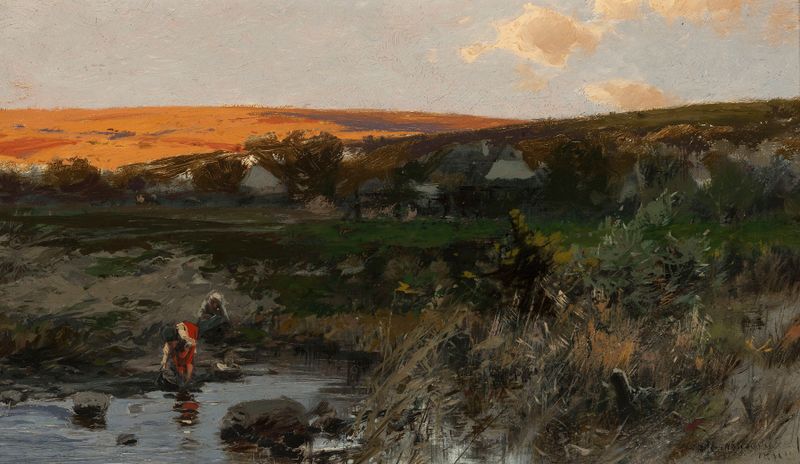
In the realm of artistic expression, how do fleeting moments transform into eternal landscapes, reflecting our inner battles with mortality? Look to the left at the dark, looming mountains, their jagged silhouettes wrapped in a haze that beckons the viewer into mystery. The subtle interplay of light and shadow dances across the canvas, highlighting the delicate greens of the meadows, which seem almost alive, pulsating with energy. Notice how the artist’s brushstrokes capture the textures of the earth — each stroke a heartbeat, each hue a whisper of life.
This careful composition not only guides the eye but invites contemplation of nature's indifference to human existence. Beneath the charming exterior lies an emotional tension between vitality and decay. The verdant fields contrast sharply with the encroaching darkness of the mountains, symbolizing life’s transience amid nature’s vastness. The ethereal quality of the light suggests moments of clarity, perhaps a fleeting acknowledgment of mortality that permeates the atmosphere.
This duality evokes a recognition of both the beauty of existence and the inevitability of its conclusion, prompting a deeper reflection on our own journeys. During the period between 1890 and 1900, the artist created this work amidst a world grappling with modernity's encroachment on nature. Living in Poland, Kochanowski sought to capture the essence of the landscape around him as it contended with rapid industrial changes. As his peers experimented with impressionism, he remained dedicated to exploring the emotional depths of natural scenes, blending tradition with the burgeoning modernist movement.
More Artworks by Roman Kazimierz Kochanowski
Browse all →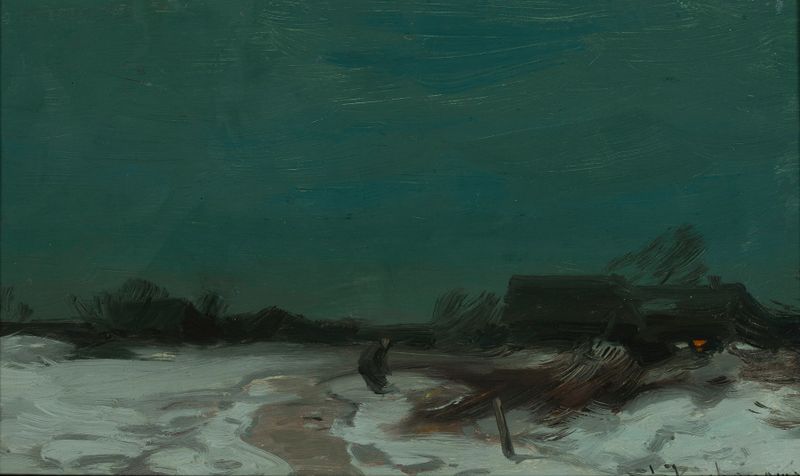
Winter landscape with cottages
Roman Kazimierz Kochanowski
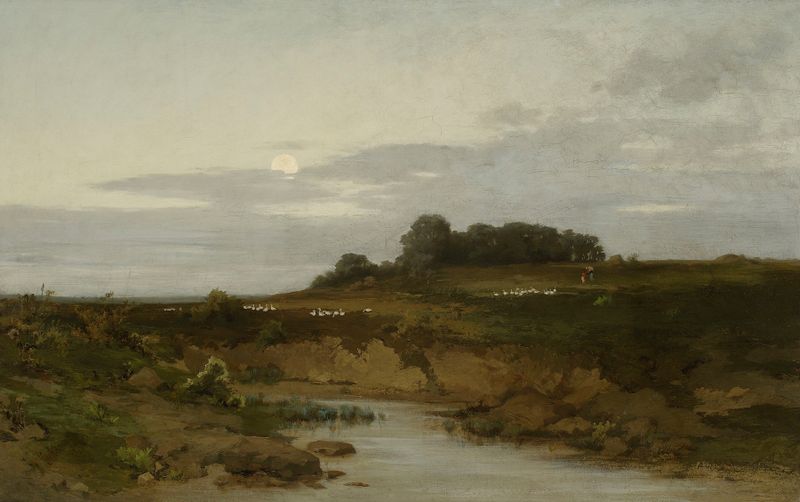
Evening
Roman Kazimierz Kochanowski
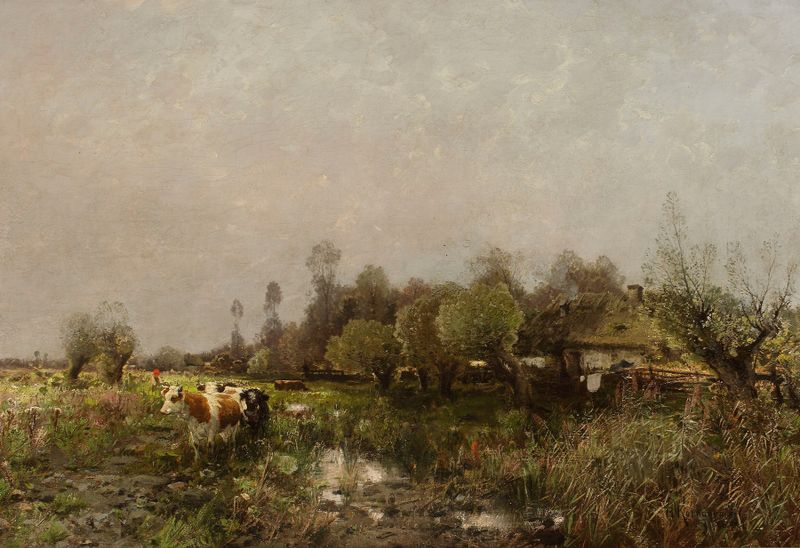
Summer landscape with a cottage on marshland
Roman Kazimierz Kochanowski
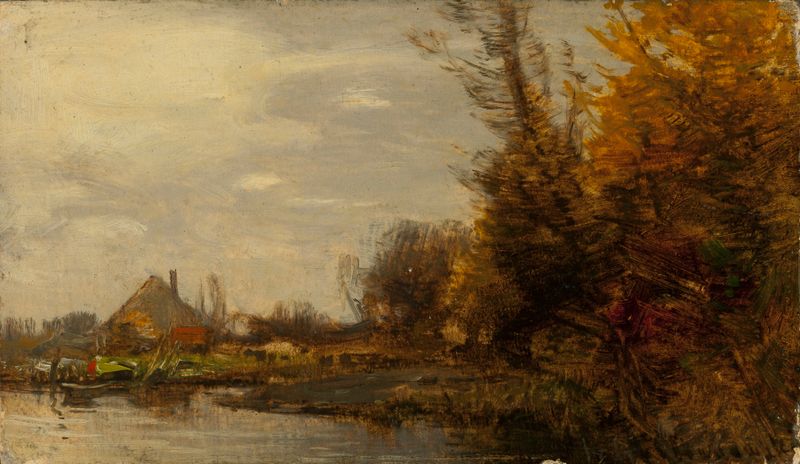
Autumn landscape with a cottage at waterside
Roman Kazimierz Kochanowski
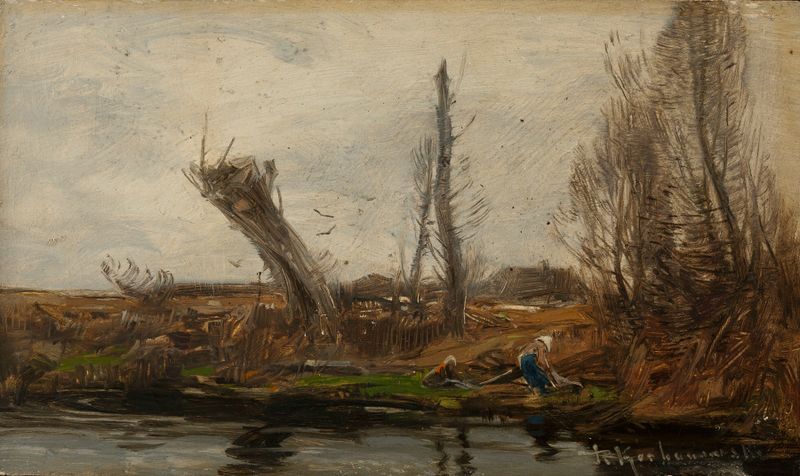
Willows at waterside
Roman Kazimierz Kochanowski
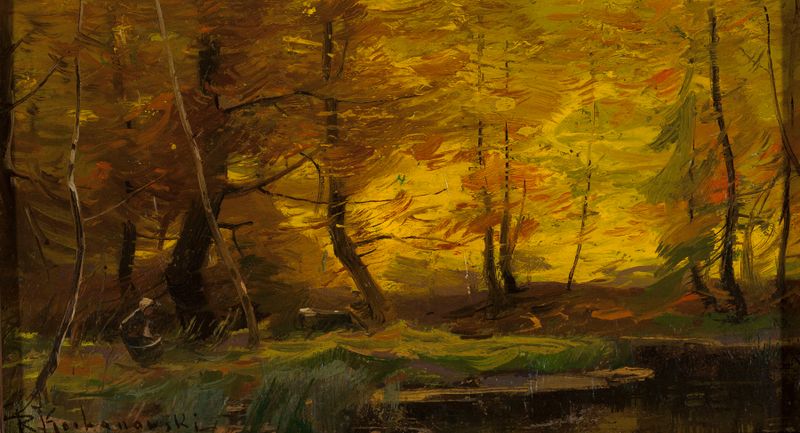
Forest landscape
Roman Kazimierz Kochanowski
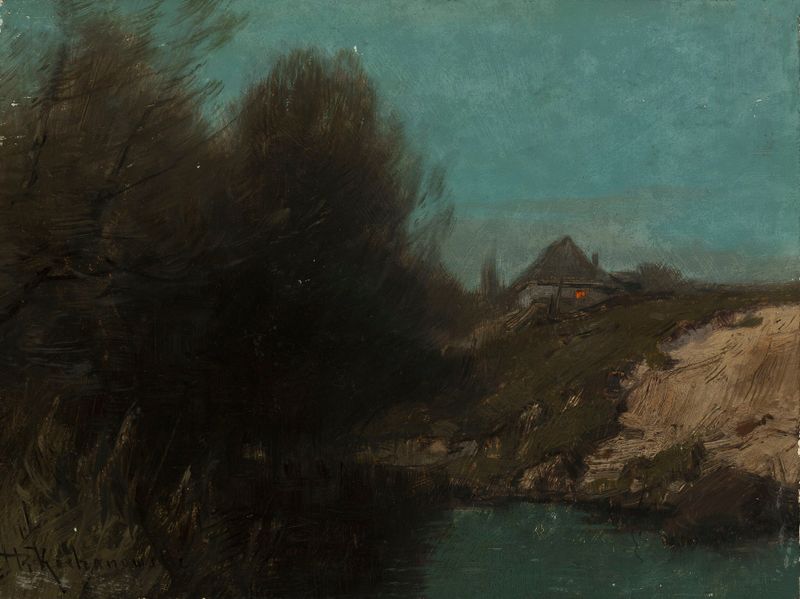
Landscape with a cottage
Roman Kazimierz Kochanowski
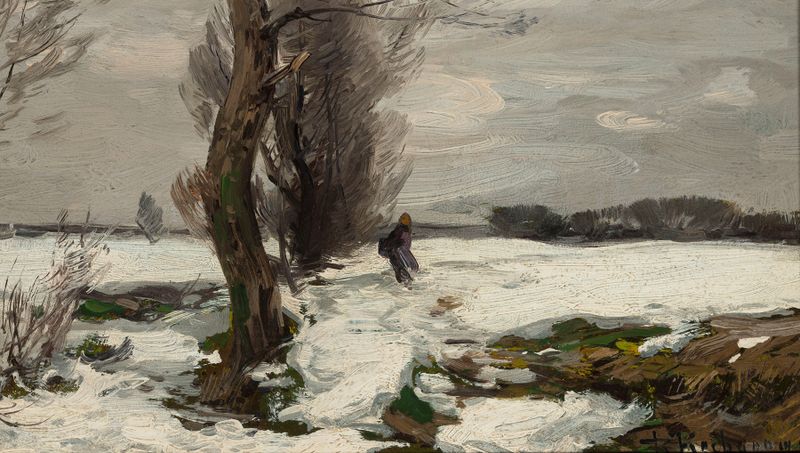
Winter landscape
Roman Kazimierz Kochanowski
Landscape at sunset
Roman Kazimierz Kochanowski
Landscape – Cottages at waterside
Roman Kazimierz Kochanowski





