Landscape — History & Facts
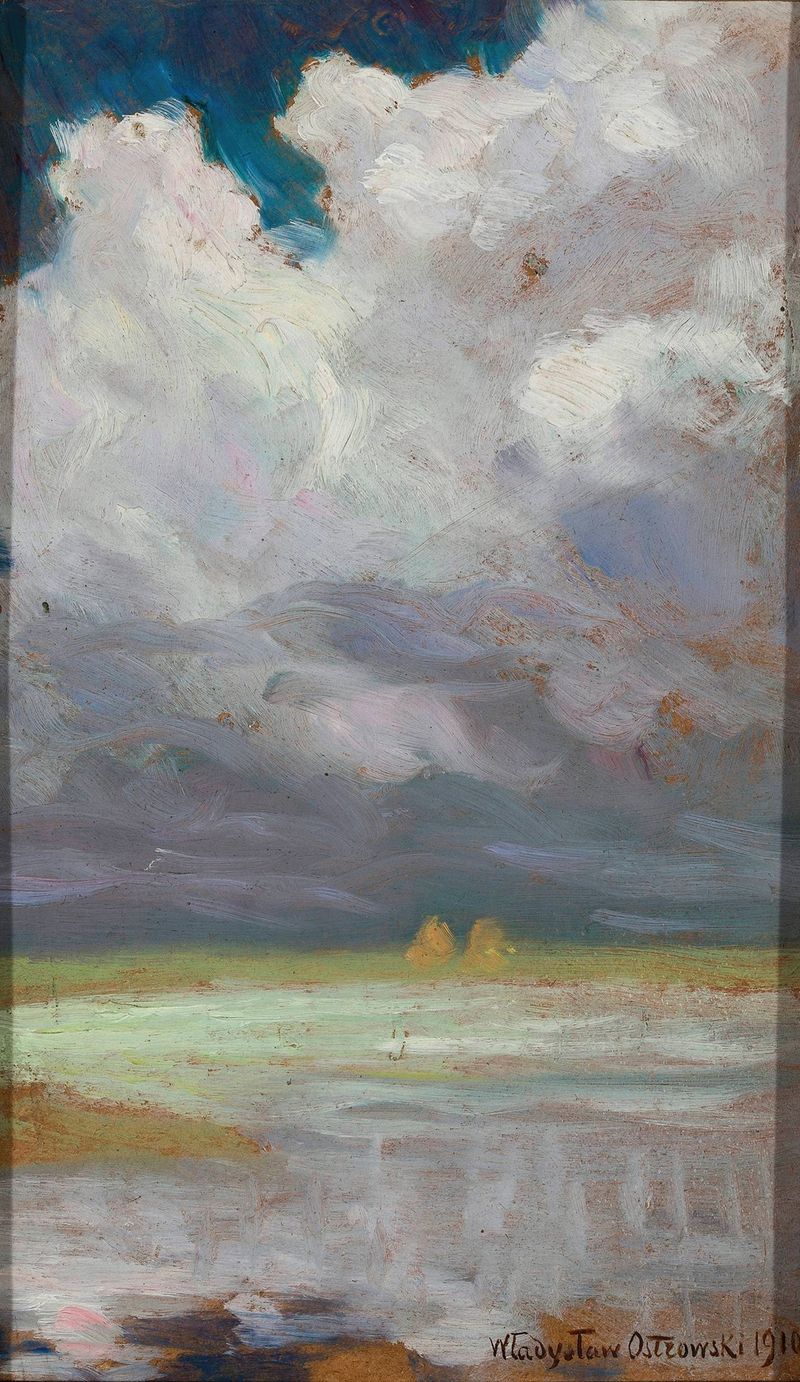
Where does light end, and longing begin? In the realm of artistry, this question hangs like a whisper, inviting us to explore the delicate balance between nature’s beauty and the transient nature of life. Focus on the gentle undulations of the hills in the center, where shades of green and gold intermingle under the soft embrace of a fading sun. The horizon, painted with dusky hues, suggests twilight, a time of day imbued with both closure and promise. Notice how the light spills over the landscape, illuminating details while allowing shadows to cradle the contours, creating a dance between presence and absence, life and mortality. Hidden within the idyllic scenery lies an undercurrent of melancholy.
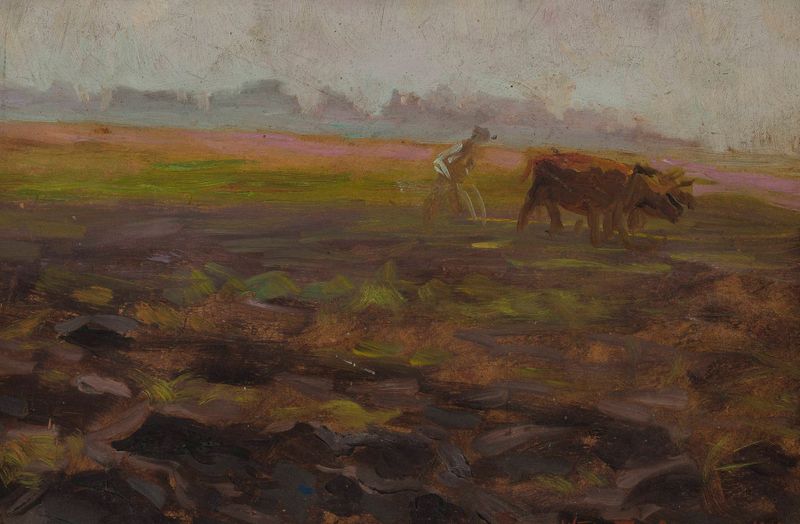
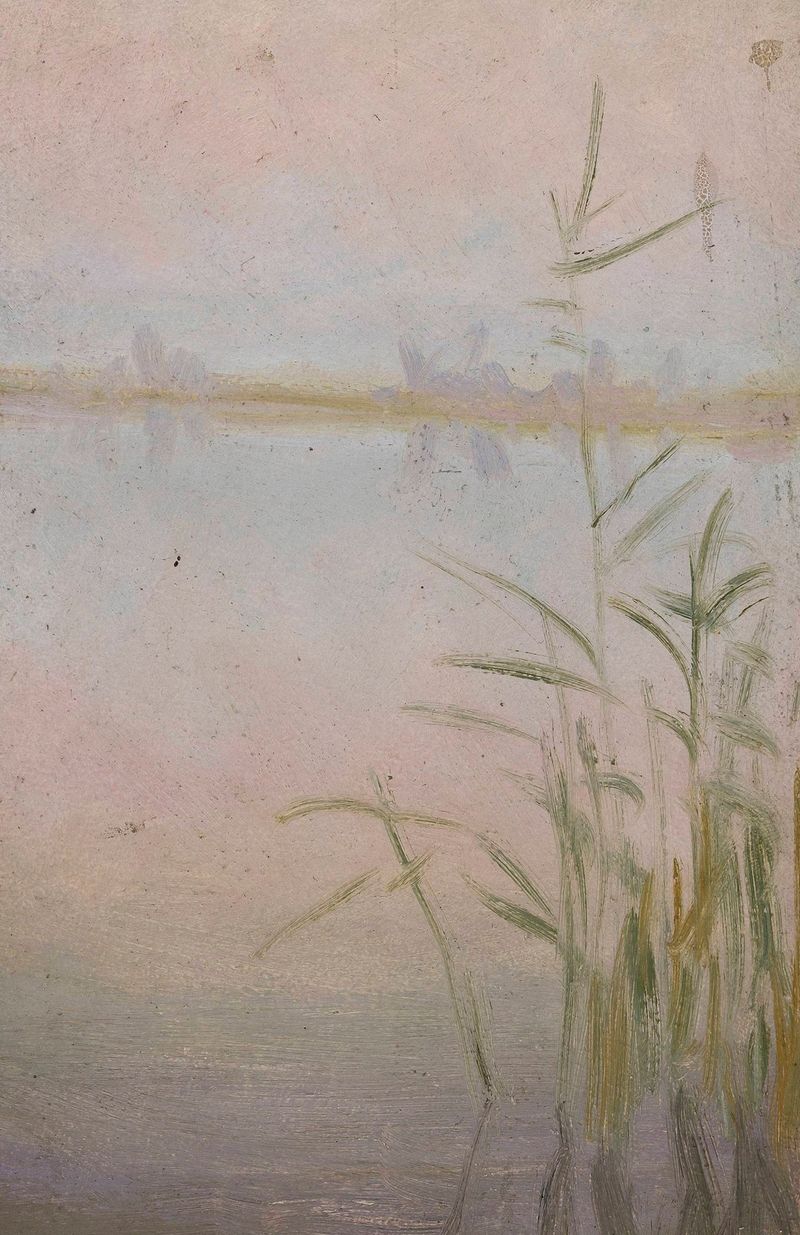
The fading light hints at the inevitability of dusk and the passing of time, while the vibrant colors evoke the fleeting nature of beauty itself. Small figures dot the scene, possibly wanderers or dreamers, reminding us of our own smallness against the vastness of the landscape—each person a temporary guest in the grand theater of life. This juxtaposition highlights the tension between the eternal cycle of nature and our impermanent existence. In 1910, Władysław Ostrowski was deeply engaged in capturing the Polish countryside, a reflection of his personal connection to the land during a period of political upheaval.
As he painted Landscape, he was influenced by the Symbolist movement, which sought to express complex emotions through vivid imagery. This work emerged at a time when artists were increasingly aware of their own mortality, grappling with the fleeting moments that define both art and life.