Landscape — History & Facts
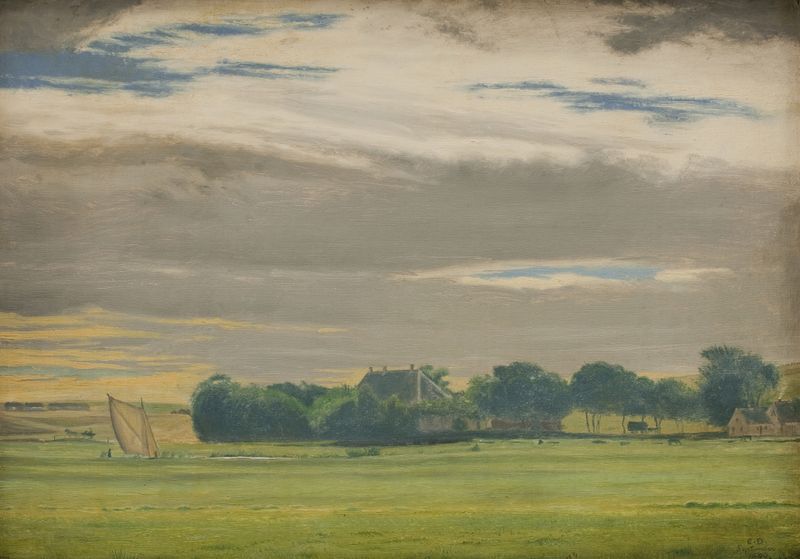
In the stillness of a landscape, the absence of sound envelops the viewer like a shroud, inviting introspection and exploration of the unspoken narratives within nature. Look to the horizon, where gentle undulations invite your eye to wander across the lush greenery and distant hills. The color palette reflects a harmonious blend of soft greens and deep, muted browns, evoking a tranquil, almost sacred atmosphere. Notice how the interplay of light and shadow guides the composition, framing the vast expanse and drawing your gaze deeper into the serene depths.
Each brushstroke stands testament to a delicate hand, crafting a world that feels both familiar and dreamlike. In this calm expanse, the silence births a multitude of meanings. The verdant fields suggest abundance and life, yet the absence of any human presence speaks volumes about solitude and the passage of time. The stillness becomes a character of its own, evoking feelings of nostalgia and eliciting questions about our connection to nature.
Here, one might ponder the effect of isolation on the human spirit, as the tranquility may serve both as a refuge and a reminder of our own solitude. In 1849, the artist created this work during a period marked by a growing interest in naturalism within the art world. Dalsgaard, working in Denmark, was influenced by the Romantic movement's emphasis on emotion and the beauty of the natural world. The landscape reflects not only the serene Nordic countryside but also the artist’s personal quest for balance amidst the historical upheaval of his time, capturing both the external and internal landscapes of his life.