Landscape — History & Facts
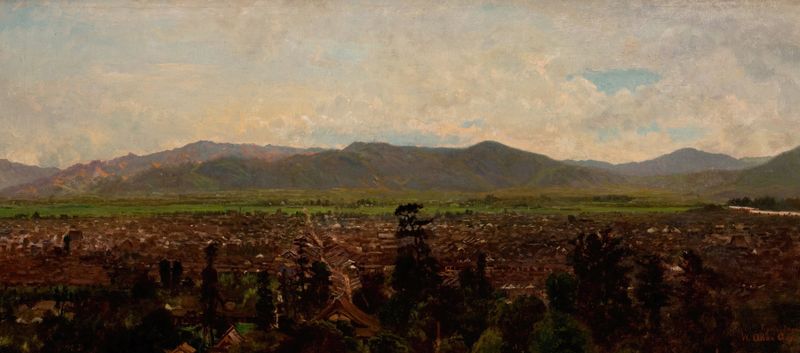
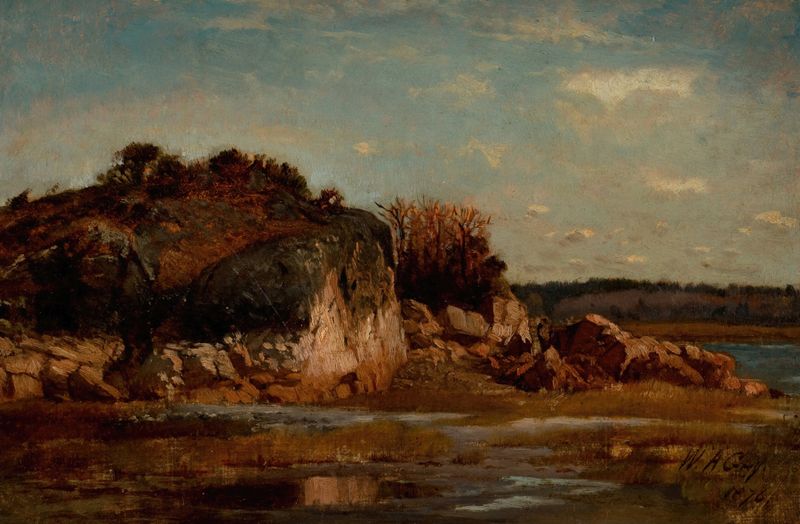
Can beauty exist without sorrow? In the tranquil embrace of a landscape, the interplay of light and shadow reveals truths deeper than the mere visual splendor before us. Look to the foreground, where a gentle stream meanders through lush, vibrant greenery. The artist employs soft, flowing brushstrokes to capture the movement of water, inviting the viewer to follow its path. Notice how the sunlight dances on the surface, creating flickers of shimmering gold amid the blues and greens.
The horizon stretches wide, capturing a vast sky that encapsulates both hope and melancholy, a duality that speaks to the human experience. A palpable tension exists between the serene beauty of nature and the heavier undertones hidden within. The juxtaposition of the bright, idyllic scenery against the looming clouds hints at the transient nature of joy, suggesting that every moment of peace may be shadowed by impending change. This landscape becomes a metaphor for faith—a belief in the beauty that coexists with sorrow, and a reminder of the cycles of life that bring both growth and loss. Winckworth Allan Gay painted this piece in 1859, during a time when the Romantic movement was reaching its zenith.
Living in England, he was influenced by both the natural world and the emotional depth of his contemporaries. The mid-19th century was a period marked by an increasing interest in capturing the essence of experience through landscape, reflecting the era's complexities and the evolving relationship between humanity and nature.