South Shore (White Head, Cohasset) — History & Facts
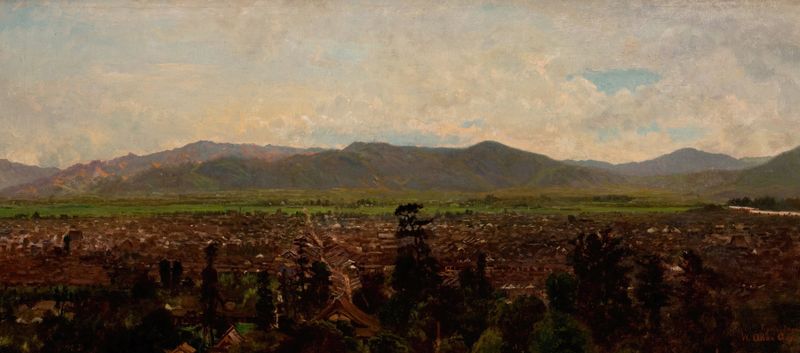
What if silence could speak through light? In the tranquil embrace of dawn, a hushed palette of soft hues whispers secrets of the day to come, inviting us into a world where color reigns supreme. Focus on the gentle gradient of blues and greens that dominate the canvas, establishing a serene atmosphere. Notice how the artist meticulously captures the interplay of light upon the water, creating shimmering reflections that dance beneath a pale sky. To the left, the rugged coastline of White Head emerges, its texture rich and inviting, while the strokes of white suggest the white caps of waves, hinting at life just beneath the surface.
This masterful blend of impressionistic techniques evokes both a sense of calm and the subtle tension of nature’s unpredictability. Beneath the surface of tranquility lies a poignant contrast between stillness and the anticipation of movement. The soft brushwork contrasts sharply with the jagged rocks, embodying the tension between the serene sea and the steadfast land. The muted colors evoke nostalgia, stirring memories of fleeting moments spent by the shore, as if time itself pauses to absorb the beauty.
In its silence, the work speaks volumes about the relationship between humanity and nature, inviting reflection on our place within this picturesque landscape. In 1876, Winckworth Allan Gay painted this piece during a time of exploration and discovery in the United States, where artists were increasingly drawn to the beauty of their own surroundings. Living in Massachusetts, Gay was influenced by the Impressionist movement that was just beginning to take root, striving to capture the ephemeral quality of light and color in his works. South Shore (White Head, Cohasset) stands as a testament to his ability to encapsulate the essence of a moment, evoking emotion through the purity of his pigments.