Landscape — History & Facts
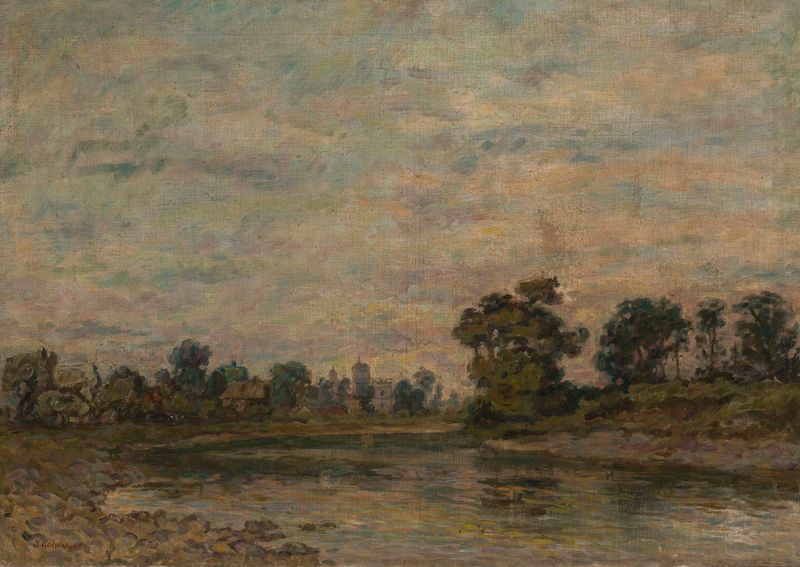
This thought lingers in the heart as one gazes at the sweeping vistas woven with innocence and subtle melancholy. In the interplay of light and shadow, the landscape becomes a canvas where nature's splendor conceals deeper truths, inviting us to reflect on the fragility of beauty. Look to the horizon where soft hues of green and gold blend seamlessly, creating a tranquil tapestry of rolling hills and distant trees. The delicate brushstrokes express a whispering breeze, while the muted colors evoke a sense of nostalgia.
Notice how the light dances upon the surface, illuminating the details of the foreground, drawing your eye to a solitary figure that hints at a story untold, inviting intrigue and contemplation. Beneath the serene exterior lies a tension between the idyllic setting and an underlying sense of solitude. The lone figure stands in a world vast and empty, suggesting a struggle between belonging and isolation. Each tree, standing tall yet apart, echoes this sentiment, while the clouds overhead teem with a weight that belies the landscape's beauty.
This contrast underscores the notion that innocence can often harbor unspoken anguish, amplifying the emotional resonance of the piece. Sokołowski created this particular work during a time when he was exploring the relationship between man and nature, reflecting the influences of Romanticism. Though the exact date remains uncertain, his experiences during this period were marked by a growing interest in the emotional narratives within landscapes. Set against the backdrop of a world grappling with change and introspection, this painting captures a moment of harmony weighed down by profound internal conflict.