
Landscape — History & Facts
When did color learn to lie? This question lingers in the viewer's mind as they gaze upon the tranquil expanse of a landscape that challenges the very essence of perception. Here, nature appears both vivid and fragile, suggesting an underlying tension that resonates deeply within the human experience. Look to the horizon, where the rich blues of the sky meld seamlessly into the muted greens of the earth. Notice how the brushstrokes dance lightly across the canvas, creating a sense of movement that draws you into the scene.
The interplay of light and shadow is particularly striking, with sunlight filtering through the trees, casting delicate shapes on the ground. This masterful technique emphasizes not just the physical beauty of the place but also hints at its transient nature. The emotional weight of this work lies in its contrast between vibrancy and fragility. The lush scenery evokes a sense of peace, yet there is an underlying suggestion that such beauty is fleeting.
Each color, while alive, feels pressed against the inevitable decay that comes with time. Here, nature is celebrated, but it also speaks of vulnerability—a reminder of how quickly things can change, piercing the fragile veneer of existence. In 1908, Goodwin painted this landscape during a time of personal exploration and artistic growth. Living in the artistic hub of Boston, he was influenced by the American Impressionist movement, infusing his work with an evolving palette and technique.
As the world around him rapidly changed, his art began to reflect both the beauty he cherished and a deep awareness of life's transitory moments.
More Artworks by Arthur Clifton Goodwin
Browse all →
Dock Scene, Boston
Arthur Clifton Goodwin

Gloucester Harbor
Arthur Clifton Goodwin
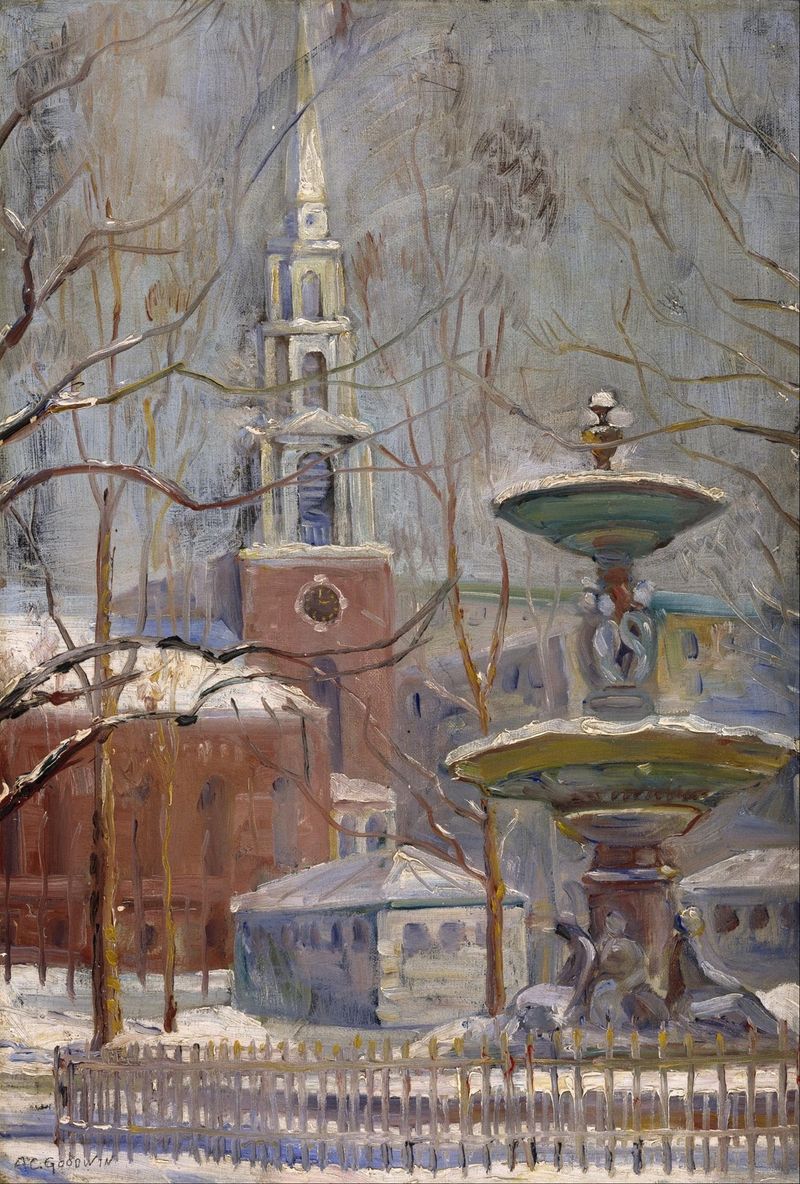
Park Street at Boston Commons
Arthur Clifton Goodwin
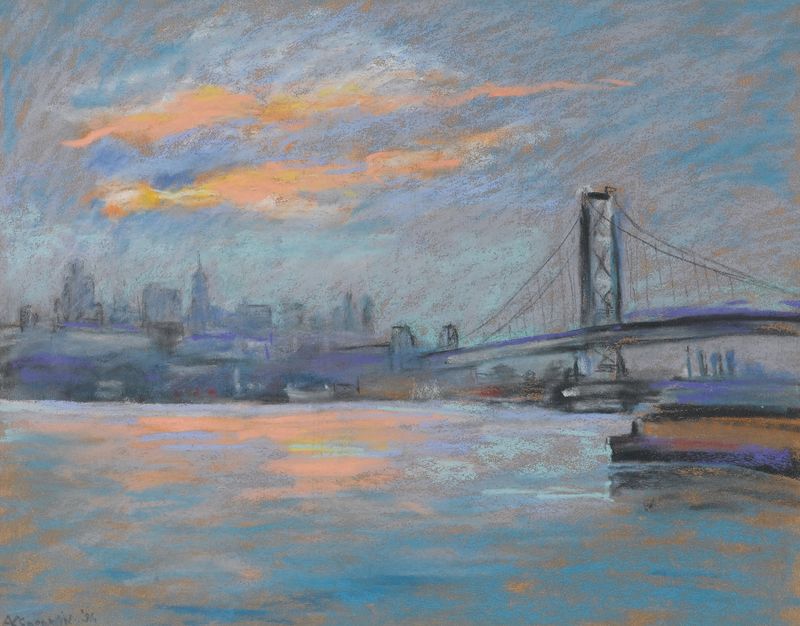
View of the Brooklyn Bridge
Arthur Clifton Goodwin
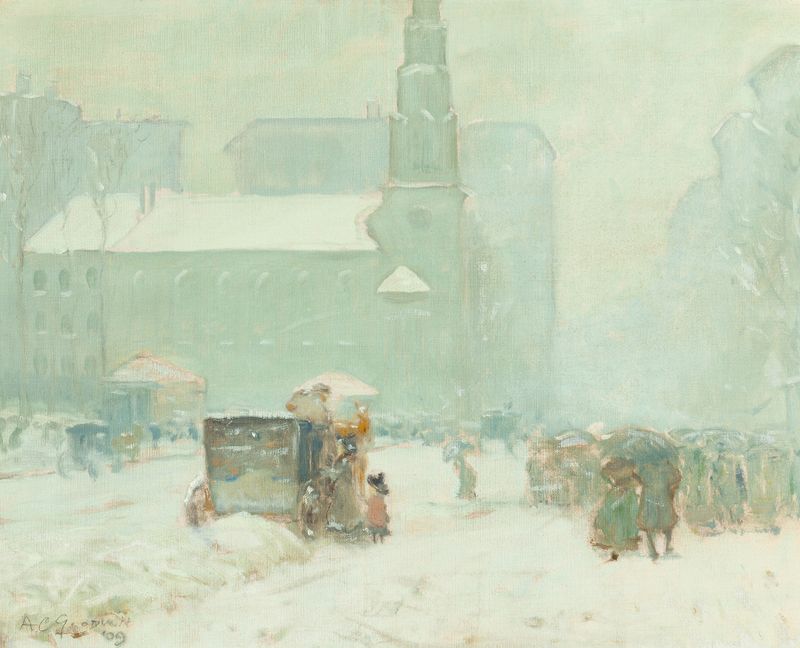
Park Street, Boston
Arthur Clifton Goodwin
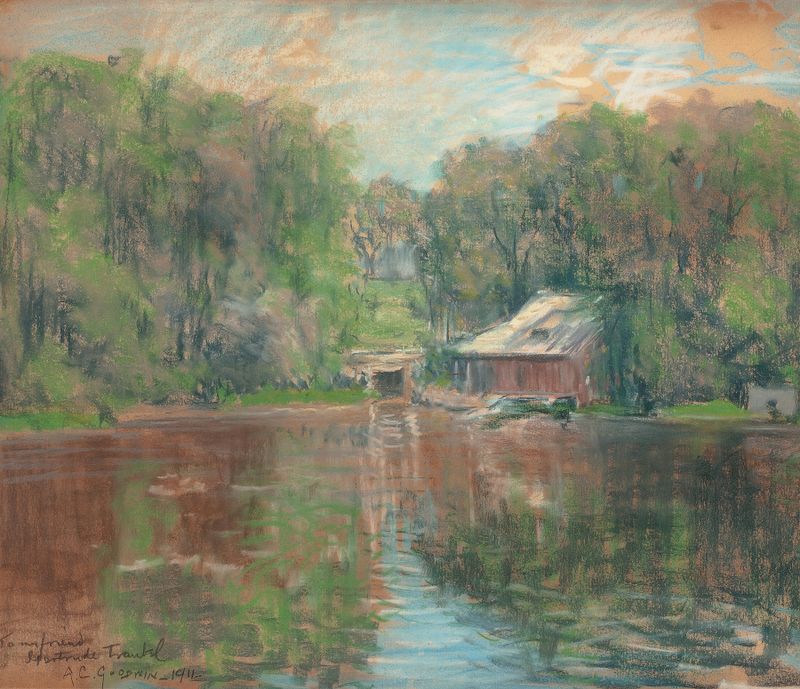
Boathouse by the Water
Arthur Clifton Goodwin

Up Columbus Avenue–Walk-on Common
Arthur Clifton Goodwin

Untitled
Arthur Clifton Goodwin

Gloucester
Arthur Clifton Goodwin





