
Park Street, Boston — History & Facts
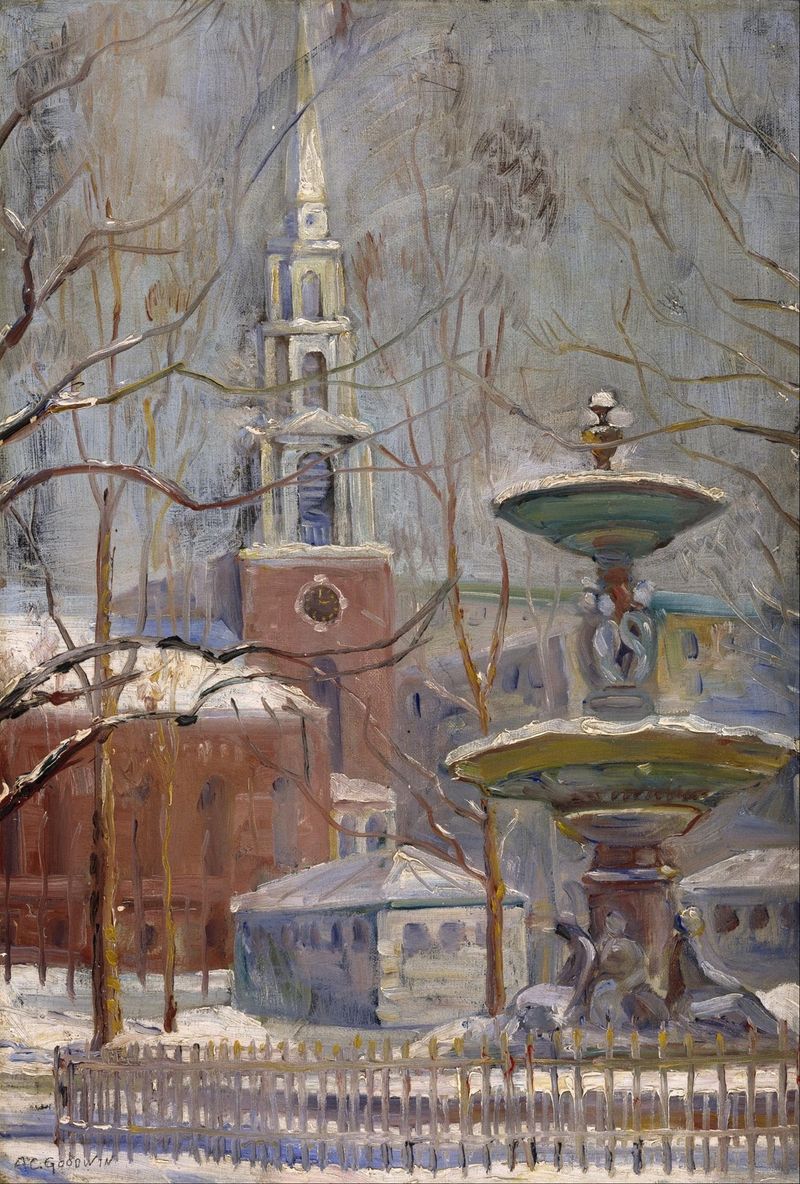
The delicate interplay of light and shadow can evoke both joy and melancholy, reminding us of the intricate dance of destiny that intertwines our lives. Look to the left, where the golden hues of the sun bathe the cobblestone street in a warm glow, illuminating a scene that feels both timeless and transient. Notice how the figures, each immersed in their own pursuits, are painted with loose brushstrokes, suggesting movement yet anchoring them in a moment of stillness. The vibrant greens of the trees above provide a canopy, contrasting sharply with the muted tones of the buildings, drawing the eye upward and inviting a sense of aspiration amidst the everyday bustle. Deeper still, the juxtaposition of light and shadow reveals a world filled with unspoken narratives.
The radiant glow on the street may symbolize hope—a fleeting moment of clarity in a chaotic urban life—while the darker corners hint at the shadows of untold stories and hidden struggles. Each figure represents a unique destiny, their paths crossing yet remaining distinct, capturing the beautiful complexity of human existence as they navigate their own journeys through time. In 1909, the artist created this piece during a transformative period for American art, where the influences of Impressionism were reshaping perceptions of light and color. Goodwin was exploring the burgeoning urban landscape of Boston, reflecting both the vibrancy and the isolation that cities can evoke.
His work emerged amidst the rich artistic dialogue of the early 20th century, a pivotal time when the boundaries of traditional representation were expanding, allowing for personal and emotional expression to flourish.
More Artworks by Arthur Clifton Goodwin
Browse all →
Dock Scene, Boston
Arthur Clifton Goodwin

Gloucester Harbor
Arthur Clifton Goodwin
Park Street at Boston Commons
Arthur Clifton Goodwin
View of the Brooklyn Bridge
Arthur Clifton Goodwin
Boathouse by the Water
Arthur Clifton Goodwin

Up Columbus Avenue–Walk-on Common
Arthur Clifton Goodwin
Landscape
Arthur Clifton Goodwin

Untitled
Arthur Clifton Goodwin

Gloucester
Arthur Clifton Goodwin





