Landscape after a Thunderstorm — History & Facts
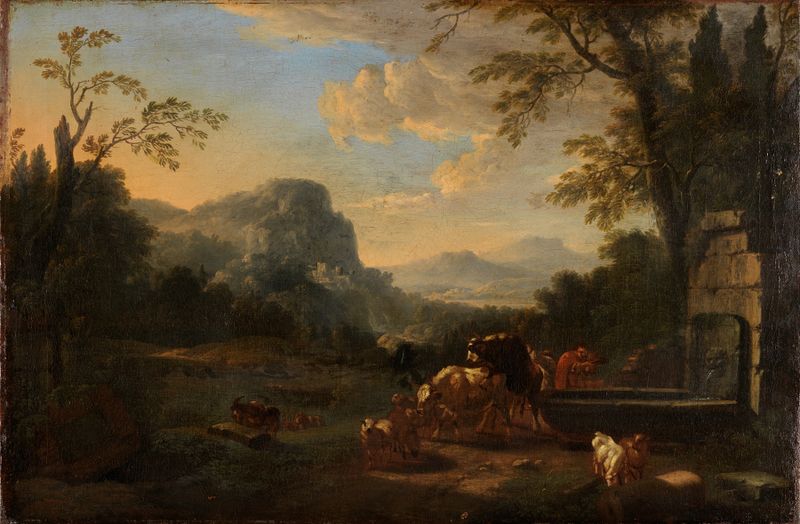
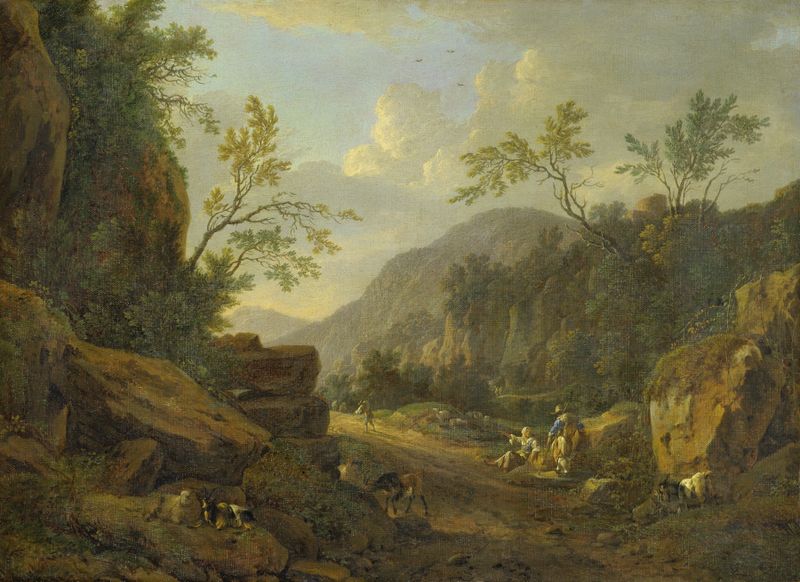
Can beauty exist without sorrow? Landscape after a Thunderstorm invites us to ponder the interplay between nature’s ferocity and the serene calm that follows, a delicate balance between destruction and renewal. Look to the left at the remnants of dark, ominous clouds, swirling and dissipating in the aftermath of the storm. Notice how the sunlight breaks through, casting a warm, golden hue across the landscape, illuminating patches of lush greenery. The artist employs a rich palette of greens and browns, punctuated by the vibrant blues of the sky, drawing the eye towards a shimmering lake that mirrors the restoration of peace. Yet, amidst the tranquility lies the poignant reminder of what has passed.
The scattered branches and slightly bent trees illustrate nature’s struggle, hinting at the tempest’s violence. The still water reflects not just the serene sky but also serves as a metaphor for rebirth—a landscape cleansed yet marked by the storm’s fury, reminding us that beauty often rises from turmoil. In the late 1660s, Johann Franz Ermels created this work while navigating the evolving art scene of Northern Europe, where landscapes became a prominent genre. With the Baroque movement emphasizing dramatic contrasts and emotional depth, he found inspiration in the dynamic interplay of light and shadow, capturing a moment that resonated with the tumultuous history of his time, where each storm serves as a precursor to renewal.