Rocky Landscape in the Evening Light — History & Facts
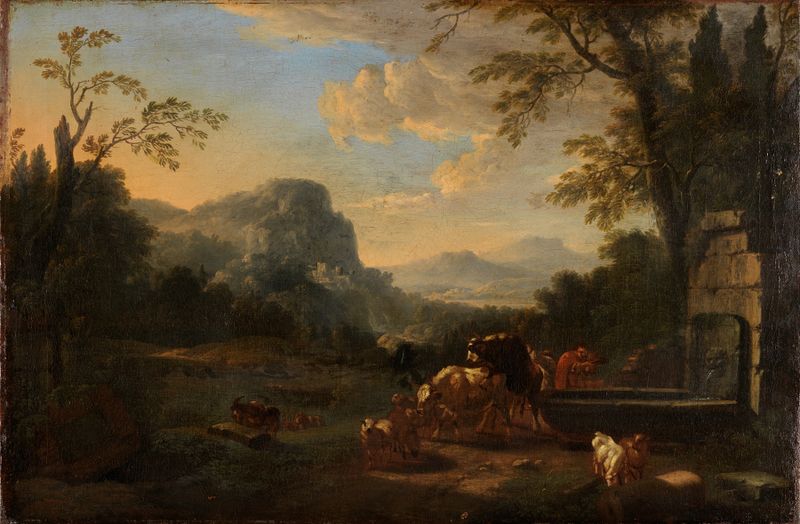
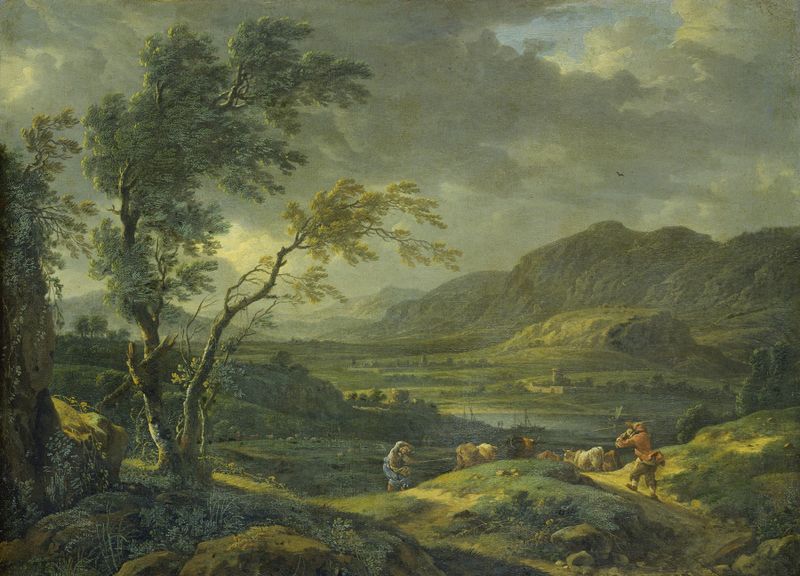
What secret hides in the quiet of the canvas? In the stillness of twilight, Rocky Landscape in the Evening Light invites the viewer to contemplate the delicate dance between darkness and illumination, hinting at the promise of rebirth. Look to the left at the subtle play of light cascading over the jagged rocks, their textures rendered with meticulous strokes that breathe life into stone. The warm glow of the setting sun highlights the contours of the land, creating a stunning contrast against the cool, shadowy recesses that envelop the scene. The palette of muted earth tones, punctuated by golden rays, evokes a serene yet dramatic atmosphere, drawing the eye toward the horizon where the sky melts into a tapestry of colors. Within this tranquil landscape, there lies a tension between permanence and transience.
The solid rocks symbolize resilience, standing sentinel against the passage of time, while the fleeting light represents the ephemeral nature of life and beauty. The interplay of dark and light not only creates depth but also suggests an eternal cycle: the promise of dawn following even the longest night, a subtle reminder of renewal amid the stillness. Johann Franz Ermels painted this work during a period of artistic exploration in the late 17th century, a time when landscapes began to gain prominence in the art world. Living in the Netherlands and influenced by the styles of his contemporaries, Ermels sought to capture the beauty of nature with precision and emotional resonance.
The evolving landscape genre reflected society’s growing appreciation for the natural world, capturing both its majesty and fragility.