Landscape at Ambleside — History & Facts
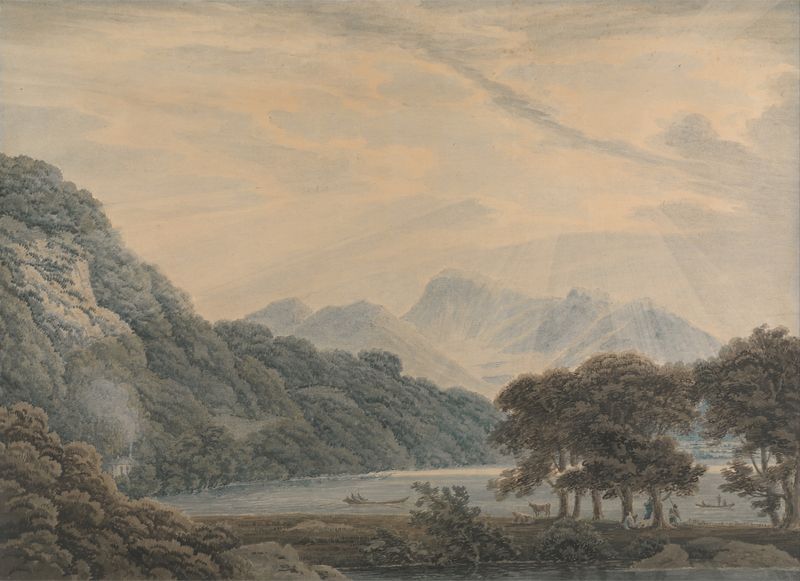
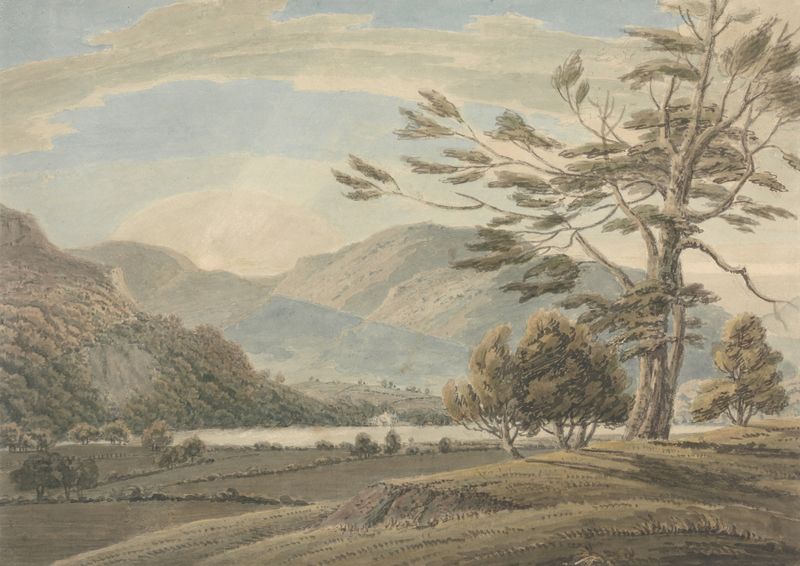
Could a single brushstroke hold eternity? In the stillness of Landscape at Ambleside, time seems suspended, whispering tales of decay and renewal beneath a tranquil sky. Look to the foreground and discover the gentle undulations of the hills, each stroke meticulously layered to create depth and texture. The cool greens and browns envelop the landscape, while the soaring clouds overhead cascade from soft whites into tempestuous grays. Notice how the light dances across the scene, illuminating some patches while casting shadows on others, evoking a sense of mystery and infinite possibility. As you explore further, subtle contrasts emerge: the vibrancy of life against the quiet inevitability of decay.
The thriving flora indicates resilience, yet the crumbling rocks hint at the transient nature of existence. This dichotomy reflects a profound understanding of the cycle of life, where beauty and deterioration coexist, each enriched by the other. In 1800, Sunderland painted this piece while living in England, a time when Romanticism was beginning to flourish. Influenced by the profound connection to nature and the broader cultural shifts, the artist sought to express the sublime beauty of the English landscape, capturing a moment that speaks not just of what is seen, but of the fleeting essence of life itself.