The Head of Ullswater, With the Lodge of Patterdale on the Left — History & Facts
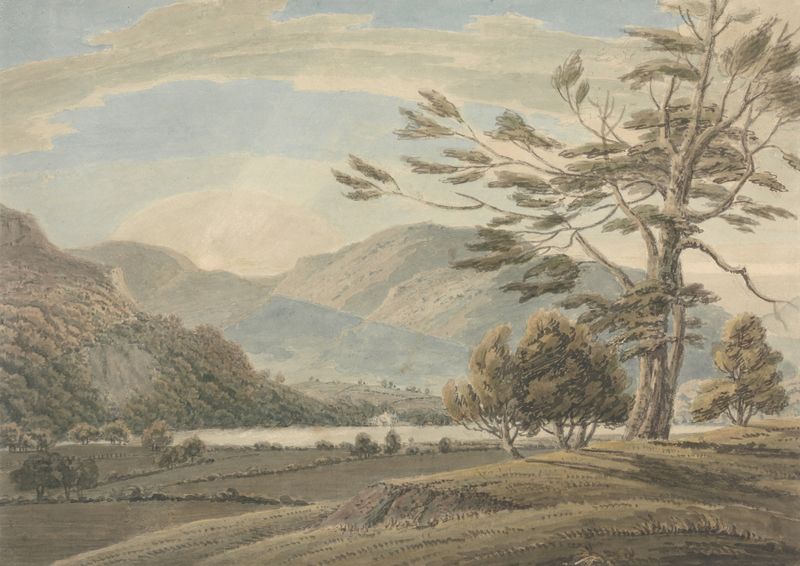
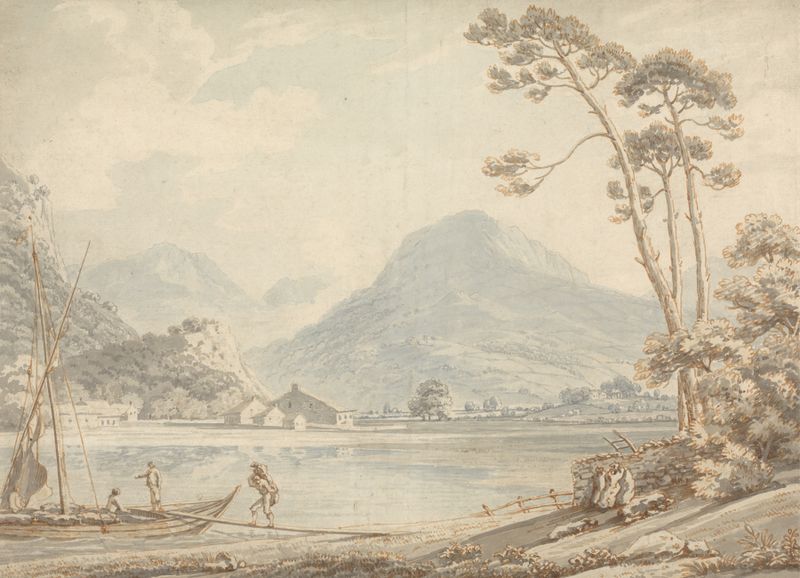
In the quiet realm of art, faith can manifest through the gentle embrace of nature, capturing the eternal spirit of a landscape. Observe the serene expanse of this canvas where a soft palette envelops the scene. Focus on the tranquil waters of Ullswater, their calm surface mirroring the surrounding hills. Notice how the subtle hues of greens and blues blend seamlessly, inviting the viewer into a moment of quiet reflection.
The lodge of Patterdale emerges gracefully to the left, nestled among trees, its presence a silent witness to nature's grandeur, grounding the airy scene. Beneath the surface, the work suggests a deep connection between humanity and the natural world. The soft transitions between colors reveal a sense of peace, while the solitary lodge hints at human vulnerability amidst the vastness. There’s an interplay of light and shadow that evokes contemplation, symbolizing both hope and solitude.
Each detail, from the ripples in the water to the distant peaks, speaks to a longing for something greater, an unwavering faith amid the ever-changing tides of life. During the time this piece was created, Thomas Sunderland was immersed in a period of artistic exploration, likely reflecting the Romantic sensibilities of his era. Although the exact date remains unknown, his work embodies a movement that celebrated the sublime in nature, drawing viewers into a dialogue that transcended the ordinary. Sunderland’s dedication to portraying the British landscape communicates a profound respect for the spirituality of the earth, resonating with a modern audience seeking connection and solace.