
Landscape at Dusk — History & Facts
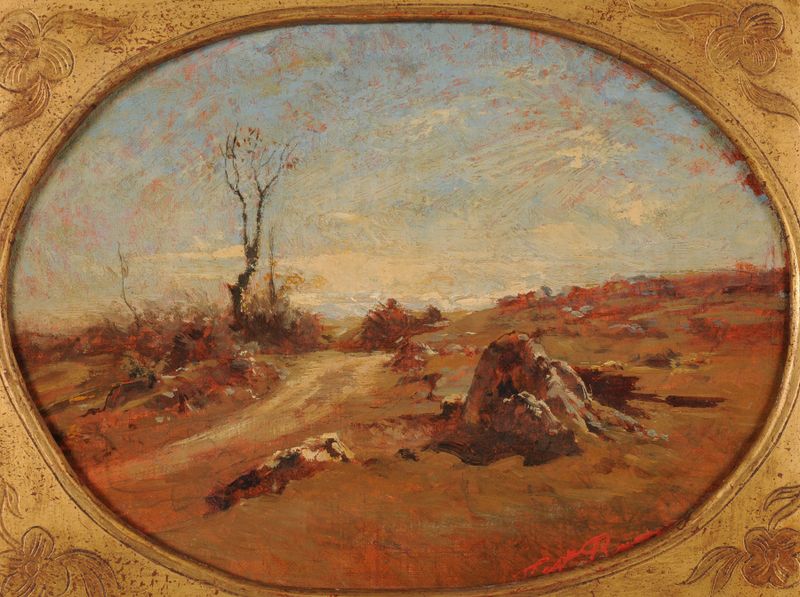
This thought lingers in the air, echoing the depths of emotion that landscapes can evoke. In the quiet moments of dusk, nature reveals her duality, embodying both serenity and melancholy. Focus on the horizon where soft hues of orange and purple meld together, teasing the edge of night. The gentle strokes create a sense of movement, as if the sky itself is breathing.
Look closely at the trees, their dark silhouettes standing starkly against the fading light, embodying a stillness that contrasts with the vibrant panorama. The meticulous layering of color and texture invites the viewer to experience this fleeting moment, as day surrenders to night. Yet, beneath the tranquil surface lies a tension that speaks to life’s transience. The fading light carries whispers of time's passage, suggesting both an ending and a promise of renewal.
The interplay of shadow and light echoes the struggle within us all—the acknowledgment that beauty often comes with an undercurrent of longing. Each brushstroke captures a revelation, a reminder that dusk symbolizes not only closure but also the potential for rebirth. During the period Ravier painted this work, he was immersed in the Romantic movement, characterized by its emphasis on emotion and nature. Working in France in the mid-19th century, he explored the delicate balance of light and shadow, striving to capture the essence of landscapes that spoke to the human condition.
The artwork reflects a time of artistic exploration, where he sought to unveil the profound connections between nature’s beauty and the innermost feelings of the soul.
More Artworks by François-Auguste Ravier
Browse all →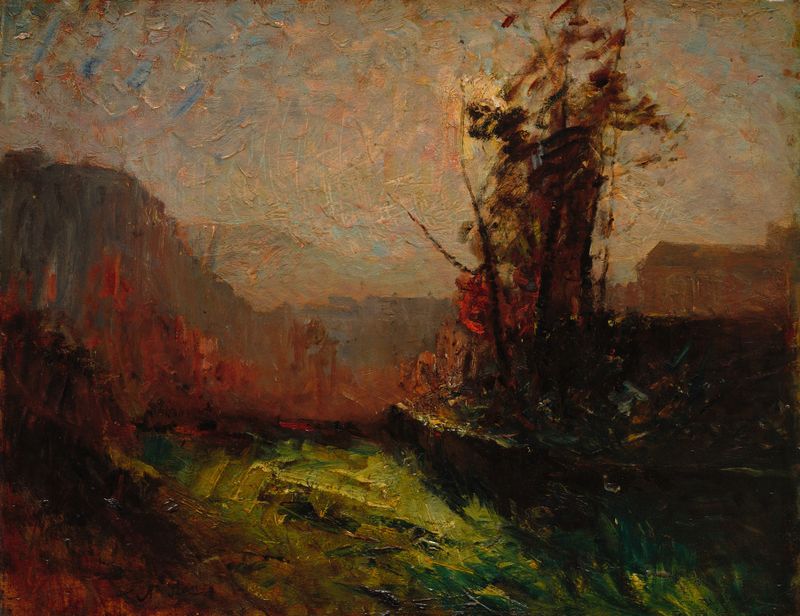
Crémieu, Seen from Chaillonnette
François-Auguste Ravier

Étude de paysage
François-Auguste Ravier
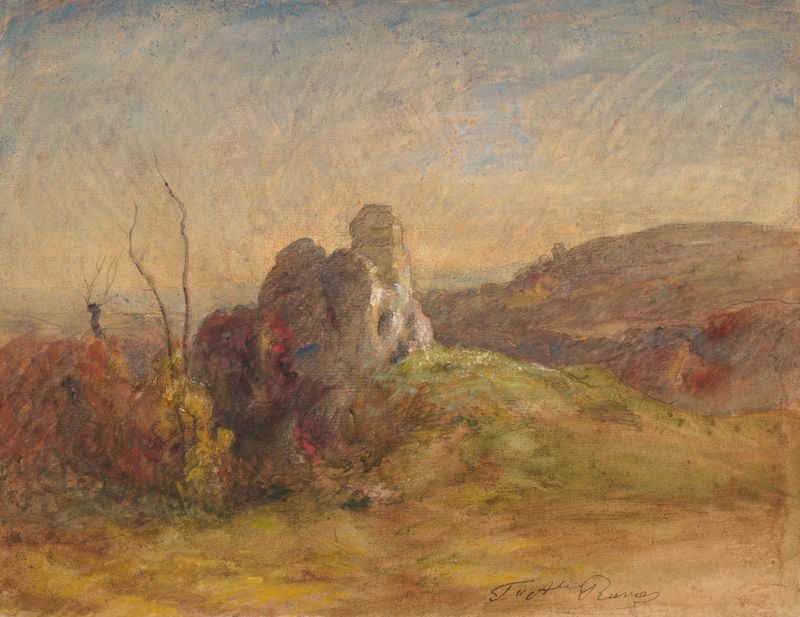
Landscape
François-Auguste Ravier
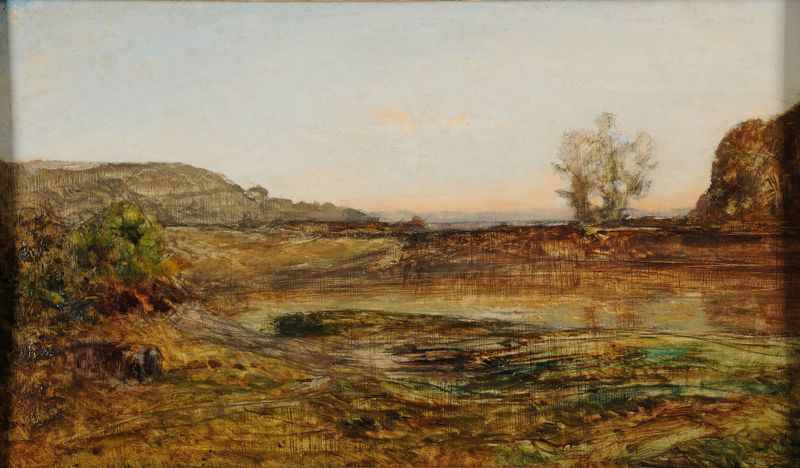
L’Étang d’Optevoz
François-Auguste Ravier
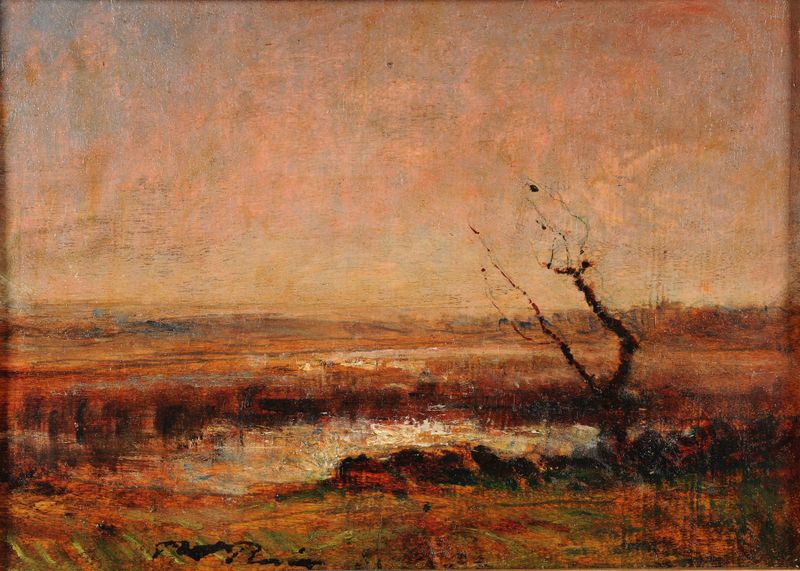
Étude de paysage
François-Auguste Ravier

Approaching Morestal
François-Auguste Ravier

Allée des Tilleuls à Crémieu
François-Auguste Ravier
Automne. L’arbre
François-Auguste Ravier

Sunset over a Pond
François-Auguste Ravier
The Terrace of the Ravier House in Morestel
François-Auguste Ravier





