Landscape at Sunset — History & Facts
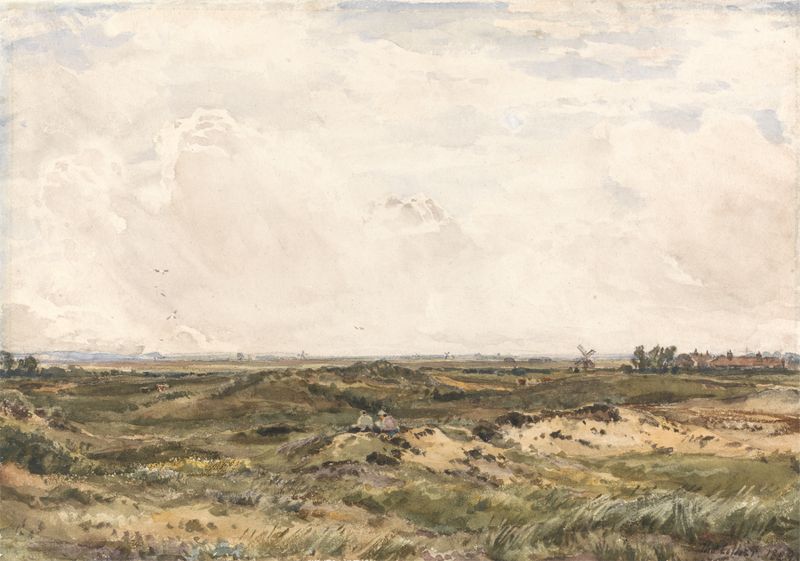
Could beauty survive in a century of chaos? In Landscape at Sunset, Thomas Collier offers a glimpse of breathtaking tranquility intertwined with the looming shadows of fate. Look to the horizon, where streaks of golden light cascade across the canvas, illuminating the delicate interplay of colors as day melds into night. The soft oranges and deep purples create a stunning contrast, drawing the eye to the tranquil lake that mirrors the sky's splendor. The brushwork, fluid and purposeful, guides us through the landscape's undulating hills and distant trees, inviting a sense of peace that feels almost tangible. Yet, beneath this serene facade lies an undercurrent of tension.
The fading light signals not just the end of a day but also the inevitable passage of time and a reminder of nature’s impermanence. The stillness of the water, while beautiful, can evoke feelings of solitude, reflecting the delicate balance between destiny and despair. Each element in the composition, from the silhouetted trees to the shimmering lake, tells a story of transition and the fleeting nature of existence. Collier painted this work in 1891, during a period when the art world was grappling with the rise of Impressionism and the broader socio-political shifts of the era.
Living in England, he was influenced by the changing tides of industrialization, yet found solace in the natural beauty surrounding him. This juxtaposition of chaos and calm in Landscape at Sunset captures not only his artistic vision but also the collective anxiety of a world on the brink of transformation.