Near Caistor — History & Facts
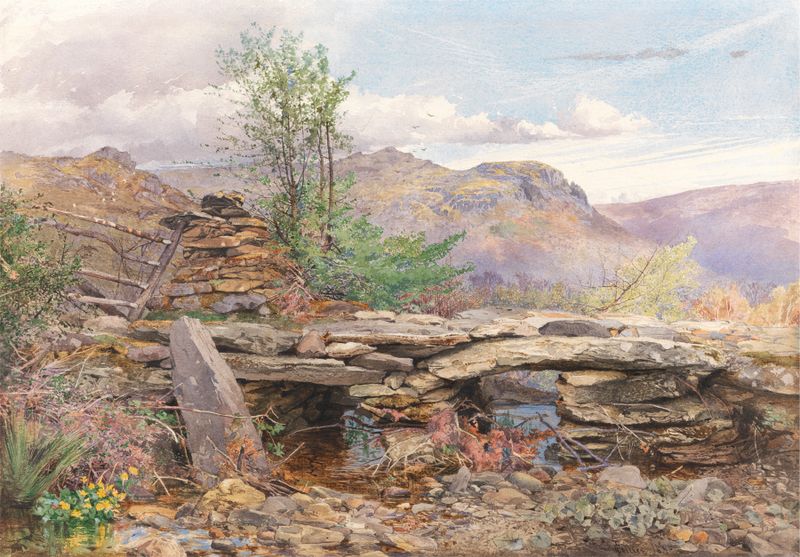
Can paint confess what words never could? In Near Caistor, the brushstrokes whisper secrets of innocence, revealing a world untouched by time's grinding wheel. Look to the right at the gentle curve of the horizon, where the verdant landscape meets a sky brushed with soft pastels. Notice how the light falls upon the golden fields, illuminating the delicate wildflowers that flutter like whispered promises in the breeze. The composition invites your eye to wander, balancing the serene beauty of nature with the subtleties of rural life, while the harmonious palette encapsulates a fleeting moment, inviting a sense of calm and nostalgia. Beneath the idyllic surface lies an emotional tension—echoes of innocence juxtaposed against the passage of time.
The lively brushstrokes evoke movement, yet there's an underlying stillness, as if the landscape itself holds its breath, aware of impending change. The juxtaposition of vibrant colors against the muted tones hints at the bittersweet nature of memory; what is cherished must eventually fade. The wildflowers, vibrant yet delicate, embody the transient beauty of youth, urging the viewer to contemplate the fragile nature of innocence. Thomas Collier painted this work in 1889 during a transformative period in English art, when the Pre-Raphaelite Brotherhood’s ideals of beauty and truth were being challenged by modernist trends.
Living in a time of burgeoning industrialization, he sought solace in the pastoral, capturing a sense of nostalgia for a simpler existence as he observed the shifting landscape around him. This painting reflects not only his artistic vision but also a collective yearning for lost innocence in a rapidly changing world.