Landscape At The Rhine (View From The Bridge) — History & Facts
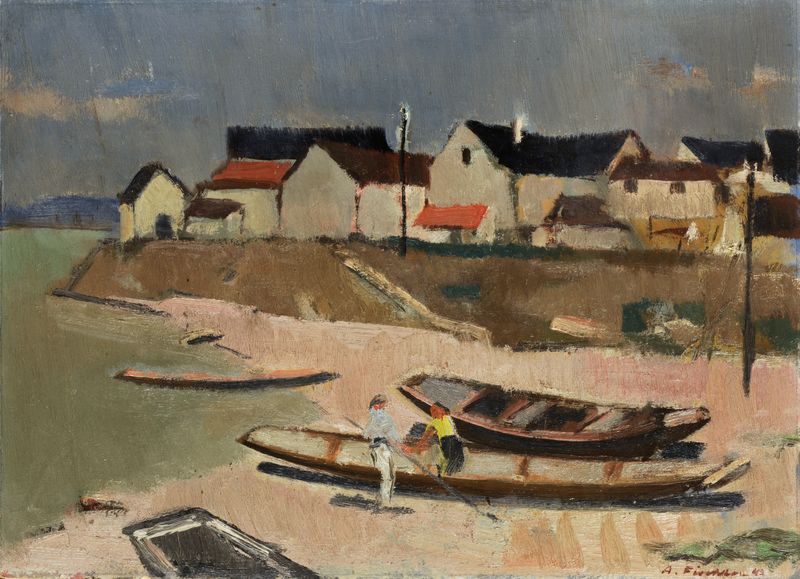
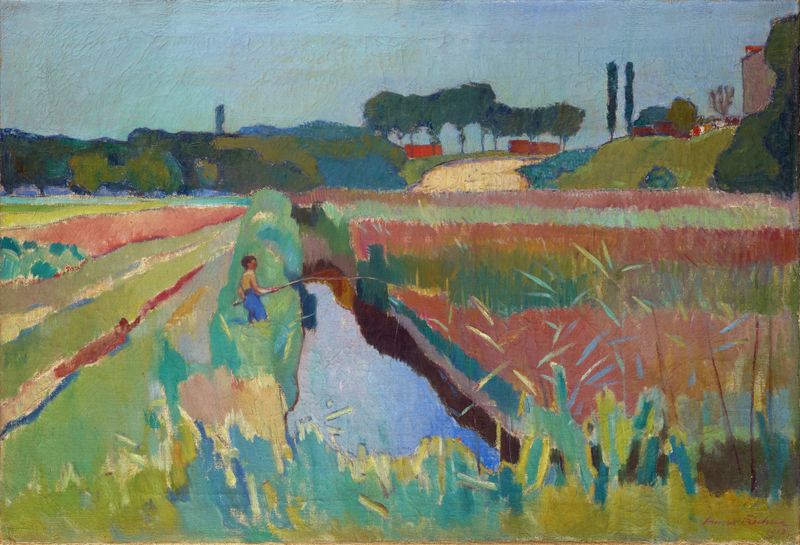
In Landscape At The Rhine (View From The Bridge), the artist captures not just a scene but a lingering tension that evokes a sense of unease and foreboding, as though the serene beauty of nature is but a thin veil over deeper fears. Look to the left where the river’s gentle ripples contrast sharply with the dark, brooding clouds above. The delicate brushstrokes emulate the fluidity of water, while the earthy tones of the landscape ground the viewer in the moment. Notice how the bridge, an architectural line connecting two realms, bisects the canvas, suggesting a passage not only across the river but also between safety and the unknown.
The light, diffused through the clouds, creates shadows that dance along the water’s surface, reflecting an inner turmoil that belies the picturesque setting. Hidden meanings simmer beneath the surface. The juxtaposition of tranquil flowing water with ominous skies evokes a sense of fear, as if nature itself is on the brink of upheaval. The bridge stands as a symbol of precariousness—although it provides a means to traverse, the viewer senses the risk that lies in crossing.
Small details, like the sparse foliage and distant hills, amplify feelings of isolation, embedding a haunting melancholy within the romanticized landscape. In 1913, Arnold Fiechter painted this piece while living in Germany amidst rising tensions in Europe. Just before the eruption of World War I, the art world was grappling with modernist movements, as traditional landscapes began to draw on deeper emotional resonances. Fiechter’s work at that time symbolically reflects a world on the brink, where beauty and fear are inextricably intertwined.