Marshland Near Neudorf With Fishing Boy — History & Facts
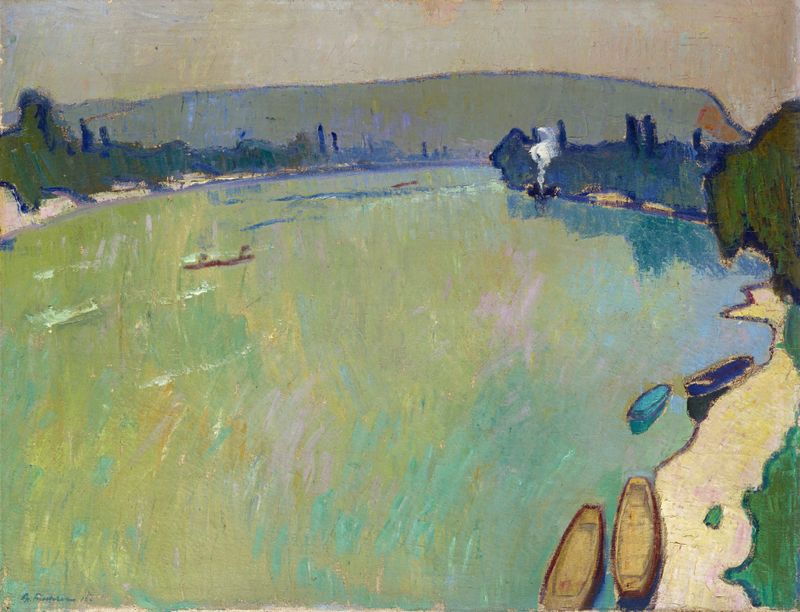
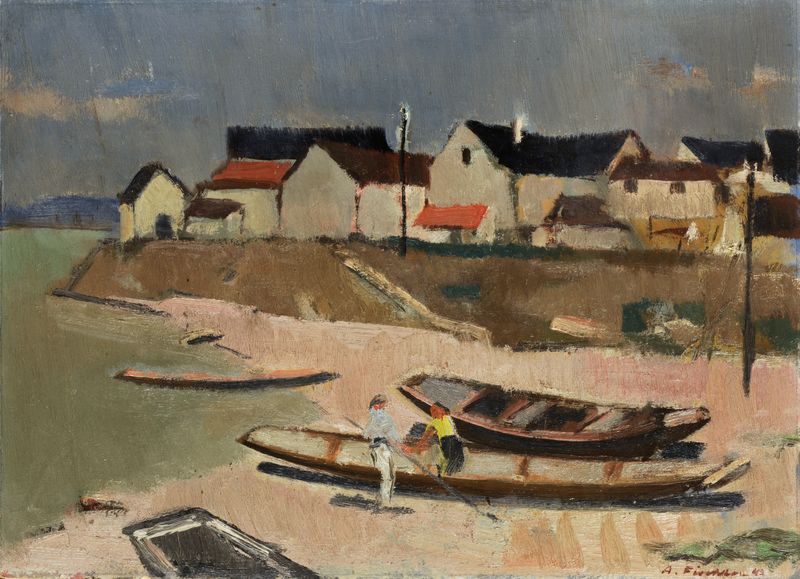
Where does light end, and longing begin? In the stillness of nature, we find the delicate balance between existence and the fleeting moments of life. Look to the left at the deep greens and browns of the marshland, where the tall reeds sway gently in an unseen breeze. Notice how the sunlight dances across the water’s surface, creating a shimmering path that draws the eye toward the distant horizon. The solitary figure of a boy with a fishing rod stands at the edge, a tiny silhouette against the expansive backdrop, embodying both innocence and the weight of solitude.
The muted palette reflects a calm yet somber atmosphere, inviting contemplation on the passage of time. Upon closer inspection, the shadows play tricks with the light, hinting at a world where dreams and reality blur. The boy’s posture, slightly hunched, suggests both concentration and a yearning to grasp the immaterial — that which is just beyond reach. The vastness of the marsh mirrors the endless possibilities of youth, yet it simultaneously evokes a sense of isolation, reminding us that even in nature, one may wrestle with the inevitability of mortality. In 1913, Arnold Fiechter was painting at a time marked by significant artistic transformation.
The world was on the brink of war, and the quietude of landscapes became a refuge for many artists seeking solace from chaos. Fiechter, rooted in the early 20th-century European art scene, captured tender moments of introspection, reflecting both the beauty of the natural world and the poignant awareness of life's fragility in each brushstroke.