
Landscape by Moonlight — History & Facts
Can beauty exist without sorrow? In Landscape by Moonlight, the haunting luminescence of the moon captures a fragile beauty, inviting viewers into a realm where tranquility and unease coexist. Focus on the serene white glow of the moon, casting its light across a darkened landscape. The delicate brushstrokes create a shimmering effect on the water’s surface, drawing your gaze toward the horizon where the sky meets the earth. Eye-catching contrasts emerge between the soft illumination of the moon and the brooding shadows enveloping the trees, suggesting an undercurrent of trepidation amidst the calmness.
The composition evokes a sense of stillness, yet the unevenness of the trees hints at a world teetering on the edge of the unknown. Here, the juxtaposition of light and dark speaks to the duality of existence—the fleeting beauty of a moonlit night shadowed by a lingering apprehension. The ethereal glow may represent hope, yet the darkened woods remain a reminder of what is hidden or unexplored. Each element in the scene suggests that beauty is often accompanied by an unshakeable sense of fear, a tension that breathes life into the stillness, rendering it profound. In 1891, as Richard Nicolaüs Roland Holst painted this work in the Netherlands, he was deeply engaged with Symbolism and its exploration of the human experience's emotional complexity.
This period in his life marked a significant shift toward more introspective themes, reflecting both personal and broader societal anxieties amidst an increasingly industrialized world.
More Artworks by Richard Nicolaüs Roland Holst
Browse all →
Corner of a Pond near Breukelen
Richard Nicolaüs Roland Holst

Kale beuk op een weide met schapen en een paard
Richard Nicolaüs Roland Holst
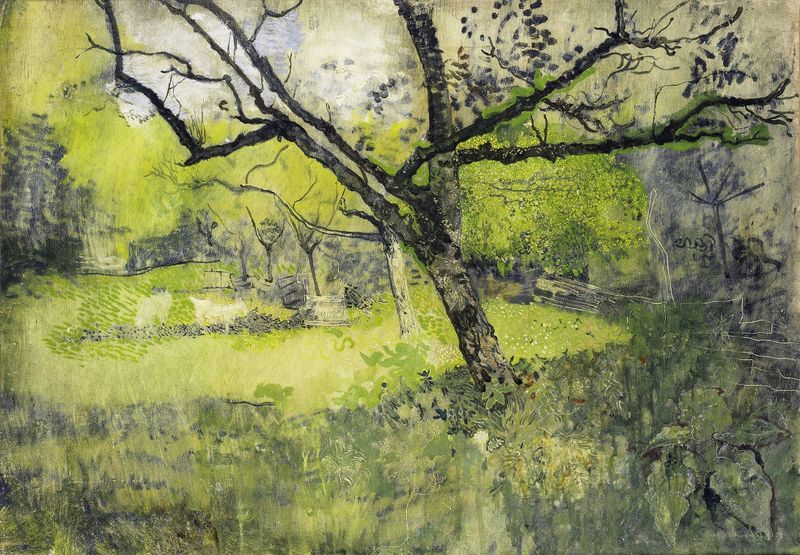
Orchard at Eemnes
Richard Nicolaüs Roland Holst
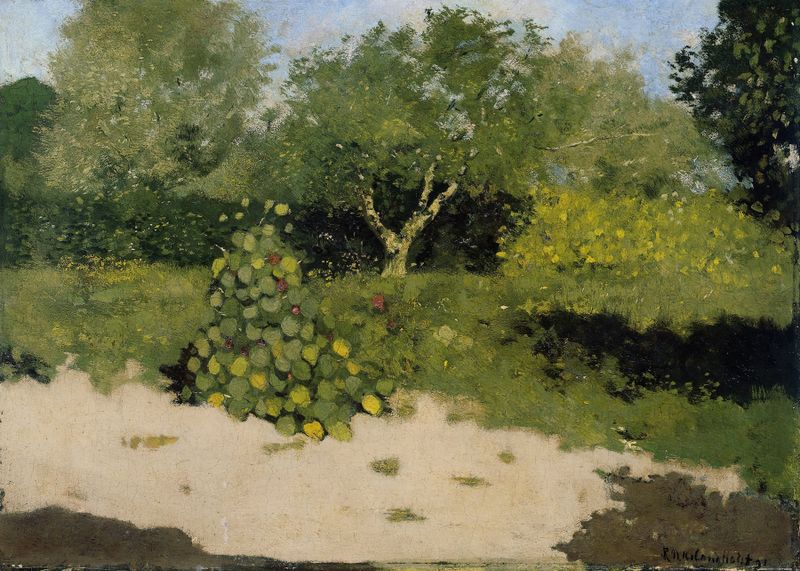
Corner of a Garden with Nasturtiums
Richard Nicolaüs Roland Holst
Orchard at Eemnes
Richard Nicolaüs Roland Holst
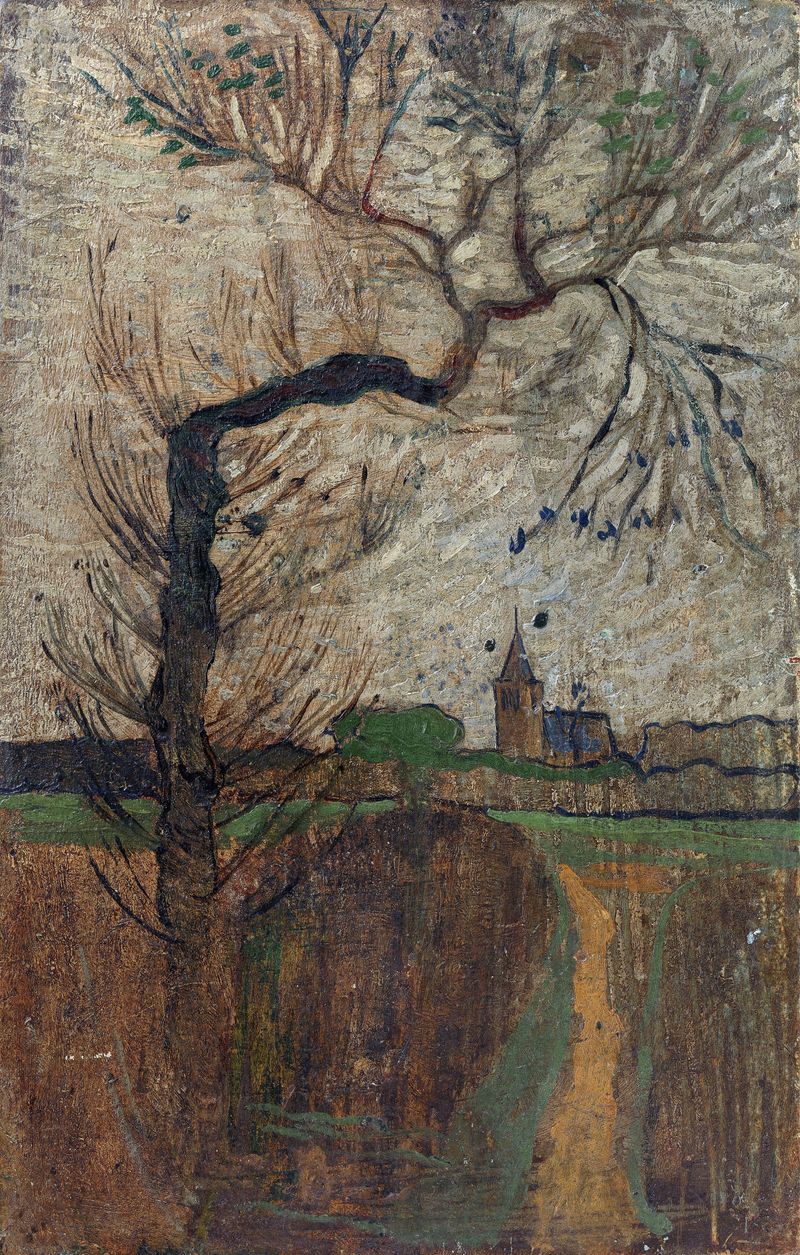
Foothpad with Willow and a Village on the Horizon
Richard Nicolaüs Roland Holst





